


Commercial Appliance Repair in Santa Monica

Repair support in Santa Monica for businesses that depend on working refrigeration, ice machines, cooking, dishwashing, and laundry equipment.

Local Santa Monica service 90-Day warranty Licensed & insured
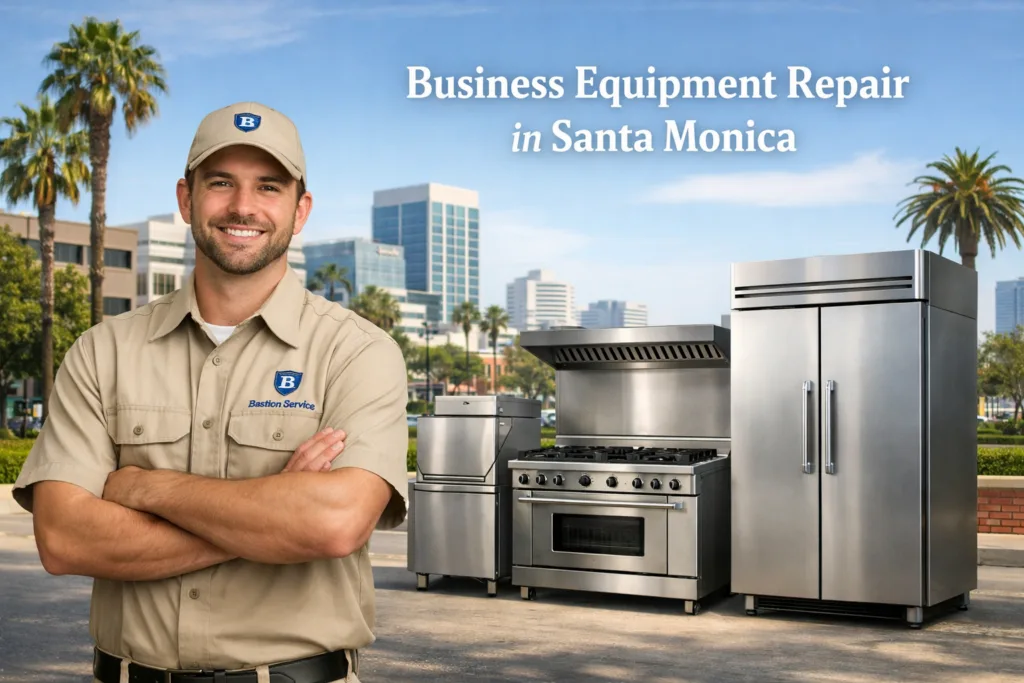
Business equipment repair technician with equipment in Santa Monica
kellie snarr review profile photo RODNEY PEETE review profile photo Joshia Brooks review profile photo Stephanie Pacciardi review profile photo Felicia M review profile photo jeffrey cloutier review profile photo jake cruzen review profile photo Maria Rodriguez review profile photo Ruth Douglas review profile photo P K review profile photo Nu Wade review profile photo Peezy Flowers review profile photo Mona Jimenez review profile photo Анастасия Козлова review profile photo Jason review profile photo Pablo Arreola review profile photo michael kovach review profile photo David Bail review profile photo Heather Dowell review profile photo Larry Wagenseller review profile photo Rudi Camenzind review profile photo Aaron Perez review profile photo Jo Anne Ghazi review profile photo Kira Morris review profile photo Michael Salisbury review profile photo Tom Slack review profile photo Sam Al review profile photo Romana Mikel review profile photo Carlos Lopez review profile photo Jason Lavea review profile photo Carole Merwin review profile photo Ana Barragan review profile photo A Shively review profile photo Tony Ramirez review profile photo A Bouss review profile photo Luise Remington review profile photo Josie review profile photo rose walker review profile photo NyimaJare’ Israel review profile photo NICOLAS ZAVALA review profile photo Xavier Hernandez review profile photo Diane Witherspoon review profile photo Isaiah Davis review profile photo Elias review profile photo Tawnee Castro review profile photo Lydia Gonsalez review profile photo Rene Castellanos review profile photo Jose Laguna review profile photo Raymond Mendoza review profile photo Ami Radunskaya review profile photo Rocio Araiza review profile photo Christian Villasenor review profile photo Christian Villasenor review profile photo Lupe Pickard review profile photo Bobbie Cruce review profile photo Lindsey Magana review profile photo Norma Hernandez review profile photo Leena Laitenen review profile photo Rodney McElrath review profile photo Michael S. review profile photo Paul Sanderson review profile photo Omar Reyes review profile photo Byron Marroquin review profile photo Elizabeth Leticia Machuca review profile photo Wliey Richardson review profile photo Eric Connaughton review profile photo robert tostado review profile photo Tamala Jones review profile photo Ladonna Yanes review profile photo Terry Amos review profile photo Kathy Osorio review profile photo Daniel Wilson review profile photo Ashley Bingham review profile photo James Marostica review profile photo
Real Google feedback 5.0 out of 5 80+ Google reviews
  • Business equipment service for Santa Monica businesses
  • Clear diagnosis before repair decisions
  • Refrigeration, ice machines, cooking, warewashing, and laundry equipment
  • Warranty for labor and parts
Equipment Repair

Equipment repair in Santa Monica for everyday business equipment problems

When business equipment performance starts slipping in Santa Monica, the most practical first step is a clear diagnosis and a repair plan that helps protect uptime and day-to-day operations.

Bastion Service helps Santa Monica businesses diagnose equipment problems that affect food storage, cooking, cleaning, laundry, ice production, and daily operations.

Licensed & insured equipment service for Santa Monica businesses, with clear diagnosis, practical repair guidance, and scheduling based on availability.

When a reach-in starts drifting out of temperature, the ice bin does not refill on schedule, or a dishwasher begins leaving racks unfinished, the disruption spreads quickly through the rest of the operation. For Santa Monica businesses, equipment problems rarely stay isolated for long. They affect prep timing, product quality, sanitation, staffing, and the ability to keep service moving without costly workarounds.

That is why commercial repair decisions work best when they start with the actual symptom pattern, not assumptions about the most expensive part. A unit that sounds louder than usual, runs longer, heats unevenly, or shuts off intermittently can have several possible causes. The useful next step is identifying whether the issue is related to airflow, controls, heating components, water supply, drainage, sensors, motors, or broader wear that may change the repair outlook.

Common warning signs across business-critical equipment

Most commercial equipment does not fail without giving some warning first. The earliest signs are often easy to overlook because the unit still runs. In practice, those in-between stages are often when service is most manageable and when secondary damage can still be limited.

  • Temperature drift in refrigerators or freezers
  • Reduced ice production or irregular cube quality
  • Slow preheat, uneven cooking, or ignition problems
  • Dishwashing cycles that stop short, drain poorly, or leave residue
  • Washers or dryers that take longer, vibrate more, or stop mid-cycle
  • New leaks, odors, buzzing, grinding, or repeated breaker trips
  • Error codes, unresponsive controls, or repeated resets

These symptoms matter because they usually point to different urgency levels. A small leak may be a hose, valve, pump, or drain issue. Long run times may indicate restricted airflow, failing fans, calibration problems, or heat loss through worn seals. A unit that keeps restarting may be protecting itself from a larger failure already developing.

Refrigeration issues that can escalate fast

Commercial refrigeration problems tend to affect both product protection and operating cost. A refrigerator, freezer, or prep cooler that no longer holds a stable temperature may be dealing with dirty coils, weak airflow, evaporator or condenser fan problems, door gasket wear, defrost faults, thermostat or sensor issues, or deeper cooling-system performance loss.

Businesses often first notice warm spots, frost buildup, excess condensation, or a compressor that seems to run almost constantly. Those are not minor nuisances. They can lead to spoilage, inconsistent holding temperatures, and added strain on key components. In a busy operation, even a partial cooling loss can force staff into constant monitoring and short-term product shifting that takes time away from normal work.

If temperatures are no longer holding reliably, waiting for a total shutdown usually creates a harder and more expensive problem. Early repair can be the difference between correcting a failing part and dealing with product loss plus broader component damage.

Ice machine problems and production pressure

Ice equipment often shows gradual decline before it stops altogether. A machine may still produce ice, but more slowly, in smaller batches, or with irregular cube shape. That can point to scale buildup, water feed problems, restricted drainage, sensor faults, inlet valve issues, freeze-cycle problems, or refrigeration-related performance loss.

Businesses in Santa Monica that rely on consistent ice output cannot always absorb that decline for long. Lower production affects beverage service, food holding, and daily planning, especially when staff begin compensating manually. Cloudy or misshapen ice, leaks around the unit, or harvest problems are all signs that the machine needs attention before it becomes an operational bottleneck.

Cooking equipment symptoms that affect consistency

Commercial ovens, ranges, and fryers usually show repair needs through inconsistency. One section heats faster than another, set temperature does not match actual performance, burners fail to ignite cleanly, or recovery times begin stretching longer than expected. In some cases, the issue is an igniter, element, thermostat, relay, sensor, switch, gas-flow component, or control fault. In others, multiple wear points are contributing at once.

Even when cooking equipment still turns on, unstable performance can create real business problems. Ticket times slip, food quality becomes harder to standardize, and staff may start overcompensating with timing or temperature adjustments. That can hide the issue temporarily, but it usually does not solve it. If the unit is overheating, failing to maintain temperature, or producing unusual odors, normal use should be reviewed promptly rather than pushed through another service period.

Dishwashing and warewashing problems that should not be ignored

Warewashing equipment is easy to judge by the final result: clean or not clean. But the underlying issue may involve pumps, drain assemblies, heating elements, fill valves, float switches, controls, rinse functions, or blocked filters and lines. A dishwasher that leaves residue, does not complete a cycle, leaks during operation, or fails to heat properly may still run, but sanitation performance becomes less predictable.

That uncertainty creates pressure on the entire back-of-house workflow. Staff may need to rewash loads, slow down throughput, or pull labor away from other tasks. If the machine is draining slowly, stopping mid-cycle, or showing repeated control errors, it is usually better to address the fault before the unit becomes unavailable during a busy period.

Laundry equipment problems that disrupt daily operations

Commercial washers and dryers support more than convenience. In many businesses, they are directly tied to turnaround time for linens, uniforms, towels, and other repeat-use items. When a washer fails to drain, spins inconsistently, shakes excessively, or stops with a wet load, the issue may involve the pump, motor, belt, suspension components, lid or door switches, controls, or drainage restrictions.

Dryers often show trouble through long cycle times, overheating, weak airflow, noise, or intermittent shutoff. Those symptoms can be related to heating components, rollers, belts, sensors, motors, or venting restrictions. Continued use under those conditions can increase wear, waste time and utilities, and lead to a full breakdown that affects the rest of the day’s workflow.

Why continued use can make repairs worse

One of the most common reasons a manageable repair becomes a larger one is continued operation after clear warning signs appear. A refrigerator with weak airflow may eventually overwork the compressor. A leaking dishwasher can affect nearby components. A dryer running too hot can damage additional parts. A fryer or oven with unstable controls can become harder to diagnose if the original fault triggers follow-on failures.

That does not mean every unusual sound requires immediate shutdown, but certain symptoms deserve faster action:

  • Equipment no longer holding safe or usable temperature
  • Burning smells or visible overheating
  • Water leaking beyond normal operating conditions
  • Loud grinding, squealing, or repeated hard starts
  • Electrical tripping, flickering controls, or power loss during use
  • Frequent resets, shutdowns, or incomplete cycles

When those conditions are present, continuing to operate the unit can increase repair scope and shorten the window for a simpler fix.

What helps determine repair versus replacement

Not every commercial equipment problem points toward replacement. Many units can be restored effectively when the issue is isolated to a motor, valve, sensor, heating part, fan, switch, control component, drain assembly, or maintenance-related restriction. If the cabinet, frame, and overall operating condition remain solid, repair may be the most cost-conscious choice.

Replacement becomes more likely when failures are becoming frequent, parts are difficult to source, structural condition is poor, energy use is becoming hard to justify, or the unit no longer supports the demands of the business. Age matters, but not by itself. The more useful question is whether the next repair is likely to return the equipment to stable service or simply postpone the next interruption.

A diagnosis-based recommendation helps separate those scenarios. It shows whether the fault is limited and repairable or whether the equipment is showing a larger pattern of decline.

Useful details to note before a service visit

Before scheduling service, it helps to gather a few observations from the people who use the equipment every day. That information can make symptom patterns clearer and help narrow the likely source of failure.

  • When the issue started and whether it appeared suddenly or gradually
  • Any recent changes in noise, cycle time, temperature, or output
  • Whether the problem is constant or only happens during peak use
  • Error codes, flashing lights, or control messages
  • Leaks, odors, frost, poor drainage, or visible buildup
  • Whether the unit was recently cleaned, moved, or serviced

For example, saying that a freezer is warm only during the afternoon, or that a dishwasher drains slowly only on certain cycles, is more useful than simply reporting that the unit is “not working right.” Those details can help identify whether the issue is load-related, intermittent, or tied to a specific function.

Commercial repair needs in Santa Monica

In Santa Monica, many businesses operate with limited room for equipment downtime. Service windows are tight, storage capacity may already be planned closely, and even one underperforming unit can create ripple effects across the rest of the day. Refrigeration, ice, cooking, dishwashing, and laundry equipment all support the same basic goal: keeping operations moving without unnecessary interruption.

That makes timely troubleshooting especially important. The best repair outcomes usually come from addressing performance changes early, understanding the risk of continued use, and deciding quickly whether the equipment is a good repair candidate. When a business-critical unit starts showing clear signs of trouble, prompt evaluation can help protect uptime, reduce avoidable losses, and support a more informed next step.

Services

Equipment we service in Santa Monica

Use these service pages to move into the equipment category that best matches the repair need in Santa Monica.

Equipment services

How it works

How equipment service works in Santa Monica

Schedule the visit, diagnose the problem, review the next step, and move forward with a clear repair plan.

Call or Book

Call us or send a booking request online with the repair issue and your service area.

Scheduled Visit

A technician arrives for the appointment and inspects the equipment or appliance based on the symptoms you described.

Diagnosis

The problem is checked carefully so the likely cause, repair plan, and practical next step are clear.

Repair Plan

Once the issue is confirmed, the repair can move forward with approval and a straightforward service plan.

Customer reviews

Real customer feedback

Recent customer feedback for Bastion Service.

michael kovach review profile photo
michael kovach
Google review

“Highly recommend! Andrei was fast, friendly, communicative and transparent, and highly competent. Went the extra mile for us. We’ll definitely use him again”

David Bail review profile photo
David Bail
Google review

“Frigidaire Ice Maker Repair @ my Dads house. Very professional experience! I received a confirming text that Andrew was on his way and would arrive with in 20 minutes. Andrew arrived earlier than expected. He quickly pulled out a new pair of shoe covers and immediately went to work. He quickly diagnosed the refrigerator ice maker problem and got it fixed. Very impressed with honesty and integrity. I would absolutely recommend as well use this company again. Thank you!!”

FAQ

equipment repair questions

Answers about diagnosis, repair options, timing, and next steps.

What equipment problems do you troubleshoot?

We troubleshoot refrigeration, ice machine, cooking, warewashing, and laundry equipment problems, including temperature drift, leaks, drainage issues, weak heating, poor wash results, unusual noise, slow cycles, and repeated shutdowns.

Why is diagnosis important before approving equipment repair?

Diagnosis helps identify the real cause before parts are ordered or repair decisions are made. Similar symptoms can come from different faults, so testing helps avoid unnecessary parts, repeat downtime, and the wrong repair path.

When should service be scheduled for equipment problems?

Service should be scheduled when equipment shows temperature changes, leaks, unusual noise, slow recovery, failed cycles, poor cleaning results, uneven heating, error codes, or repeated resets. Waiting for complete failure often increases downtime and repair scope.

How do you know whether equipment repair is better than replacement?

The decision depends on equipment age, condition, failure history, parts availability, repair cost, and how much downtime affects operations. Repair often makes sense for isolated failures, while replacement becomes more practical when breakdowns are frequent or major systems are worn.

Ready to schedule?

Schedule Equipment Repair in Santa Monica

Book equipment repair in Santa Monica with clear diagnosis, practical repair guidance, and dependable local service for refrigeration, ice, cooking, warewashing, and laundry equipment.

Call (323) 433-6360