
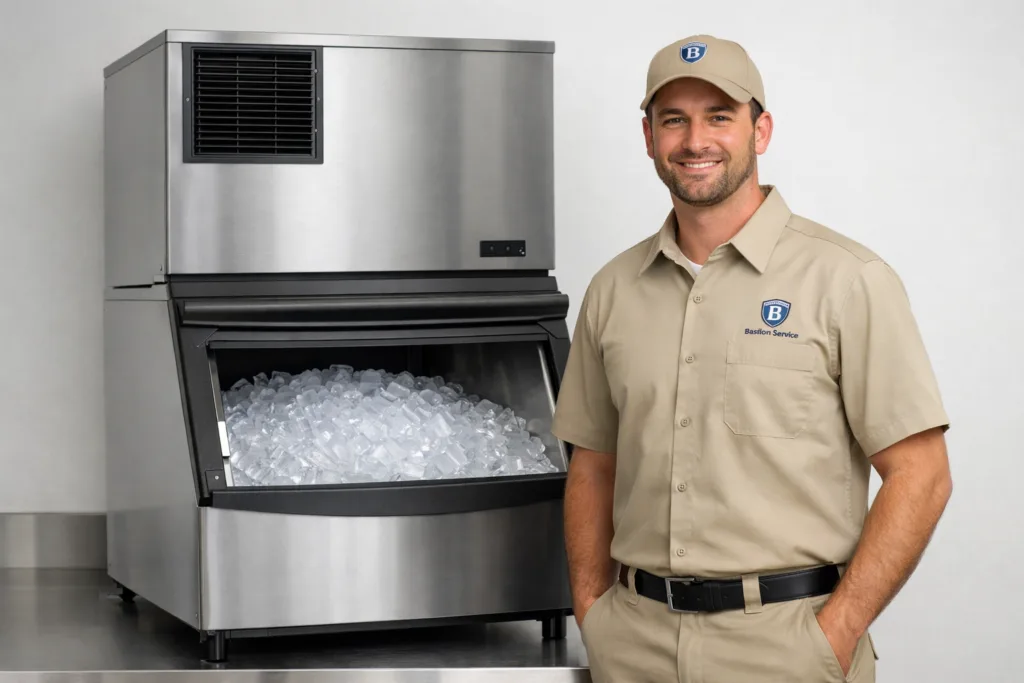




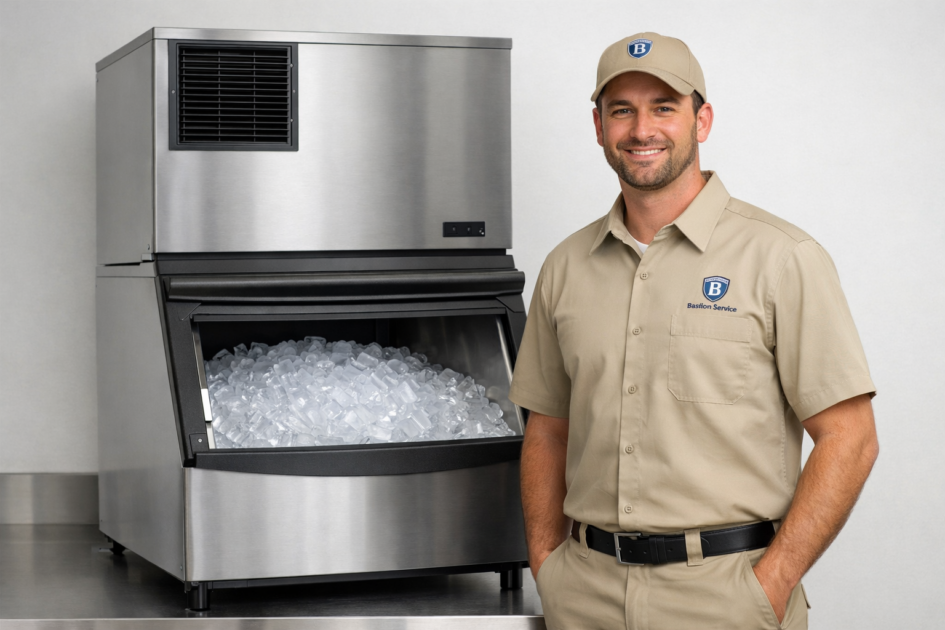
Ice machine problems can disrupt service quickly, especially when production drops during busy hours or water issues create cleanup and safety concerns. For businesses in Santa Monica, the next step is usually not guesswork but an on-site evaluation that identifies whether the trouble is coming from water supply, drainage, scale buildup, controls, refrigeration performance, or the harvest cycle. Bastion Service works with Hoshizaki equipment issues that affect uptime, output, and day-to-day operations, with repair scheduling based on the actual symptom pattern and the urgency of the breakdown.
For specific equipment paths in Santa Monica, review Hoshizaki Refrigerator Repair in Santa Monica, Hoshizaki Freezer Repair in Santa Monica, and Hoshizaki Ice Machine Repair in Santa Monica.
Restaurants, bars, cafés, hotels, offices, and other businesses in Santa Monica often notice early warning signs before a full failure. Ice may come out smaller than normal, production may slow down across the day, the unit may stop and restart unpredictably, or water may begin collecting around the machine. Those symptoms usually point to a specific fault path, and early repair service can help limit waste, reduce downtime, and prevent a minor issue from turning into a larger interruption.
Common Hoshizaki Ice Machine Symptoms That Point to Repair Needs
Low output is one of the most common reasons businesses schedule service. A machine that still runs but no longer keeps up with demand may be dealing with restricted water flow, mineral buildup, inlet problems, temperature-related performance loss, sensor issues, or a harvest problem that prevents full batch completion. The important part is identifying why production has changed, because the repair path depends on the cause rather than the symptom alone.
Ice quality changes are also important. If the machine is making cloudy ice, thin cubes, uneven shapes, soft batches, or partial sheets, the problem may involve water distribution, freeze consistency, scale, or controls that are no longer reading operating conditions correctly. Poor ice quality often shows up before complete failure, so service at this stage can be more manageable than waiting for a shutdown.
Why Ice Production Falls Off
Restricted Water Flow
When water is not entering or moving through the machine correctly, output usually drops first. Slow fills, inconsistent water delivery, clogged pathways, valve trouble, or mineral restriction can all reduce the amount of ice a Hoshizaki unit produces. Businesses may notice longer cycle times, smaller batches, or a machine that appears to be running normally while still failing to meet demand.
Harvest Cycle Problems
If the machine freezes but does not release ice properly, the issue may be tied to harvest timing, sensors, controls, or related components. Incomplete harvest can lead to partial production, repeated cycling, or shutdowns that seem random from the operator side. This is one of the more important issues to diagnose promptly because repeated failed harvest attempts can place extra stress on the system.
Refrigeration or Temperature Performance Issues
Some low-production complaints are not water related at all. If freezing conditions are not being reached or maintained correctly, the machine may produce weak batches, take too long to cycle, or stop making usable ice altogether. In these cases, a proper diagnosis helps separate airflow, temperature, and sealed-system concerns from simpler water-side faults.
Leaks, Drain Problems, and Standing Water
Water around the machine should be treated as a service issue, not a routine inconvenience. Leaks can come from loose connections, cracked lines, drainage restrictions, overflow conditions, internal component faults, or operating problems that send water where it does not belong. In a business environment, even a small leak can create slip hazards, interrupt cleaning routines, and affect nearby equipment.
Drain-related problems can also interfere with normal ice production. If water backs up, fails to clear properly, or overflows during operation, the machine may begin cycling abnormally or shut itself down. Drain issues often overlap with sanitation concerns, so it helps to have the unit checked before the problem spreads into repeated stoppages or poor ice quality.
Scale Buildup and Gradual Performance Loss
Mineral accumulation is a frequent cause of declining performance in ice machine equipment. Scale can narrow water paths, affect freeze consistency, interfere with harvest, and reduce total output over time. Many businesses first notice this as a gradual slowdown rather than an obvious breakdown, which is why the issue is often allowed to continue longer than it should.
Heavy buildup can also make other symptoms harder to interpret. A machine may appear to have a control problem, water-flow issue, or harvest fault when scale is contributing to all three. When cleaning no longer restores normal operation, repair service can determine whether the unit needs component replacement, correction of restricted pathways, or additional work to restore stable performance.
Shutdowns, Error Conditions, and Intermittent Operation
A Hoshizaki ice machine that stops unexpectedly or runs only part of the time should be evaluated before it reaches a complete failure. Intermittent operation may point to sensor problems, float issues, electrical faults, overload conditions, board failures, or protective shutdowns triggered by another system problem. These symptoms are especially disruptive because the machine may seem recovered for a period and then fail again under normal demand.
If the unit is still producing some ice, it can be tempting to keep using it without service. The risk is that the underlying fault may worsen at the point of highest demand, leaving the business with less control over timing. Scheduling repair while the machine is still partially operational often gives operators a better chance to plan around staffing, volume, and backup supply.
When Ice Quality Signals a Larger Problem
Not all service calls begin with a full shutdown. Sometimes the first sign is ice that looks wrong, melts too quickly, clumps, or arrives in incomplete batches. These changes can indicate water issues, scaling, freeze inconsistencies, or controls that are no longer managing cycles correctly. Even when the machine is technically still making ice, quality problems can affect beverage service, storage, and customer experience.
Operators should also pay attention to odor concerns, visible residue, or recurring sanitation-related complaints that return shortly after routine cleaning. Those patterns can suggest that the issue is not just surface maintenance, but a deeper operating problem that needs repair attention.
Signs Continued Use May Increase Repair Costs
Some symptoms justify faster action because ongoing operation can add wear or lead to more expensive failures. These include persistent leaking, repeated shutdowns, obvious scale affecting water movement, loud or unusual sounds, incomplete harvest, or a machine that is running longer than usual just to produce limited output. In those situations, continued use may place extra strain on pumps, valves, controls, and other key components.
- Production drops that continue getting worse week by week
- Water pooling near or under the unit
- Overflow or poor drainage during normal operation
- Frequent resets or unexplained stops
- Irregular, thin, soft, or cloudy ice
- Heavy visible scale or repeated performance loss after cleaning
If any of these are happening, a service visit can help determine whether the machine can stay in operation temporarily or whether taking it offline is the safer business decision.
Repair or Replacement Decision Factors
Many Hoshizaki ice machine problems are repairable, especially when the issue is isolated to controls, sensors, valves, pumps, water-path components, or correctable operating faults. Replacement becomes a more serious consideration when the machine has recurring major failures, extensive scale-related damage, a long downtime history, or repair needs that no longer make sense for the condition of the unit.
The best choice depends on more than age alone. Businesses in Santa Monica usually need to weigh current symptoms, reliability history, urgency of ice demand, and the likelihood that repair will return the machine to stable service. A diagnosis helps turn that into a practical decision rather than an assumption based only on the latest breakdown.
Scheduling Service With Less Disruption
Ice machine repair is often as much about operational planning as the faulty part itself. A scheduled visit can help clarify whether the problem is limited to one system, whether follow-up work is likely, and whether the machine should remain in use until repairs are completed. That matters for businesses trying to protect beverage service, guest expectations, and routine kitchen workflow.
If your Hoshizaki ice machine is leaking, producing less ice, showing harvest problems, shutting down, or making poor-quality batches in Santa Monica, scheduling service promptly can help contain downtime and prevent a broader interruption. A focused repair visit gives you a practical next step, a clearer picture of the fault, and a better basis for deciding how to keep operations moving.


