
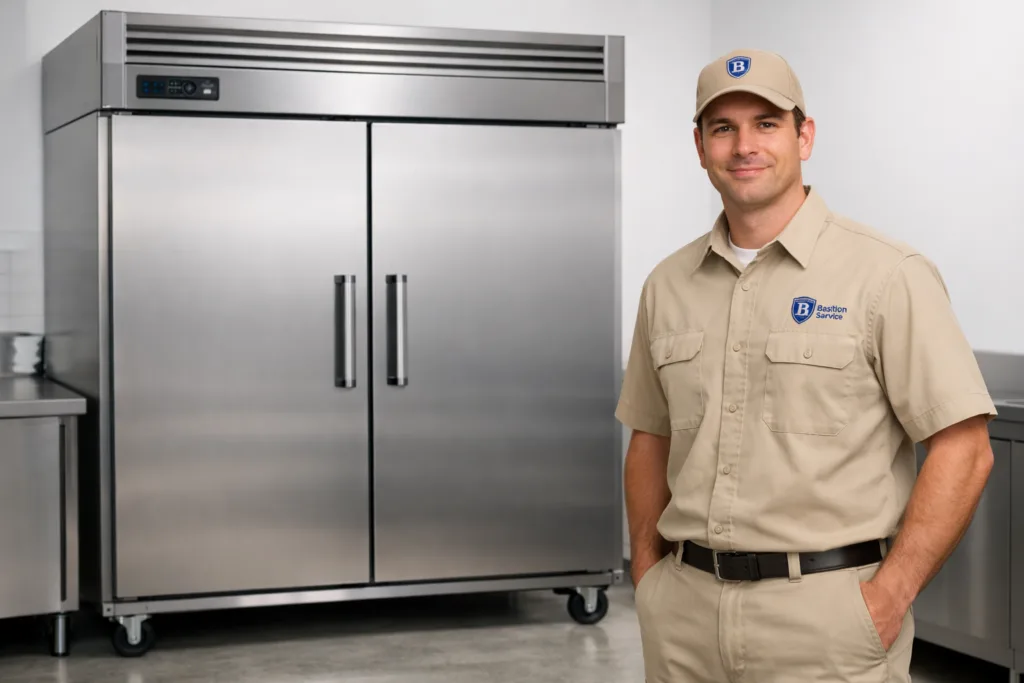




When Turbo Air refrigeration equipment begins missing temperature targets or showing unstable operation in Santa Monica, the most important next step is timely service that identifies the actual fault before inventory loss, rushed parts ordering, or avoidable downtime gets worse. Bastion Service works with businesses that need symptom-based diagnosis, repair scheduling that fits operations, and clear direction on whether a refrigerator or freezer can stay in use while service is underway.
For specific equipment paths in Santa Monica, review Turbo Air Refrigerator Repair in Santa Monica, Turbo Air Freezer Repair in Santa Monica, and Commercial Appliance Repair in Santa Monica.
Turbo Air refrigeration repair for businesses in Santa Monica
Turbo Air refrigerators and freezers are often expected to hold steady temperatures through busy prep cycles, deliveries, repeated door openings, and long operating hours. When performance changes, the problem may start small but quickly affect storage reliability, food flow, staff routines, and daily opening or closing procedures. A warm cabinet, slow freezer recovery, repeated frost buildup, or water on the floor usually points to a repair issue that needs on-site testing rather than guesswork.
Good service is not only about fixing a failed part. It also involves checking whether airflow is restricted, whether controls are reading correctly, whether fans are moving air as they should, and whether the unit is showing signs of a larger cooling-system problem. That helps business owners and managers decide whether the equipment can remain in limited use, whether product should be moved, and how urgently repair should be scheduled.
Temperature problems that usually need prompt diagnosis
Cabinet running warm
A Turbo Air refrigerator or freezer that is running warm can be affected by several different faults, including dirty coils, fan motor problems, sensor or control failure, airflow blockage, door seal leakage, or refrigerant-related issues. The reason fast diagnosis matters is that the same warm-cabinet symptom can come from either a manageable component repair or a more serious cooling failure.
In day-to-day operations, this often shows up as product temperatures drifting, staff adjusting controls more often, or one part of the cabinet feeling warmer than another. If the unit is losing temperature more often during normal use, it makes sense to schedule service before the equipment reaches a full no-cool condition.
Refrigerator section freezing product
Overcooling is also a repair issue. If a refrigerator is freezing product, the equipment may have a control problem, a sensor issue, or an airflow imbalance that is preventing even temperature management inside the cabinet. While some operators assume colder means better performance, freezing in the wrong section usually indicates unstable regulation rather than healthy operation.
This type of symptom can lead to waste, inconsistent holding conditions, and unnecessary strain from longer run times. A service visit can help determine whether the fault is isolated to controls or tied to a broader circulation problem within the unit.
Freezer not recovering after door openings
When a freezer takes too long to return to set temperature after normal access, the problem may involve restricted airflow, weak fan performance, frost accumulation, dirty heat-transfer surfaces, or declining cooling capacity. Slow recovery is one of the more useful warning signs because it often appears before a full breakdown.
For businesses in Santa Monica, this symptom is especially important when staff notice that product takes longer to firm back up or that the unit runs for extended periods without catching up. Continued operation under those conditions can increase wear and make the eventual repair more expensive.
Airflow and circulation symptoms
Weak airflow inside the cabinet
Poor circulation can make a Turbo Air refrigerator or freezer appear to have a major cooling problem even when the root issue is airflow-related. Frost on the evaporator area, blocked internal passages, failing fan motors, or coil contamination can all reduce air movement and create warm spots inside the cabinet.
Typical signs include uneven temperatures, products near one shelf holding differently from those in another area, and longer recovery after the doors have been opened. When airflow is compromised, the entire system has to work harder, so early repair can help prevent secondary damage.
Fan noise, scraping, or intermittent fan operation
Unusual fan sounds should not be ignored. Rattling, scraping, buzzing, or intermittent fan operation may point to motor wear, blade obstruction, loose mounting, or ice interfering with movement. Even when cooling has not fully failed, reduced fan performance can quickly create temperature inconsistency and frost-related complaints.
Fan issues are also a good example of why symptom-based testing matters. What sounds like a simple noise complaint may actually connect to a defrost fault, control issue, or moisture problem that is affecting multiple components.
Frost buildup and defrost-related issues
Heavy frost in a freezer
Repeated frost accumulation in a Turbo Air freezer often indicates a problem with defrost operation, door sealing, airflow, or moisture entering the cabinet. As frost thickens, air movement drops, temperatures start rising, and fan components may begin hitting ice or slowing down.
Businesses often notice this as a unit that seems to cool unevenly, needs ice cleared more often, or starts showing both frost and warm-temperature symptoms at the same time. That combination usually means the issue is no longer cosmetic and should be inspected before freezer performance drops further.
Ice near doors or excess condensation
Moisture around the door area, sweating surfaces, or ice forming along gaskets can point to alignment problems, damaged seals, warm-air infiltration, or unstable cabinet temperatures. These conditions may seem minor at first, but they often signal that the unit is working harder than it should and still not maintaining ideal conditions.
Repair becomes more important when door-area moisture is paired with warmer product temperatures, longer run cycles, or frost appearing deeper inside the cabinet. In those cases, the visible condensation is only part of the larger problem.
Leaks, drainage faults, and water around the unit
Water near Turbo Air refrigeration equipment can come from clogged drains, defrost drainage issues, excess condensation, or ice melt caused by declining cooling performance. For a business, a leak is not just a maintenance annoyance. It can create cleanup demands, slip risks, sanitation concerns, and a clue that the unit is no longer operating normally.
If water on the floor appears together with warm temperatures, frost buildup, or unusual cycling, the problem should be treated as a refrigeration repair issue rather than only a drain problem. On-site service can determine whether the fix is limited to drainage or tied to a broader failure inside the system.
Signs the equipment should not be left unchecked
Some operating patterns suggest a refrigerator or freezer should be evaluated sooner rather than later:
- Cabinet temperatures keep drifting out of range
- The unit runs longer than normal or seems unable to cycle down
- Frost keeps returning after being cleared
- Fans become noisy, intermittent, or stop moving air properly
- Water, condensation, or ice appears repeatedly around the unit
- Staff have to move product away from warm spots or freezing spots
- Recovery after door openings becomes noticeably slower
These symptoms usually mean the equipment is already providing useful clues about the fault. Waiting for a complete shutdown can increase downtime and narrow the options for protecting stored product.
Repair decisions depend on the symptom pattern
Not every Turbo Air problem points to the same repair path. Some issues involve fans, sensors, controls, drains, gaskets, or airflow restrictions. Others raise concern about compressor performance or the cooling system itself. The practical value of a service visit is understanding which type of failure is present and what that means for timing, parts, and equipment reliability going forward.
That information helps businesses answer the questions that matter most during a disruption: whether the unit can keep operating temporarily, whether inventory should be relocated, whether the repair is likely to stabilize the equipment, and whether the cost and scope of work still make sense for the unit’s role in daily operations.
Scheduling Turbo Air refrigeration service in Santa Monica
If a Turbo Air refrigerator or freezer is running warm, building frost, leaking, showing airflow problems, or struggling to recover, scheduling service early is usually the best way to limit larger interruptions. For businesses in Santa Monica, the goal is not only to correct the current symptom but to confirm the cause, plan the repair responsibly, and decide what the equipment should be doing until service is completed.
When refrigeration performance becomes inconsistent, a scheduled diagnosis provides the clearest path forward: identify the fault, protect product where possible, and move quickly on the repair before downtime spreads into the rest of the operation.


