
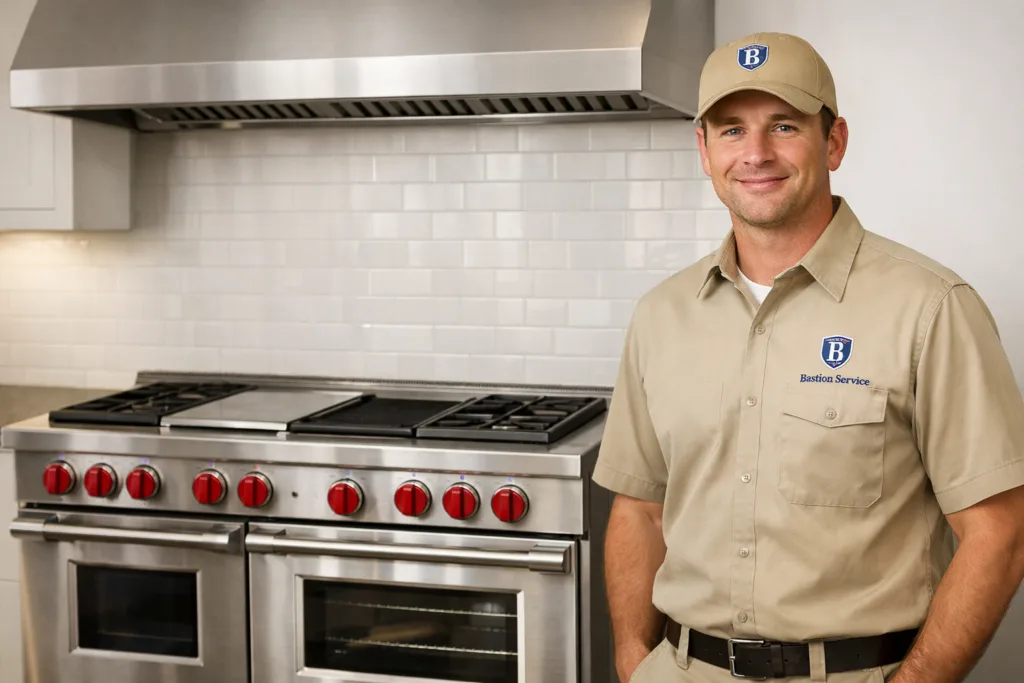




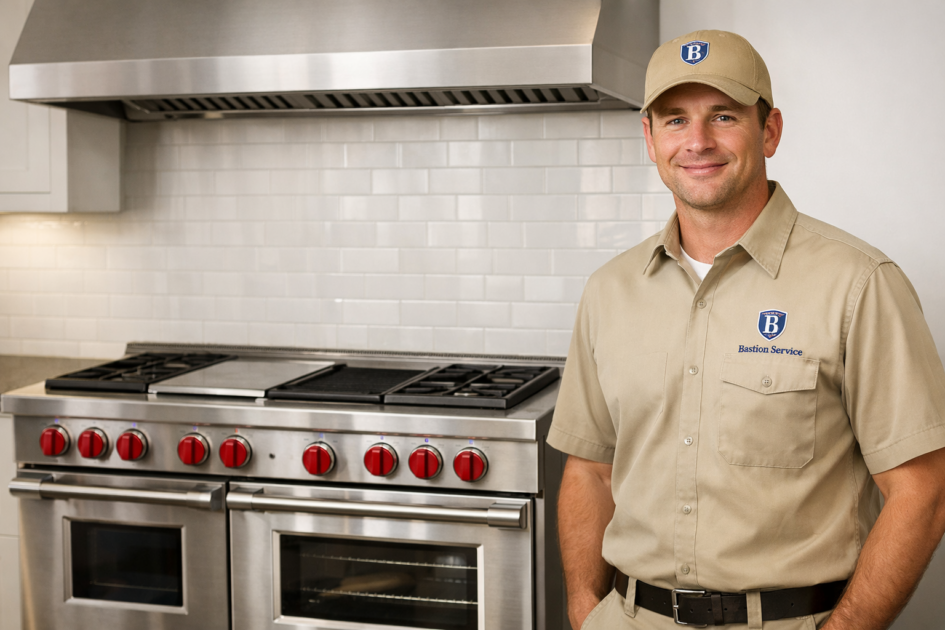
When Wolf cooking equipment starts missing temperatures, delaying ignition, or dropping out during service, the right response is to connect the symptom to a repair decision quickly. For businesses in Santa Monica, that usually means determining whether the unit can finish the shift, whether it should be taken offline, and how service should be scheduled to limit downtime. Bastion Service works with Wolf oven, range, and fryer problems that affect production flow, consistency, and day-to-day kitchen reliability.
For specific equipment paths in Santa Monica, review Wolf Oven Repair in Santa Monica, Wolf Range Repair in Santa Monica, and Wolf Fryer Repair in Santa Monica.
What Wolf cooking equipment problems typically need repair?
Most service calls begin with a pattern rather than a total failure. Equipment may still run, but not well enough to support normal volume. Common warning signs include:
- Slow preheat or poor heat recovery
- Burners that click but do not light normally
- Ovens that bake unevenly or miss set temperature
- Ranges with weak, unstable, or inconsistent flame
- Fryers that drift above or below target heat
- Controls that stop responding, reset unexpectedly, or shut the unit down
- Performance changes that create longer ticket times or product inconsistency
These issues can be tied to ignition components, sensors, thermostatic controls, burner assemblies, heating systems, safety limits, wiring faults, or electronic controls. The visible symptom matters, but the repair plan depends on what is actually causing it.
Oven symptoms that affect output and consistency
Slow preheat, heat loss, and uneven cooking
Wolf ovens often show trouble through longer warm-up times, poor temperature hold, hot and cold spots, or batches that no longer finish evenly. In a working kitchen, those problems usually show up as slower production, inconsistent quality, and more time spent adjusting cook cycles.
Possible causes can include failed heating components, faulty temperature sensing, control faults, door seal wear, or airflow-related problems. Similar oven complaints can come from very different failures, which is why diagnosis matters before parts are ordered or production planning changes around the unit.
When an oven should not stay in service
If the oven overheats, shuts off mid-cycle, trips safety functions, or cannot hold usable temperature, continued use can create more waste and more disruption than taking it offline. A unit that is technically running but no longer predictable can be more damaging to service flow than one that is completely down, especially when multiple batches are affected before the problem is confirmed.
Range problems that slow line work
Ignition faults and burner performance issues
Wolf range repair is commonly needed when burners fail to ignite, ignite late, click repeatedly, burn unevenly, or lose flame strength during use. In practical terms, that can slow prep, reduce station capacity, and force staff to work around an unreliable cooking surface.
These symptoms may point to igniters, switches, burner assemblies, gas delivery problems, valve issues, or control-related faults. Because a range can appear partly functional while still causing major slowdowns, it helps to assess the problem early instead of relying on repeated relighting or workarounds during service.
Control issues and gas-related warning signs
If controls are not responding correctly, burners are behaving unpredictably, or ignition timing changes suddenly, the unit should be evaluated before regular use continues. If there is a strong or persistent gas odor, stop using the equipment and address the gas safety concern first. After conditions are safe, repair service can determine whether the issue involves ignition, valves, burners, or related control components.
Fryer issues that create delays and quality problems
Slow recovery and temperature drift
Wolf fryers often need service when they recover too slowly between loads, overshoot set temperature, fail to maintain stable heat, or shut down under demand. For businesses in Santa Monica, fryer trouble often becomes obvious during busy periods, when even small heating errors turn into longer wait times and inconsistent product quality.
Likely causes can include thermostat problems, sensor faults, burner or heating-system issues, high-limit trips, or control failures. Because fryer performance affects both speed and consistency, even a modest drift in temperature can create larger operating problems over the course of a shift.
When fryer behavior should be checked immediately
If the fryer overheats, drops temperature sharply, shuts off during use, or shows unstable heat from load to load, it should be assessed before returning to normal production. A fryer that runs inaccurately can cause more disruption than one that is obviously down because the problem may continue unnoticed until output, oil use, or product quality is already affected.
Why symptom-based diagnosis matters
One of the biggest repair mistakes is assuming the first visible symptom identifies the failed part. An oven that will not hold temperature may have a sensor issue, a heating fault, a control problem, or a sealing issue. A range with ignition trouble may involve the igniter, switch, burner components, or gas-related controls. A fryer with slow recovery may be dealing with a heating-system problem, an inaccurate sensing issue, or a safety-related shutdown condition.
That is why service should focus on the equipment behavior as a whole rather than a single complaint. For business operators, the goal is not just to get the unit running again, but to understand whether the repair is isolated, whether the failure may repeat, and how the timing of service will affect kitchen operations.
Repair planning for businesses in Santa Monica
Equipment repair decisions usually involve more than replacing one failed component. Operators also need to weigh downtime, shift coverage, production demands, symptom history, and whether the rest of the unit is still in sound condition. A kitchen may be able to work around one offline appliance for a short period, but repeated shutdowns, unstable temperatures, or unreliable burners can quickly affect staffing, ticket times, and output.
Repair is often the right move when the fault is specific and the equipment remains otherwise solid. Broader replacement discussions become more relevant when the same problems keep returning, multiple systems are wearing out together, or the interruption from repeat service has become harder to manage than a planned equipment change.
When to schedule service instead of waiting
Early service usually reduces larger disruptions. If Wolf cooking equipment is showing burner instability, delayed ignition, weak recovery, poor temperature control, unexplained shutdowns, or inconsistent operation from shift to shift, waiting tends to increase the chance of a full stoppage at the worst time. Scheduling repair when symptoms first start affecting reliability gives businesses in Santa Monica a better chance to manage downtime, protect output, and decide on the next step before the problem spreads across service.
If your Wolf oven, range, or fryer is affecting daily production, the most useful next step is to arrange service based on the exact symptom pattern, how the equipment is behaving under load, and how urgently the downtime is impacting the kitchen.


