
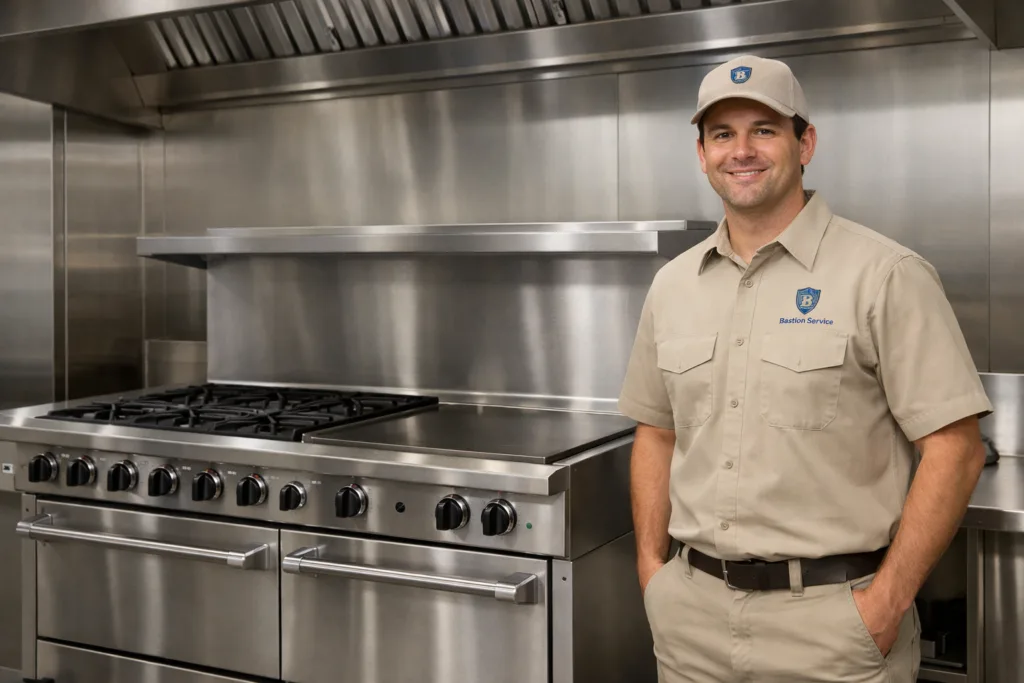




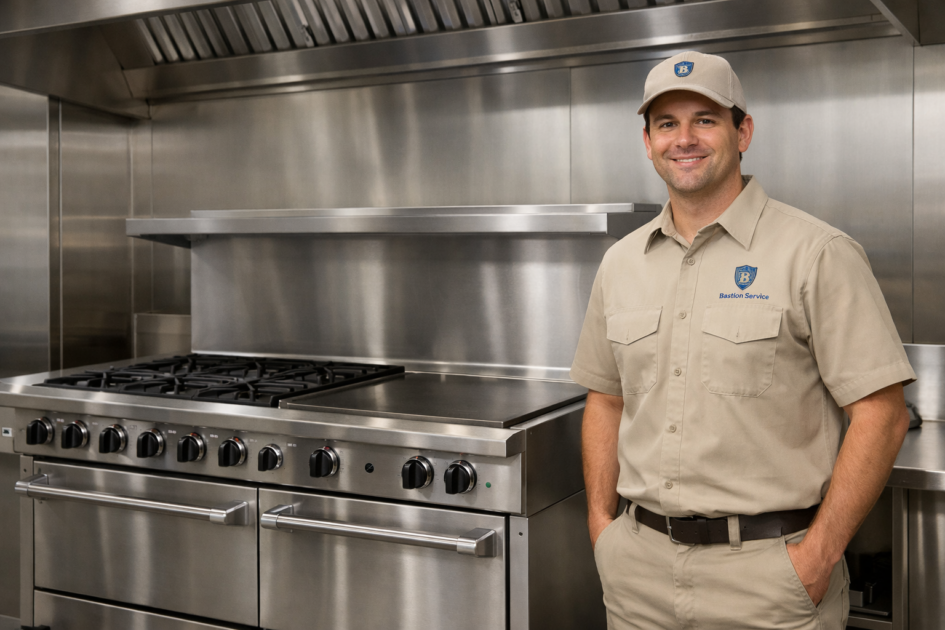
When Southbend cooking equipment starts affecting output, consistency, or line timing, service decisions usually need to happen quickly. A unit that still turns on can still be costing a kitchen time, product quality, and staff efficiency if heat is unstable, burners are unreliable, or recovery is too slow during busy periods. For businesses in Santa Monica, the most useful next step is scheduling a symptom-based diagnosis that identifies what is failing, whether the unit should stay in use, and what repair path makes the most sense for daily operations.
For specific equipment paths in Santa Monica, review Southbend Oven Repair in Santa Monica, Southbend Range Repair in Santa Monica, and Commercial Appliance Repair in Santa Monica.
Bastion Service helps businesses in Santa Monica evaluate Southbend equipment problems with attention to downtime, scheduling, and production impact. That matters when ovens and ranges are central to prep, line flow, and service speed, and when a seemingly minor issue may actually involve ignition components, controls, gas delivery, burner assemblies, or temperature regulation.
What Southbend cooking equipment problems do you troubleshoot?
Southbend cooking equipment can develop problems that show up gradually or all at once. In many kitchens, the first sign is not total failure but inconsistent performance: longer preheat times, uneven heating, burners that do not respond correctly, or a unit that works during slow periods but struggles once service picks up.
Common symptoms that often justify a repair visit include:
- Ovens not reaching set temperature
- Temperature drifting too high or too low during use
- Ranges with burners that will not ignite or stay lit
- Delayed ignition or repeated clicking before lighting
- Weak flame, uneven burner output, or poor heat transfer
- Slow preheat and poor heat recovery between loads
- Unexpected shutdowns during cooking
- Controls that respond inconsistently or do not hold settings
- Uneven cooking results that force staff to rotate product
- Performance drops that create ticket delays and remakes
These issues can appear in different combinations, which is why symptom overlap matters. What looks like a burner problem may involve gas flow, ignition sequence, safety components, temperature controls, or internal electrical faults. A repair appointment is most helpful when it focuses on how the equipment is actually behaving in service, not just on the most obvious surface symptom.
Oven problems that interfere with production
Southbend oven issues often become visible through inconsistent cooking results before the unit completely stops heating. A kitchen may notice that one batch finishes properly while the next runs long, or that product color and doneness vary even with the same settings. Those patterns often point to temperature regulation faults, heating problems, sensor issues, ignition trouble, or uneven heat distribution inside the cavity.
Warning signs that an oven needs attention include:
- Longer-than-normal preheat
- Hot spots or cold spots
- Failure to maintain cooking temperature
- Overheating that risks product loss
- Intermittent heating during a shift
- Shutdowns that interrupt batches mid-cycle
In day-to-day use, oven problems can force staff to compensate in ways that hide the real fault. They may add extra cook time, rotate pans more often, or avoid certain production loads entirely. Those workarounds can keep service moving temporarily, but they also make the unit less predictable and can increase the chance of a more disruptive breakdown.
Range issues that slow the line
On Southbend ranges, burner performance has a direct effect on timing, coordination, and usable capacity. If a burner lights slowly, loses flame, runs weak, or cycles unpredictably, the problem can spread beyond one station. Staff may start shifting pans to other burners, crowding available space, or changing cooking order just to keep tickets moving.
Range service is commonly needed when operators report:
- Burners that do not ignite on the first try
- Flame that is too low, uneven, or unstable
- Burners that go out during use
- Control issues that make heat hard to regulate
- Top performance that drops under heavier use
- Repeated relighting or restarting during service
These are not just convenience issues. When range output becomes inconsistent, kitchens lose speed and repeatability. Repair becomes more urgent when staff no longer trust a burner to respond normally, especially during peak periods when line delays affect the rest of the operation.
Heating, ignition, and temperature control failures
Unstable heat
If the equipment runs too hot, too cool, or fluctuates through the same cooking cycle, the fault may involve controls, sensors, thermostatic regulation, ignition behavior, burner function, or related internal components. Unstable heat often causes product inconsistency first and a full failure later.
Ignition problems
Ignition faults can show up as delayed startup, repeated attempts to light, burners that click without igniting, or intermittent lighting after the unit has already been in use. These symptoms can affect both safety and reliability, and they usually should not be ignored if they are happening repeatedly.
Control-related symptoms
When settings do not match actual performance, or when operators cannot rely on the unit to hold temperature or respond normally, a control issue may be involved. Even if the equipment still produces heat, poor control behavior can make normal operation too inconsistent for a busy kitchen.
Slow recovery and under-load performance problems
Some Southbend units appear usable when demand is light but break down operationally once volume increases. This is common with equipment that preheats eventually but cannot recover heat fast enough between loads, or ranges that perform acceptably with limited use but weaken once multiple burners are needed at the same time.
Symptoms of under-load failure often include:
- Temperature dropping too far after doors are opened
- Burners losing strength during sustained cooking
- Recovery times that grow longer through the shift
- Output slowing noticeably during busy service
- Inconsistent performance that only appears under pressure
This matters because many kitchens judge equipment by whether it turns on, not whether it keeps up. If the unit cannot recover or hold output when the line is active, it is already affecting labor flow, product timing, and service reliability.
When continued use can make the problem worse
Not every issue requires an immediate shutdown, but some symptom patterns should move repair higher on the schedule. If a Southbend oven or range is overheating, failing to maintain flame, shutting off without warning, or behaving unpredictably at the controls, continued use can increase wear on related parts and make the eventual outage more disruptive.
A stronger repair signal is when staff are building routines around the fault. Examples include avoiding certain burners, adding extra preheat time to every shift, restarting the unit repeatedly, or adjusting recipes and cook times to compensate for weak or uneven heat. Once those habits start, the equipment is no longer operating normally enough to leave the issue unresolved.
How repair decisions are usually evaluated
A service-oriented diagnosis should do more than confirm that something is wrong. It should help determine whether the issue is isolated to a repairable component, whether related wear is likely, whether the unit can remain in limited use, and how quickly the repair should be scheduled based on business impact.
Repair is often the right next step when the equipment is otherwise in solid condition and the fault is centered in areas such as:
- Ignition components
- Burner-related parts
- Temperature controls
- Sensors and regulation systems
- Gas-flow-related operation problems
- Electrical or control-system faults affecting performance
Replacement becomes a more serious discussion when breakdowns are recurring, prior repairs have not restored stable performance, or the unit’s overall condition no longer supports dependable daily use. For most businesses, that decision is easier after the actual cause and severity of the current symptom pattern are documented.
Scheduling service before downtime expands
Waiting for total failure often creates the worst timing. Equipment problems that begin as slower heat-up, occasional ignition trouble, or inconsistent burner output can become full production interruptions during a rush. Scheduling repair earlier gives operators more options for planning around the work, protecting throughput, and reducing the chance of a same-day shutdown.
If your Southbend oven or range in Santa Monica is causing delays, inconsistent cooking, burner trouble, or unreliable temperature control, the next practical step is to arrange service and review the repair options based on urgency and equipment condition. Early action can help limit downtime, prevent a smaller fault from spreading, and restore more predictable kitchen performance.


