




Equipment problems on a Vulcan oven, range, or fryer rarely stay isolated for long. A burner issue can slow prep, a temperature-control fault can affect product consistency, and an intermittent shutdown can force staff to reorganize the line in the middle of service. For businesses in Santa Monica, the most useful next step is service that identifies the actual failure, explains the repair scope, and helps schedule the work around production demands.
For specific equipment paths in Santa Monica, review Vulcan Oven Repair in Santa Monica, Vulcan Range Repair in Santa Monica, and Vulcan Fryer Repair in Santa Monica.
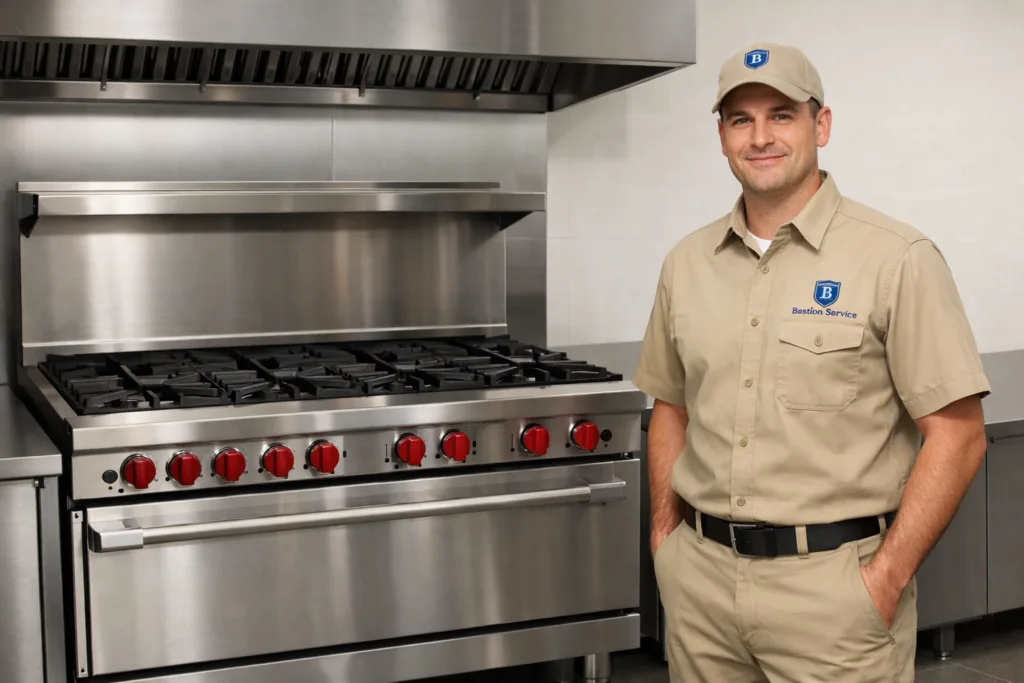
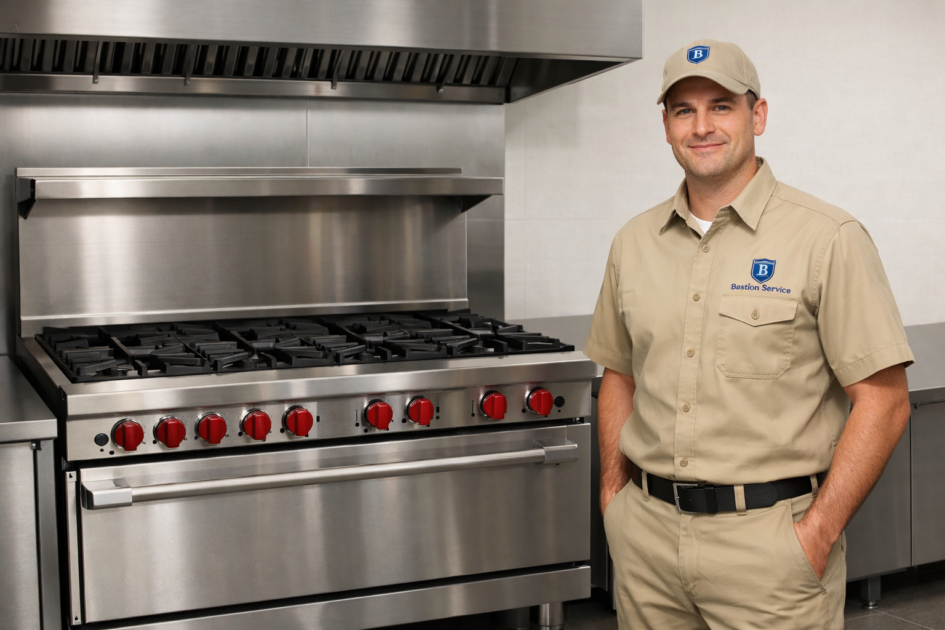
Bastion Service works with Santa Monica businesses that rely on Vulcan cooking equipment every day. When ovens, ranges, or fryers start missing temperature, recovering slowly, failing to ignite, or stopping unexpectedly, the goal is to pinpoint the cause and move toward repair before downtime spreads to other stations.
Common Vulcan cooking equipment problems that lead to repair
Many service calls begin with a symptom that seems simple at first: slow heat-up, uneven cooking, weak burner output, or controls that no longer respond normally. In practice, those symptoms can come from different underlying faults, including ignition problems, temperature-sensing issues, burner wear, control failures, safety shutoff concerns, or electrical problems.
That is why symptom-based diagnosis matters. Two units can show the same performance issue while needing very different repairs. A fryer that cannot hold oil temperature may have a control problem, while an oven with similar inconsistency may point to a sensor or heating-system fault. Sorting that out early helps businesses decide whether the equipment can stay in limited use, whether parts are likely needed, and how urgently the repair should be scheduled.
Fryer symptoms that affect speed and consistency
Oil temperature will not stabilize
When a fryer heats too slowly, overshoots, or drops below the set temperature during normal use, food quality and ticket timing usually suffer first. These problems often trace back to thermostatic controls, temperature probes, burners, ignition components, or related control-system failures. If the fryer is no longer producing consistent results, continued use can also increase oil waste and make output less predictable from one batch to the next.
Slow recovery during active service
Some fryers appear normal during startup but cannot keep pace once demand increases. Slow recovery often shows up when basket cycles become more frequent and the unit struggles to return to the target temperature. That can indicate burner weakness, airflow or fuel-delivery issues, or controls that are not responding correctly under load. In a busy kitchen, this kind of lag can reduce throughput even before the fryer stops working completely.
Ignition failure or mid-shift shutdowns
If a fryer fails to light consistently, locks out, or shuts down during service, it should be inspected promptly. Intermittent problems are especially disruptive because they create uncertainty for the staff and can become full non-operation without much warning. Repair in these cases is about more than restoring heat; it is also about confirming stable operation so the same shutdown does not happen again on a later shift.
Oven problems that interfere with output
Uneven heating and drifting temperatures
A Vulcan oven that cooks unevenly or runs hotter or colder than the set point can affect timing, batch quality, and menu consistency. Depending on the model, the issue may involve sensors, thermostatic controls, ignition components, heating elements, fans, or electrical parts. When staff are compensating by rotating pans, extending cook times, or avoiding certain recipes, the oven is already creating an operational problem rather than just a minor inconvenience.
No heat, weak heat, or short cycling
An oven that will not heat, loses heat too quickly, or cycles off unexpectedly can stall production fast. Sometimes the failure is limited to one component, such as ignition or a control board. In other cases, several worn parts may be contributing to repeated outages. A service visit helps determine whether the repair is straightforward or whether the equipment is showing a broader decline in reliability.
Range issues that disrupt line work
Burners not lighting properly
Delayed ignition, burners that will not stay lit, and weak flame output can slow every station that depends on the range. These symptoms may point to ignition parts, burner assemblies, gas-flow components, controls, or wear affecting stable combustion. Even when the range still functions part of the time, inconsistent burner performance can make the entire cooking line harder to manage.
Poor heat control across the top
Hot spots, low output, or controls that no longer respond predictably often force staff to shift pans, change timing, or move production to another station. That usually means the equipment is already costing time and consistency. In many cases, targeted repair can restore one of the most important pieces of kitchen equipment before the problem develops into wider disruption.
Signs the equipment should be serviced sooner rather than later
Some performance problems can wait for scheduled downtime, but others tend to worsen if they are ignored. Service should move higher on the priority list when the equipment is showing:
- repeated ignition failures
- unexpected shutdowns
- temperature drift or poor temperature control
- slow recovery during active use
- burners that are weak, uneven, or unreliable
- controls that stop responding or respond inconsistently
- staff workarounds such as frequent resetting or changing procedures to compensate
These are often signs that the problem is affecting more than one shift and may be increasing stress on other components. Scheduling repair earlier can help prevent a larger outage at a worse time.
Repair decisions for older or repeatedly failing equipment
Not every service call ends with the same recommendation. Some Vulcan units need a focused repair to correct a burner problem, control fault, or temperature issue and then return to normal operation. Others have a pattern of recurring failures, slower performance, and increasing downtime that makes each new breakdown more disruptive than the last.
In those cases, diagnosis helps businesses weigh the value of repairing the current fault against the broader reliability of the equipment. The key question is not only whether the unit can be fixed, but whether the repair supports daily kitchen output with reasonable confidence.
What a service visit should help clarify
A productive appointment should answer the practical questions that matter to operators: what failed, whether the equipment should remain in use, what parts or labor may be involved, and how the repair can be scheduled with the least disruption to the kitchen. That matters even more when the affected oven, range, or fryer is tied directly to prep flow, ticket times, or limited station capacity.
If your Vulcan cooking equipment is showing heating problems, ignition trouble, temperature inconsistency, slow recovery, burner issues, or repeated shutdowns, scheduling service in Santa Monica is the clearest way to limit downtime and make a workable repair decision before the problem affects more of the operation.


