
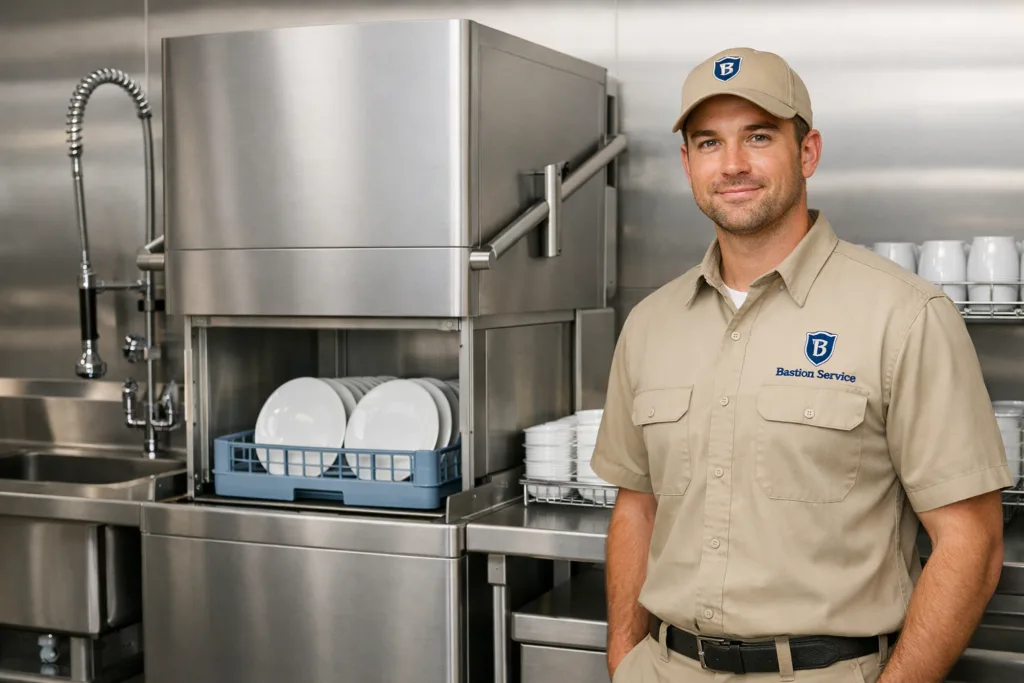




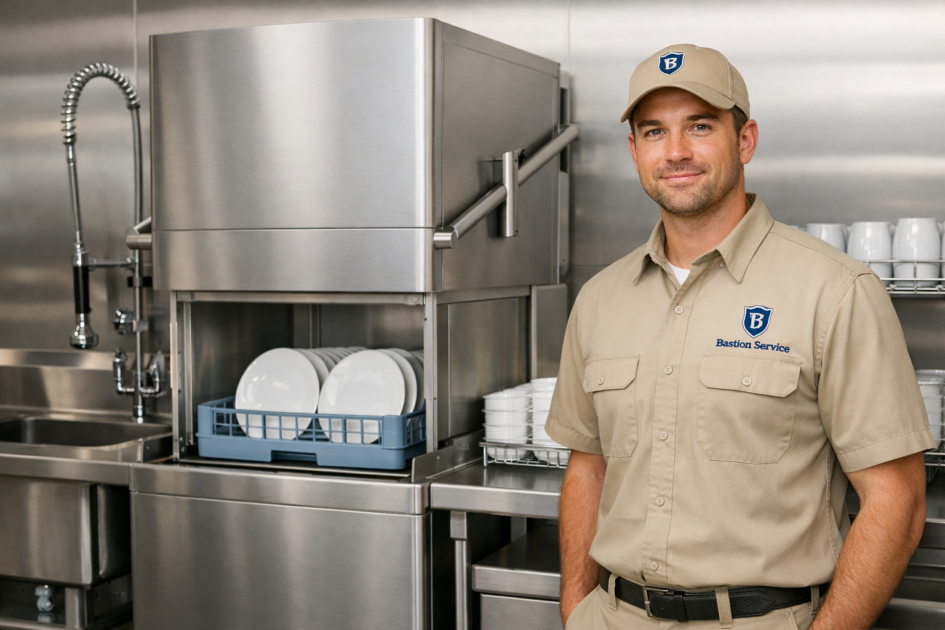
Dishwashing failures in a commercial setting can disrupt far more than cleanup. Once racks start backing up, staff time gets pulled away from service, clean ware availability drops, and the entire kitchen or dish area can lose rhythm. Because the same visible symptom can come from very different mechanical, electrical, or water-flow problems, the most efficient repair path starts with identifying where the cycle is actually breaking down.
Related commercial equipment paths in Santa Monica include Commercial Refrigerator Repair in Santa Monica, Commercial Freezer Repair in Santa Monica, and Hobart Dishwasher Repair in Santa Monica.
How commercial dishwasher problems affect daily operations
A commercial dishwasher is part of the production line. When it underperforms, the effects usually show up quickly: slower table turns, delayed prep support, extra hand washing, repeat wash cycles, and increased strain on staff. In restaurants, hospitality properties, institutional kitchens, breakroom environments, and other business settings in Santa Monica, even a modest warewashing problem can create bottlenecks across the day.
That is why symptom-based service matters. A machine that leaves dishes dirty may have a wash pressure problem, a rinse issue, scale buildup, heating trouble, or a chemical-delivery fault. A machine that stops mid-cycle may be dealing with a fill failure, door switch issue, drain restriction, sensor problem, or control interruption. Treating every issue like a simple part swap can lead to repeat downtime.
Common commercial dishwasher symptoms and what they may indicate
Poor wash results, film, spotting, or residue
If dishes, glassware, or utensils come out with residue, haze, or inconsistent results, the problem may involve clogged wash arms, blocked filters, weak pump output, low water level, mineral scale, rinse delivery issues, or inadequate temperature. In higher-volume operations, performance often declines gradually before staff realize the machine is no longer washing evenly from rack to rack.
When sanitizing performance depends on proper final rinse temperature, heat-related faults deserve prompt attention. A unit that is technically running but not achieving reliable wash quality can still create major operational and sanitation concerns.
Slow draining or standing water
Water remaining in the machine after a cycle often points to drain pump trouble, blocked screens, drain hose restrictions, drain valve issues, or debris buildup inside the system. Operators may also notice odors, dirty water recirculating, or cycles that seem to stall near the drain phase.
Drain issues should not be treated as minor. Continued use can increase internal contamination, strain pumps and motors, and raise the likelihood of overflow around the machine.
Leaks around or under the unit
Leaks may come from door gaskets, pump seals, cracked hoses, fill components, loose connections, overflow conditions, or drain failures. Some only appear during a specific stage of the cycle, which makes timing an important clue. A leak that shows up during fill may point to a different fault than one that appears only during wash or drain.
Even a small leak can create larger problems if water reaches flooring, nearby equipment, or electrical areas. In a commercial environment, that can quickly become both a safety issue and a facility maintenance issue.
Failure to fill, heat, rinse, or finish the cycle
When a dishwasher will not start properly, fails to fill, loses heat, or stops before completing a cycle, the cause may involve inlet valves, floats, door interlocks, heating components, relays, sensors, timers, or electronic controls. Intermittent shutdowns are especially disruptive because the machine may restart temporarily, only to fail again during busy hours.
Repeated resets by staff can sometimes make troubleshooting harder, especially when the underlying issue is electrical or control-related rather than a simple temporary interruption.
Noise, vibration, or recurring fault conditions
Grinding, rattling, humming, or unusual pump noise can indicate obstructions, worn moving parts, motor issues, cavitation, or loose internal assemblies. Repeated fault codes, nuisance breaker trips, or unexplained shutdowns are also warning signs that the machine is operating under stress.
These symptoms often appear before a larger failure. Addressing them early can help prevent more extensive damage to pumps, heaters, motors, or control components.
When service should be scheduled
It is usually time to schedule service when staff are rewashing items, cycle times are becoming unreliable, water is appearing around the machine, heat levels are inconsistent, or draining problems are affecting the next load. These are not just convenience issues. They usually signal a machine that is no longer supporting normal kitchen flow the way it should.
Prompt attention is especially important when the dishwasher is leaking steadily, tripping power, failing to sanitize properly, stopping mid-cycle, or leaving heavily soiled wares after a normal run. Those conditions tend to affect output, labor, and equipment condition at the same time.
Signs continued operation may cause more damage
Some dishwasher faults allow limited operation for a short time, but others create a strong risk of compounding damage. Continued use is usually a bad idea when the unit has a persistent leak, severe noise, a burning smell, a no-drain condition, or repeated electrical shutdowns. Running through those symptoms can push stress into other systems and expand the repair scope.
A practical rule for managers is simple: if the machine can no longer perform its core cleaning and sanitizing role consistently, or if using it appears to create risk to the unit or surrounding area, normal operation should stop until the fault is checked.
Repair versus replacement
Many commercial dishwasher problems are repairable, including issues involving pumps, valves, seals, drains, switches, sensors, heaters, and control components. Repair is often the right move when the machine is structurally sound, the failure is limited in scope, and the unit can return to steady performance after service.
Replacement becomes a more serious consideration when the dishwasher has chronic downtime, multiple failing systems, extensive corrosion, poor parts availability, or ongoing performance issues that continue even after recent repairs. The age of the machine matters, but so do operating demands, maintenance history, and whether the equipment still matches the facility’s real throughput needs.
What information helps speed up diagnosis
Good symptom details can make service more efficient. Helpful observations include whether the problem happens during fill, wash, rinse, drain, or heating; whether the issue is constant or intermittent; whether any error display appears; and whether staff have noticed changes in sound, temperature, cycle length, or water behavior.
- Whether dishes are coming out dirty, spotted, or wet
- Whether water remains in the tank after the cycle
- Whether leaking occurs at the front, side, or underneath
- Whether the machine fails at the same point each cycle
- Whether the problem appeared suddenly or worsened over time
These details can help separate a drain problem from a pump issue, a heating fault from a control failure, or a water supply issue from an internal component problem.
Commercial dishwasher repair for Santa Monica businesses
Businesses in Santa Monica typically need warewashing equipment to perform consistently across busy service windows, not just turn on and run part of a cycle. Effective commercial dishwasher repair is about restoring reliable cleaning, rinse performance, drainage, and cycle completion so staff can work without unnecessary delays or workarounds.
Whether the machine is leaving residue, failing to drain, leaking onto the floor, losing temperature, or shutting down unexpectedly, the right next step is to match the repair approach to the actual symptom pattern. That keeps the focus where it belongs: stable equipment performance, reduced disruption, and a dish area that supports the rest of the operation.


