
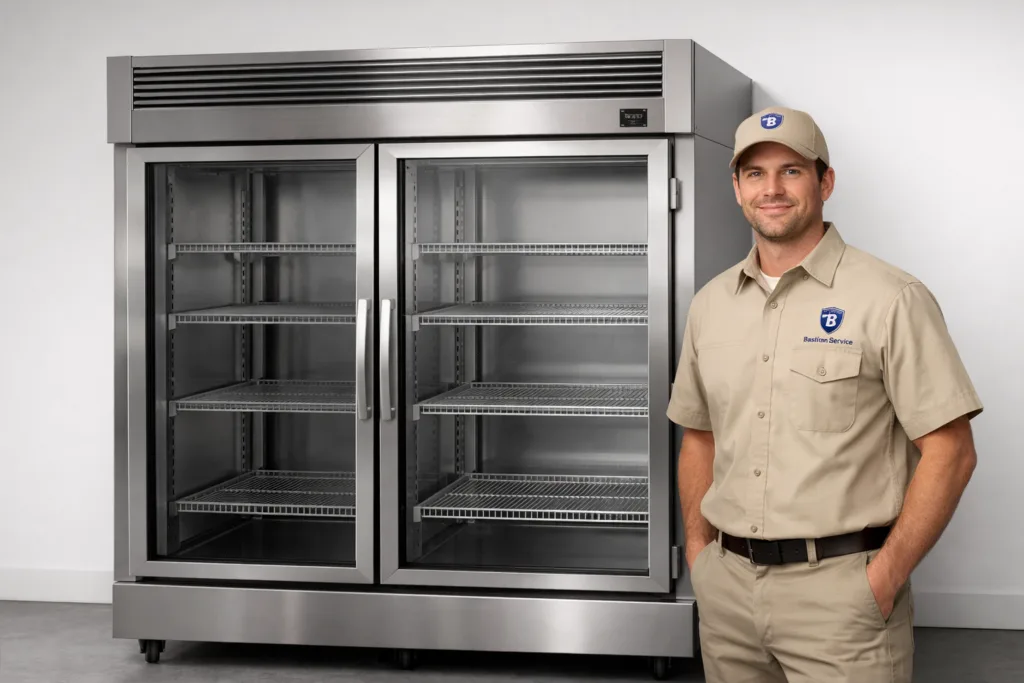




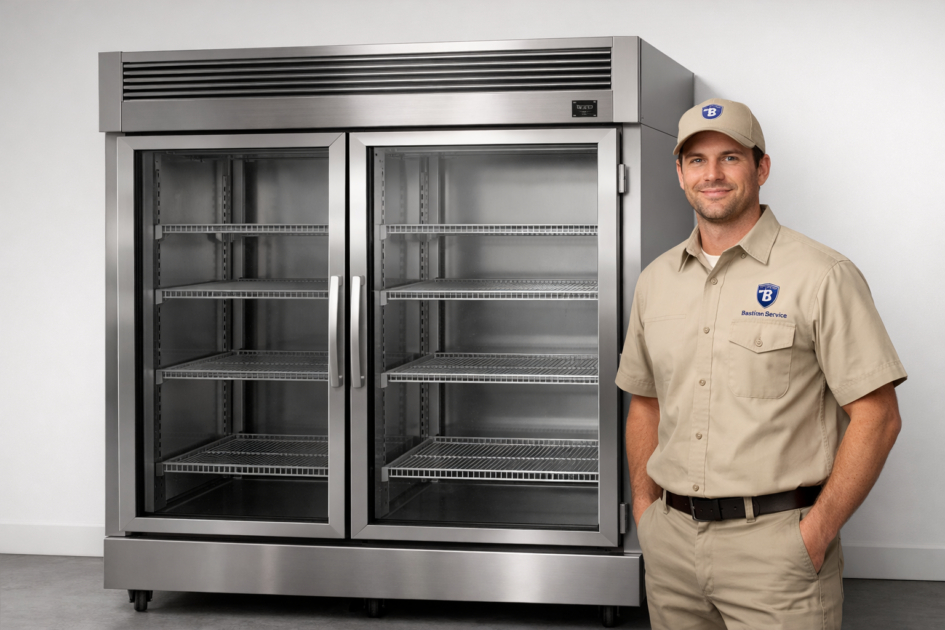
When a Beverage-Air refrigerator or freezer starts drifting out of range, the priority is to identify the fault before product loss, staff disruption, or avoidable parts replacement turns a manageable issue into a larger outage. For businesses in Santa Monica, service decisions usually need to happen quickly: whether the unit can stay in limited use, whether inventory should be moved, and what repair timing makes the most sense based on the symptom pattern. Bastion Service works with local operators who need diagnosis, repair scheduling, and realistic next steps for Beverage-Air refrigeration equipment that is no longer performing normally.
For specific equipment paths in Santa Monica, review Beverage-Air Fridge Repair in Santa Monica, Beverage-Air Freezer Repair in Santa Monica, and Commercial Appliance Repair in Santa Monica.
What Beverage-Air refrigeration equipment problems do you troubleshoot?
Most service calls begin with a symptom that seems simple on the surface but can have several possible causes underneath. Beverage-Air refrigeration equipment may show warm cabinet temperatures, slow recovery after door openings, ice or frost buildup, fan noise, water leaks, condensation, control irregularities, or a unit that runs constantly without reaching the set temperature. In other cases, the equipment may still be cooling, but not evenly enough to support normal daily use.
For Santa Monica businesses, the most useful repair visit is one that separates symptoms that look similar but require different fixes. A warm refrigerator may involve a fan motor, door gasket, sensor, control issue, dirty condenser, or a sealed-system problem. A freezer with frost may point to defrost trouble, moisture infiltration, circulation loss, or a door that is no longer closing correctly. Good diagnosis matters because the repair path, urgency, and whether the unit should remain in service can vary significantly from one fault to the next.
Refrigerator symptoms that usually need service
Cabinet running warm or not holding set temperature
If a Beverage-Air refrigerator is struggling to maintain food-safe holding temperatures, there may be an airflow problem, a weak fan, a sensor or control fault, a gasket leak, restricted condenser performance, or a developing refrigerant issue. Some units cool acceptably when doors stay closed but recover too slowly during busy periods. Others may show warm pockets in one section while another area appears normal.
These symptoms matter because the unit may still appear functional while losing consistency. When staff notice temperature drift, longer run times, or unexplained product concerns, service is often the better choice before the refrigerator fails completely during regular operation.
Uneven cooling from shelf to shelf
Uneven temperatures often point to circulation issues rather than a total cooling loss. Blocked airflow paths, evaporator fan problems, icing around internal components, or overloading patterns can all reduce how evenly cold air moves through the cabinet. In a business setting, that can create hidden holding problems even when the display or controller still seems close to target.
On-site diagnosis helps determine whether the issue is operational, airflow-related, or tied to a failing component that will continue to worsen with daily use.
Condensation inside the refrigerator
Recurring moisture on walls, doors, or stored product can indicate door sealing problems, excessive warm-air intrusion, drainage issues, or cooling performance that is no longer controlling humidity correctly. Interior condensation is often an early warning sign that a refrigerator is working harder than it should or that outside air is entering the cabinet too often.
Freezer symptoms that often point to developing failure
Frost buildup and interior ice formation
Heavy frost on interior panels, around the evaporator area, or across stored inventory usually means the freezer is dealing with excess moisture or a defrost-related issue. Common causes include a failing defrost component, poor door sealing, fan problems, or conditions that keep cold air from circulating correctly. As frost builds, performance often becomes less stable and storage space may become harder to use efficiently.
In many cases, removing visible ice does not solve the underlying problem. If frost returns quickly, airflow sounds restricted, or doors become difficult to close, repair is usually needed to prevent repeat icing and deeper strain on the system.
Slow pull-down or poor freezer recovery
A freezer that takes too long to return to temperature after normal door activity may be under mechanical or airflow stress. This can show up as soft product, rising cabinet readings during busy periods, or a unit that runs for long stretches without catching up. Causes may include fan trouble, coil issues, control problems, gasket leakage, or a system that is losing cooling capacity.
For businesses in Santa Monica, this is an important symptom because the freezer may still appear to be operating while no longer protecting stored product reliably during normal workflow.
Freezer running constantly
Continuous operation usually means the equipment is trying to overcome heat gain or compensate for a performance loss. Doors that do not seal, dirty heat-rejection surfaces, weak airflow, sensor issues, and refrigerant-related faults can all produce this pattern. A freezer that rarely cycles off should be checked before extra runtime leads to larger component wear.
Leaks, floor moisture, and cabinet water issues
Water near the unit is not just a housekeeping concern. In business environments, leaks can create slip hazards, affect surrounding materials, and signal problems that tie back to the refrigeration system itself. Beverage-Air refrigerators and freezers may leak because of blocked drains, defrost water management problems, excess interior moisture, or temperature conditions that are changing how water forms and moves through the cabinet.
If staff are repeatedly cleaning up water without understanding why it keeps returning, service helps determine whether the source is drainage, icing, insulation, sealing, or another performance issue. This is especially useful when the unit also has warm spots, frost, or long run cycles.
Airflow and fan-related problems
Airflow issues can make a refrigeration problem look worse than it first appears, or hide the actual cause until temperatures become unstable. When a fan motor weakens, an evaporator area ices over, or airflow is obstructed, cold air may not circulate properly through the cabinet. That can lead to uneven temperatures, warm product zones, frost accumulation, and longer compressor runtime.
Signs that airflow should be inspected include:
- Sections of the cabinet cooling differently than others
- Noticeable drops in recovery speed after doors open
- Frost forming in patterns rather than evenly
- Fans sounding strained, obstructed, or unusually loud
- Cold production at one point in the cabinet but not throughout the space
Because airflow faults often overlap with control and defrost symptoms, diagnosis is usually more reliable than trying to judge the problem from temperature readings alone.
What unusual noise can indicate
Buzzing, rattling, clicking, humming changes, or louder-than-normal fan noise can all be useful clues during a service visit. Noise may point to fan blade interference, motor wear, vibration from mounting hardware, control-related cycling problems, or strain within the cooling system. Not every sound means immediate shutdown, but noise paired with weak cooling, frosting, or moisture usually deserves attention sooner rather than later.
When staff can describe whether the sound happens during startup, throughout the cycle, or near a specific area of the cabinet, that often helps narrow down the likely source and shorten the repair process.
When the equipment should not stay in regular use
Some problems allow limited operation while repair is being arranged, but others become more expensive if the unit remains heavily used. Continued operation may worsen the situation when:
- The cabinet is no longer holding a dependable temperature
- Frost is building rapidly or repeatedly after clearing
- The unit is running almost nonstop
- Doors are not sealing or closing properly
- Leaks or condensation are creating floor safety concerns
- Fans are not moving air consistently
In these situations, a repair appointment helps determine whether the equipment can remain in partial service, whether product should be transferred, and whether the current symptom points to a repairable component issue or a larger system concern.
How repair decisions are made on site
For most businesses, the key questions are straightforward: what failed, how urgent the problem is, whether continued use risks additional damage, and whether repair makes sense for the equipment’s current condition. On-site evaluation helps answer those questions with the actual unit in view instead of relying only on broad symptom descriptions.
It helps to note a few details before service if they are available:
- Recent temperature readings or alarm history
- Whether the problem is constant or intermittent
- If the issue began after cleaning, loading changes, or heavy use
- Where frost, moisture, or warming is most noticeable
- Whether the cabinet still recovers overnight or during slower periods
That information can make diagnosis faster and can support better scheduling decisions around unloading, temporary workarounds, and repair timing that fits daily operations in Santa Monica.
Repair versus replacement considerations
Not every Beverage-Air problem points to replacement. Many faults involving fans, controls, sensors, drains, gaskets, and other serviceable parts can often be addressed once the cause is confirmed. In other situations, repeated breakdowns, declining cooling performance, leak-related concerns, or multiple overlapping failures may change the conversation.
The goal is to avoid two expensive mistakes: replacing a unit too early when a focused repair would restore reliable operation, or putting repeated short-term fixes into equipment that is no longer a strong candidate for continued use. A symptom-based inspection helps clarify which direction is more sensible for the specific refrigerator or freezer involved.
Scheduling Beverage-Air refrigerator and freezer repair in Santa Monica
If your Beverage-Air refrigeration equipment is showing warm temperatures, frost buildup, moisture problems, airflow issues, unusual noise, or unstable cycling, the next step is to schedule service based on the urgency of the symptom and the role the unit plays in daily operations. For businesses in Santa Monica, a repair visit can confirm the fault, explain whether the equipment should remain in use, and outline the most practical path to restore dependable performance with the least disruption possible.


