
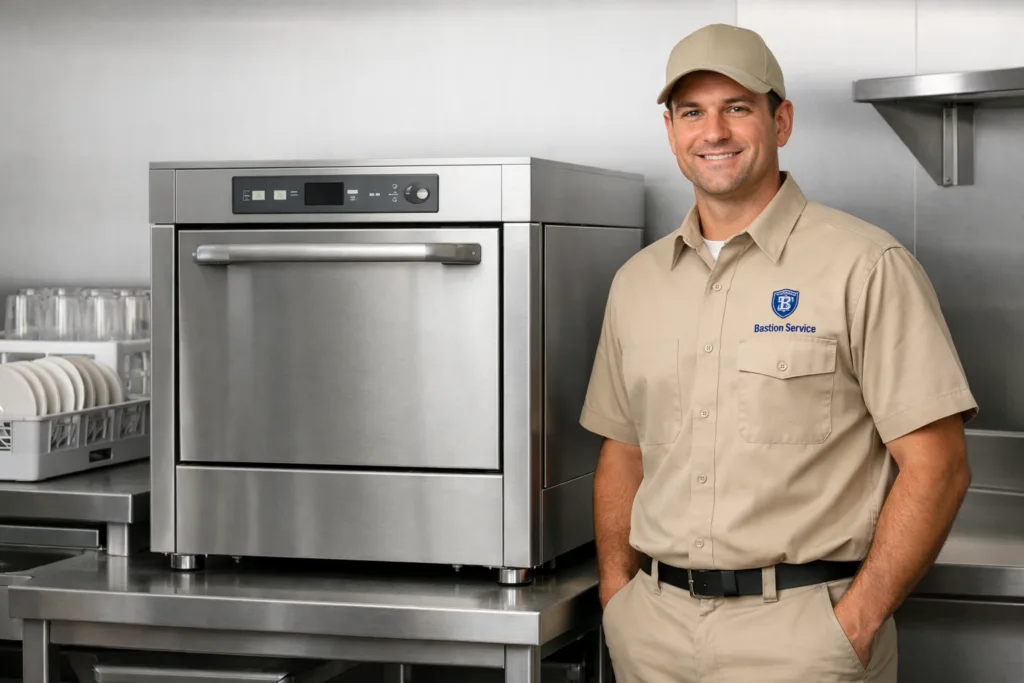




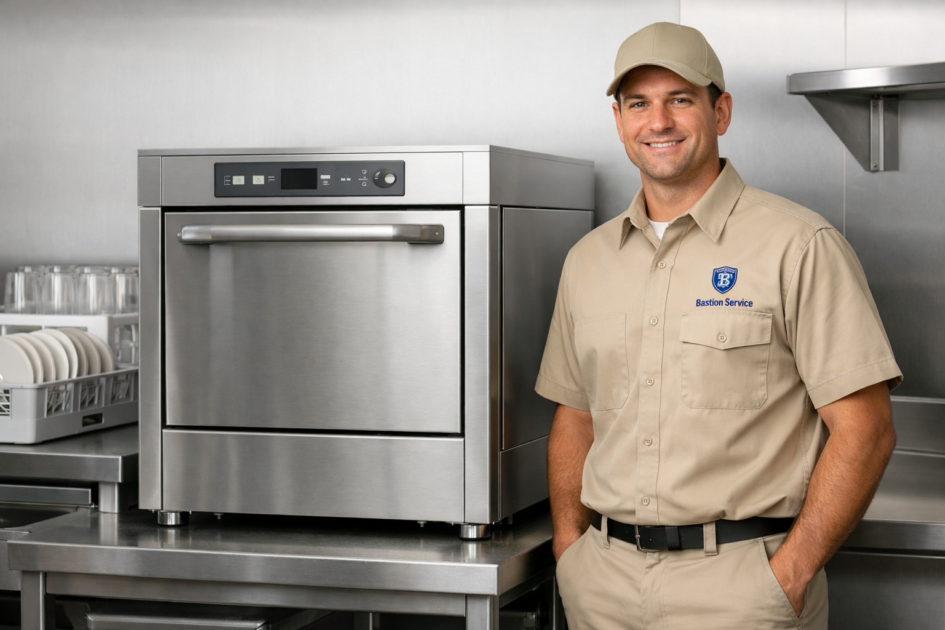
When Hobart warewashing equipment starts missing wash results, slowing down between loads, or stopping during operation, the best next step is service that focuses on the actual symptom pattern and the impact on daily workflow. For Santa Monica businesses, repair decisions often need to happen quickly because dishroom downtime affects sanitation, labor, and service pace. Bastion Service provides repair support for Hobart warewashing equipment with diagnosis, scheduling, and symptom-based troubleshooting that helps operators decide whether the unit can stay in use or needs immediate attention.
For specific equipment paths in Santa Monica, review Hobart Dishwasher Repair in Santa Monica and Commercial Appliance Repair in Santa Monica.
What Hobart Warewashing Equipment Problems Do You Troubleshoot?
Hobart warewashing equipment can develop problems that show up gradually or all at once. In many cases, operators notice one recurring symptom first, such as poor cleaning results, slow filling, incomplete draining, temperature inconsistency, water leakage, or an unresponsive control panel. Those symptoms can point to issues involving pumps, spray components, valves, heating systems, sensors, electrical parts, door hardware, or control-related failures.
Common problems that usually warrant inspection include:
- Dishwasher loads coming out dirty, spotted, or not fully rinsed
- Low wash pressure or weak spray action
- Tank fill problems or water not entering correctly
- Slow draining or standing water after a cycle
- Leaks around the door, base, hoses, or internal components
- Final rinse temperature problems or poor heat recovery
- Sanitation complaints tied to inconsistent cycle performance
- Error conditions, reset issues, or controls that stop responding
- Units that pause, shut down, or fail to complete the cycle
Because these symptoms can overlap, repair usually starts with confirming whether the fault is isolated to one system or whether several wear issues are contributing to the same performance problem.
Wash Performance Problems and Dirty Load Complaints
If racks are coming out with food soil, film, residue, or inconsistent rinse results, the problem may not be limited to one part. Wash performance issues often involve circulation problems, blocked spray arms, failing pumps, low water pressure inside the machine, heating faults, or detergent and rinse delivery issues. Operators may also notice that certain racks clean better than others, which can suggest uneven spray coverage or reduced wash action during the cycle.
In a busy kitchen, poor wash performance becomes an operations issue quickly. Staff may have to rewash items, separate questionable loads, or slow service to keep clean inventory available. When that pattern starts repeating, repair is usually more cost-effective than working around the machine day after day.
Signs the problem may be more than routine maintenance
- Cleaning results have dropped even after normal cleaning procedures
- Racks near one side come out cleaner than others
- Wash cycles sound different than usual
- Soil remains after complete cycles
- Spotting and residue appear together with heat or rinse concerns
Fill and Drain Problems That Interrupt Throughput
A Hobart dishwasher that does not fill correctly or does not drain at the end of the cycle can create immediate workflow disruption. Slow filling may point to inlet valve problems, restrictions, sensor issues, or control faults that prevent the machine from bringing in the proper water level. Draining problems may involve clogged drain paths, pump issues, obstructions, or electrical problems affecting drain activation.
When fill and drain issues start showing up together, the machine may become unreliable from cycle to cycle. One load may complete, while the next stalls or leaves standing water behind. That kind of inconsistency is usually a sign that the problem should be diagnosed before continued use causes a full shutdown during a busy shift.
Common symptoms tied to fill or drain faults
- The machine fills slowly or not at all
- Water level seems too low or too high during operation
- Standing water remains in the tank after a cycle
- The drain portion of the cycle is delayed or incomplete
- The unit stops and restarts as it tries to move water properly
Leaks, Door Problems, and Water Containment Issues
Water on the floor around warewashing equipment should never be treated as a minor nuisance. Leaks may come from worn door gaskets, misaligned latches, cracked hoses, loose fittings, pump-related failures, or internal sealing problems. Some leaks only appear once the machine reaches a certain point in the cycle, which can make them easy to overlook until the water spread becomes more obvious.
Door issues can also affect performance even when the machine still runs. If the door is not sealing correctly, pressure and water containment can suffer, and the machine may not operate consistently from one load to the next. In Santa Monica kitchens, a persistent leak can also create avoidable cleanup and slip concerns around the dish area.
Rinse Temperature and Heat-Related Problems
Temperature problems are among the most important warewashing symptoms to address quickly. If the machine is not heating as expected, not maintaining rinse temperature, or delivering uneven heat across repeated cycles, the cause may involve heating elements, thermostats, relays, sensors, wiring, or control failures. Some units continue running while underheating, which can make the problem harder to spot until wash quality or sanitation confidence starts slipping.
Operators often report heat-related problems in ways such as:
- Cycles feel normal, but results are inconsistent
- The machine takes longer than usual to recover between loads
- Rinse performance changes during heavy use
- The dishwasher appears to run, but not at the expected temperature
- Performance is worse later in the day than at startup
Because temperature issues can affect both cleaning outcome and operating confidence, they should be evaluated before the machine is relied on for a full shift.
Sanitation Concerns and Repeatable Cycle Inconsistency
Sometimes the main complaint is not a visible mechanical failure but an overall loss of consistency. One cycle looks acceptable, the next leaves residue, and the one after that stops early or drains poorly. When warewashing equipment becomes unpredictable, the real problem is often deeper than a single visible symptom. Sensors, controls, heating systems, and water movement components can all contribute to this kind of intermittent behavior.
Sanitation concerns deserve prompt attention when the machine is no longer producing dependable repeat results. Even if the dishwasher still powers on and completes some cycles, recurring inconsistency is usually enough reason to schedule repair and determine whether the equipment can safely remain in service.
Control Faults, Shutdowns, and Mid-Cycle Stops
If a Hobart dishwasher starts locking up, failing to respond to inputs, stopping mid-cycle, or requiring repeated resets, the issue may involve the control system, switches, wiring, sensors, relays, or supporting electrical components. These problems often start as occasional interruptions and become more frequent over time. A machine that shuts down once in a while can still create major disruption if staff cannot trust it during peak volume.
Control-related symptoms often include a combination of operational complaints rather than a single obvious failure. For example, the machine may fill but not proceed, heat but not complete the cycle, or drain only after repeated attempts. When those patterns show up, troubleshooting should focus on the full operating sequence rather than replacing parts based on guesswork.
When to Stop Using the Equipment and Schedule Repair
Some symptoms allow a short window for planned service, while others should move the machine to the top of the repair list. If the dishwasher is leaking heavily, failing to complete cycles, missing temperature targets, producing repeated sanitation complaints, or shutting down under load, continued use can turn a manageable problem into a larger outage.
It is usually time to schedule service promptly if you notice:
- Repeated incomplete or aborted cycles
- Visible leaking during operation
- Standing water that returns after every use
- Inconsistent final rinse performance
- Controls that freeze, reset, or behave unpredictably
- Wash results that vary sharply from load to load
For managers deciding whether to keep the machine running, the key factors are repeatability, severity, and whether the issue is affecting usable output. If the equipment is no longer supporting steady dish flow, service should not be delayed.
What a Repair Visit Helps Clarify
A warewashing repair visit is about more than identifying one failed part. It helps determine what system is actually causing the symptom, whether additional wear is involved, how urgent the repair is, and what the most realistic next step looks like for the operation. That may mean same-problem confirmation, a broader parts need, or a recommendation on whether continued use is likely to create more downtime.
For businesses in Santa Monica, the most useful outcomes from diagnosis usually include:
- Whether the unit can remain in service temporarily
- Which component group is responsible for the breakdown
- Whether the fault appears isolated or part of broader wear
- How the problem affects throughput and sanitation workflow
- Whether repair is likely to restore stable operation
When Repair Makes Sense and When Bigger Decisions May Be Needed
Many Hobart warewashing problems are repairable when the machine is otherwise in solid condition. Pumps, valves, heating components, sensors, controls, switches, seals, and door hardware are all examples of parts and systems that can fail without meaning the equipment itself is at the end of its useful life. In those cases, repair can be the right move to restore output and limit disruption.
A larger decision may be worth considering when breakdowns are recurring across multiple systems, the machine has significant wear beyond the current complaint, or the cost of repeated downtime is becoming harder to absorb than the repair itself. The right choice depends on condition, symptom history, and whether the expected result after service supports day-to-day reliability.
Repair Support for Hobart Warewashing Equipment in Santa Monica
When Hobart warewashing equipment starts showing repeatable problems with cleaning, filling, draining, leaking, heating, sanitation, or controls, service is most effective before the issue turns into a full stoppage. For businesses in Santa Monica, scheduling repair once the symptom pattern becomes clear helps protect throughput and makes planning easier for the kitchen team. If your dishwasher is no longer operating consistently, the next practical step is to arrange inspection, confirm the fault, and move forward with the repair path that best supports continued operation.


