
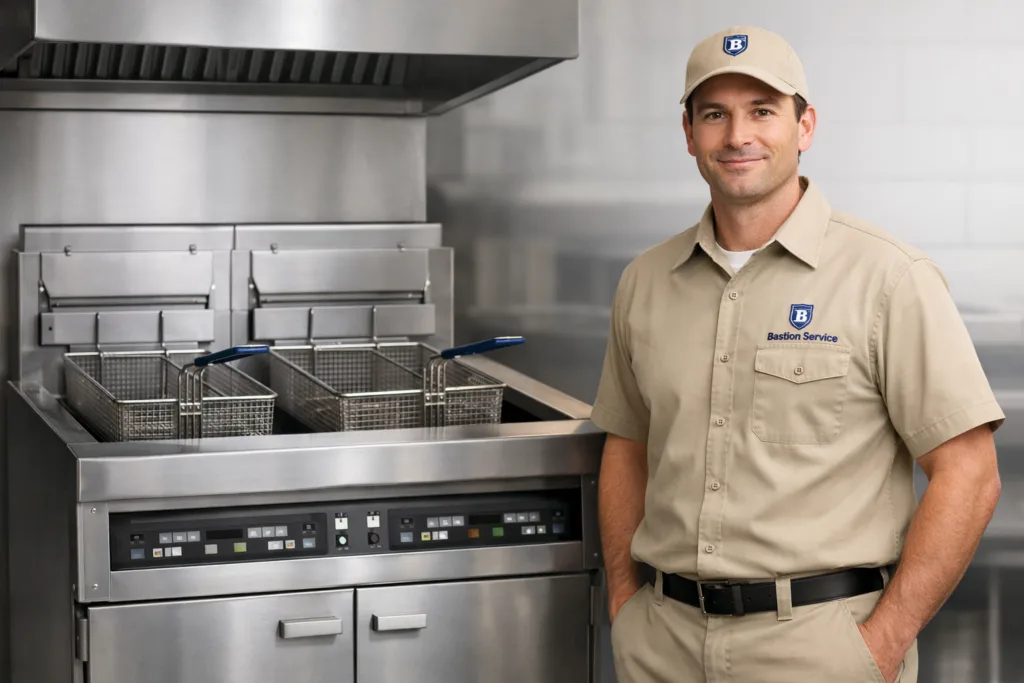




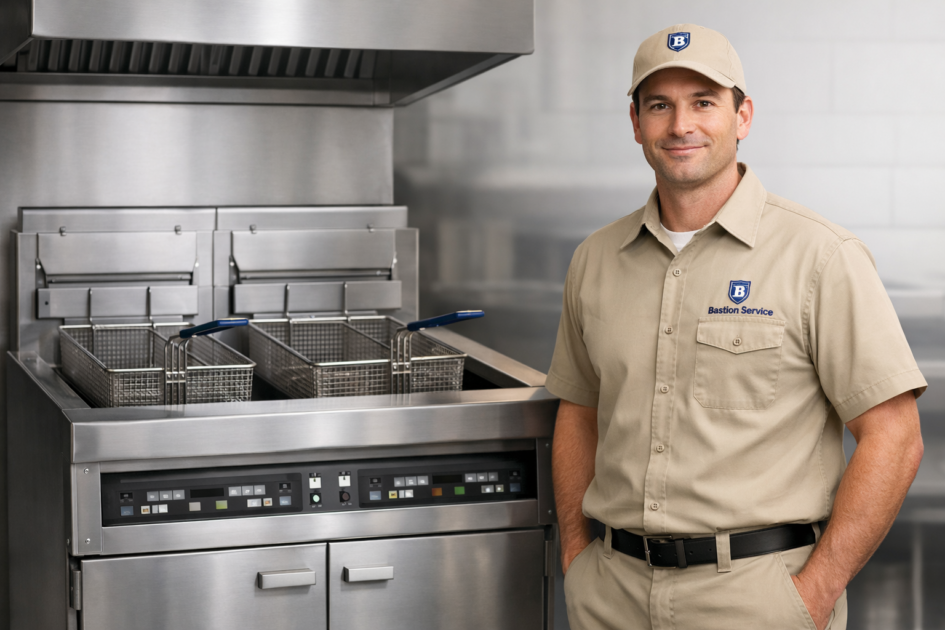
When Frymaster cooking equipment starts missing temperature, recovering too slowly, or shutting down during service, the priority is to identify the fault quickly enough to protect output and avoid unnecessary downtime. In busy kitchens, small performance changes often turn into ticket delays, uneven results, and rushed operator workarounds. Bastion Service helps businesses in Santa Monica assess the symptom pattern, determine whether the unit can stay in operation safely, and schedule repair based on the actual problem rather than guesswork.
For specific equipment paths in Santa Monica, review Frymaster Fryer Repair in Santa Monica and Commercial Appliance Repair in Santa Monica.
What Frymaster cooking equipment problems usually need service?
Most service calls begin with a symptom staff can see during production: heat that does not match the setting, ignition that becomes unreliable, burners that cut out, controls that stop responding, or shutdowns that interrupt the line. Frymaster cooking equipment is built for heavy use, so when performance changes, the issue may involve more than one part of the system. A temperature complaint, for example, can be tied to sensing, controls, burner performance, gas-related components, or safety-limit conditions.
For many Santa Monica businesses, the most important question is not just what failed, but how the fault affects daily operations. Some issues allow limited use until repair is completed. Others should be addressed before staff continue running the equipment under load.
Common Frymaster fryer symptoms and what they may indicate
Fryers are often where operators notice trouble first because any change in heat recovery or temperature control shows up quickly in food quality and production speed. Similar symptoms can come from different causes, which is why symptom-based diagnosis matters before parts are ordered.
Temperature running too low or too high
If the fryer is not holding the selected temperature, heating unevenly, or overshooting the set point, the cause may involve the temperature probe, thermostat response, control board behavior, or burner performance. These faults can lead to inconsistent cook results, excess oil stress, and longer production times. A unit that still heats but cannot be trusted to maintain a stable temperature usually needs service before it causes larger workflow problems.
Slow recovery between batches
Slow recovery is one of the most disruptive fryer complaints because the equipment may appear functional while still reducing kitchen capacity. Weak heat output, burner inefficiency, sensor inaccuracy, or control-related problems can all cause longer recovery times. In practice, this shows up as bottlenecks during rush periods, uneven batch timing, and pressure to reduce volume or adjust menus around the affected fryer.
Ignition failure or delayed startup
If the fryer will not light, takes repeated attempts to start, or loses flame after ignition, the issue may involve ignition components, flame sensing, burner operation, control faults, or related gas-system problems. These symptoms should not be dismissed as occasional startup quirks. Repeated resets during service hours can waste time, interrupt production, and make an intermittent fault harder to track accurately.
Unexpected shutdowns during operation
When a Frymaster unit shuts down mid-cycle or locks out without warning, the cause may be tied to safety limits, sensor input errors, wiring faults, control failure, or unstable burner operation. Intermittent shutdowns are especially frustrating because they create uncertainty for staff and can force sudden changes in line workflow. Once shutdown behavior appears more than once, it is usually worth scheduling repair before a complete outage occurs.
Error codes or unresponsive controls
Digital control issues can range from inconsistent button response to recurring fault displays that return after resetting. While some operators can temporarily clear a code, the repeat pattern often points to an underlying component or communication issue. If the controls are unreliable, the fryer may still run, but production planning becomes difficult because staff cannot depend on stable settings or predictable operation.
Why early repair matters for Santa Monica kitchens
Cooking equipment problems affect more than the machine itself. A fryer that heats slowly can change prep timing, staffing flow, holding decisions, and customer wait times. A unit with unstable temperature can create waste, rework, and inconsistency that spreads across the kitchen. For businesses in Santa Monica, service is often about preserving throughput as much as restoring function.
Early repair scheduling also helps managers make better short-term decisions. If the issue is isolated and repairable, the equipment may return to normal operation without prolonged disruption. If the problem is more serious, knowing that sooner allows the kitchen to adjust production plans, reduce dependence on the unit, or take it off the line before the failure becomes more expensive.
Signs the equipment should not stay in regular use
Some symptoms suggest the unit should be evaluated before continued operation:
- Overheating or unstable temperature swings
- Repeated ignition failures or delayed lighting
- Burners cutting out during normal use
- Frequent resets needed to keep the fryer running
- Recurring shutdowns during service
- Fault codes that return after clearing
- Recovery times that no longer support production demand
These problems can increase strain on controls, ignition parts, and related components. They can also make it harder to judge whether the unit is safe and reliable enough for daily use. A service visit helps determine whether limited operation is reasonable or whether the equipment should be removed from active use until repair is completed.
Repair versus replacement considerations
Not every Frymaster issue points to replacement. In many cases, repair is the practical option when the fault is isolated, parts condition is otherwise good, and the equipment still fits the kitchen’s production needs. Replacement becomes a more serious discussion when there are repeated failures across multiple systems, mounting downtime, or repair costs that no longer make sense compared with expected reliability afterward.
The best decision usually depends on a few business factors:
- How often the problem has returned
- Whether the failure affects only one system or several
- How critical the unit is to daily output
- How long the kitchen can work around the downtime
- Whether repair is likely to restore dependable operation
What to have ready before scheduling service
A faster diagnosis often starts with clear operating details. Before scheduling repair, it helps to note when the problem happens, whether it appears at startup or under load, what staff have already observed, and whether any codes or shutdown patterns repeat. Even simple details such as slow morning startup, heat loss during rush periods, or a burner dropping out after recovery can help narrow the likely causes.
If the unit is still running, managers should also note whether staff are compensating with longer cook times, lower batch volume, manual setting changes, or repeated resets. Those workarounds are useful clues because they show how the fault is affecting real kitchen performance.
Service support for Frymaster equipment in Santa Monica
When Frymaster equipment starts affecting food quality, timing, or line reliability, the next step is to schedule service before the problem spreads into a larger operational setback. Whether the issue involves temperature control, ignition, slow recovery, burner performance, control faults, or sudden shutdowns, a focused repair assessment helps determine the cause, the urgency, and the most practical path back to stable operation for your Santa Monica kitchen.


