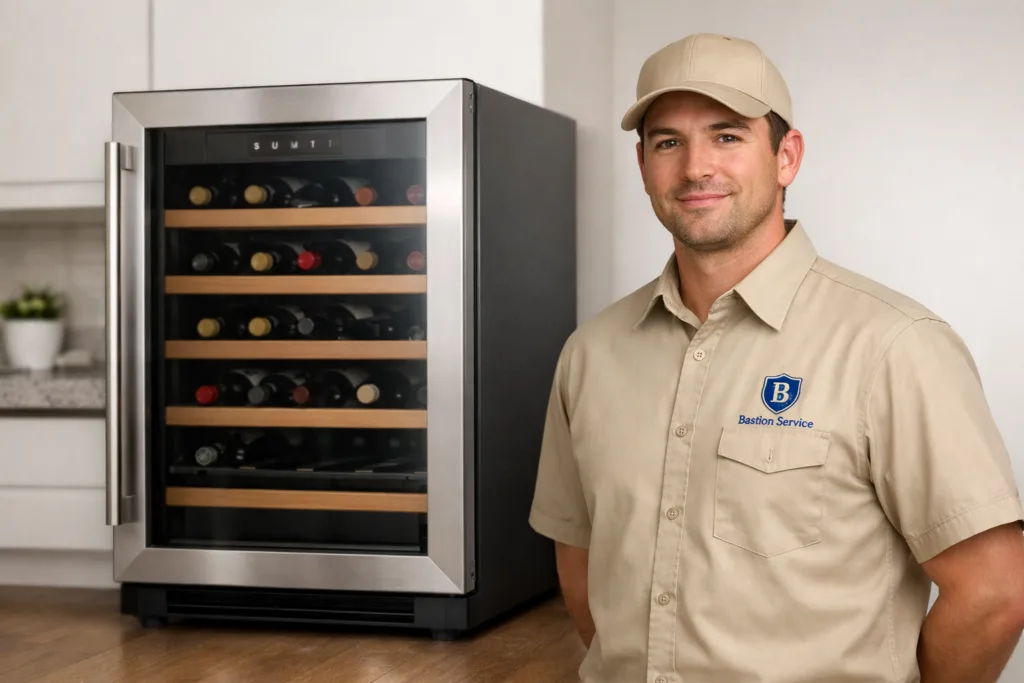
Wine coolers work best when temperature, airflow, and humidity stay consistent. When a Summit unit begins warming, overcooling, collecting moisture, or making a different sound than usual, the symptom itself often points toward the system that needs attention. Looking closely at that pattern can help prevent unnecessary parts replacement and reduce the risk of added wear from continued operation.
What symptom patterns usually mean
Cabinet is running warm
If the display is on but bottles are not reaching the selected temperature, the cause may be as simple as restricted airflow or as involved as a failing cooling component. A dirty condenser area, weak fan motor, faulty sensor, temperature control issue, or sealed-system problem can all produce similar results. When the cooler runs for long stretches without getting cold enough, it usually needs more than a settings adjustment.
Temperature swings up and down
A Summit wine cooler that cools normally for a while and then drifts warm may have an intermittent control, sensor, fan, or defrost-related issue. Some homeowners first notice this when bottles feel cooler one day and noticeably warmer the next. Repeated swings matter because wine storage depends on stability, not just on whether the unit feels cold at one moment.
Unit is too cold or freezing bottles
Overcooling often points to a thermostat, thermistor, sensor, or control problem. It can also happen when airflow is uneven inside the cabinet. If one section is much colder than another, or if bottles near a vent are freezing while the rest of the cooler seems normal, the issue may involve circulation rather than the entire refrigeration system.
Condensation or water buildup
Moisture inside the cabinet or water near the base can come from a blocked drain path, poor door sealing, repeated warm-air intrusion, or a temperature-control problem that causes excess condensation. If shelves stay damp or water begins reaching nearby flooring or cabinetry, service should not be put off. Moisture problems can spread beyond the appliance itself.
Buzzing, rattling, clicking, or fan noise
Wine coolers are not silent, but a clear change in sound often means something has shifted. Rattling may come from vibration or a mounting issue. Scraping or whirring can point to a fan blade or fan motor problem. Buzzing and repeated clicking may signal compressor strain, relay trouble, or another electrical or cooling-system fault. New noise is especially important when it appears along with weak cooling.
Lights and controls work, but performance does not
A responsive display does not always mean the cooling system is working correctly. Homeowners sometimes assume the appliance is fine because the lights come on and the controls respond, yet the cabinet temperature tells a different story. In that case, the fault may be behind the interface, such as a sensor failure, fan issue, control problem, or refrigeration fault.
Problems that deserve prompt service
Some issues are worth monitoring briefly, such as a temporary temperature rise after the door was left open for an extended period. Others usually call for service sooner rather than later, especially when they repeat or worsen over several cycles.
- The compressor seems to run almost constantly
- The cabinet is warming even though settings have not changed
- Water is pooling inside or under the unit
- One zone is cooling differently from the other
- Fans are noisy, inconsistent, or seem not to move air properly
- The unit shuts off and restarts more often than normal
- There is visible frost or repeated icing where airflow should be open
These signs can point to faults that place extra stress on major components. Waiting too long can turn a manageable repair into a larger one if the cooler keeps struggling to maintain temperature.
Why wine cooler issues are often more specific than refrigerator issues
A residential wine cooler is built around narrow storage conditions rather than broad food preservation. That means smaller changes in sensor accuracy, airflow, sealing, or control behavior can have a noticeable effect. A Summit wine cooler may still seem partly functional while no longer holding the steady environment it was designed to maintain.
This is one reason symptom-based diagnosis matters. Two units can both seem “not cold enough,” but one may have an airflow restriction while the other has a more serious refrigeration problem. The repair path depends on which system is actually failing.
Repair or replace depends on the failure
Many Summit wine cooler problems are tied to components such as fans, controls, sensors, switches, drains, or door-sealing parts. In those cases, repair can make good sense if the cabinet is otherwise in solid condition. Replacement becomes a more likely discussion when the unit has repeated cooling failures, multiple developing issues, or a major sealed-system problem in an older appliance.
For homeowners in Inglewood, the most practical decision usually comes down to four things:
- the exact part or system that failed
- the age and overall condition of the cooler
- whether the problem is isolated or part of a larger pattern
- how well the unit has been maintaining temperature before this issue
That kind of comparison helps avoid replacing a cooler over a fixable issue while also avoiding investment in a unit that is already showing broader decline.
What to do before service
Before scheduling repair, it helps to note what the cooler is doing right now rather than relying on a general description like “it stopped working.” Useful details include whether it is running nonstop, whether the temperature is too high or too low, whether one area cools differently, whether water is present, and what type of noise has changed.
You can also check a few basic conditions safely:
- Confirm the door is closing fully and the gasket is not visibly loose
- Make sure vents inside the cabinet are not blocked by bottle placement
- See whether the unit is level and not vibrating against surrounding surfaces
- Note any recent power interruption or sudden change in settings
If the cooler is leaking, icing heavily, or sounding strained, it is usually better to limit use until the cause is identified.
What homeowners in Inglewood usually want from a repair visit
Most service calls come down to a few practical questions: why the cooler is not holding temperature, whether continued use could make things worse, and whether repair is likely to restore normal storage conditions. In a household setting, that matters because the appliance is often installed near finished cabinetry and used to protect bottles that should not be exposed to repeated warming and cooling.
For Summit wine cooler repair in Inglewood, the most helpful next step is a clear diagnosis and repair plan based on the exact symptom pattern, the appliance condition, and the most likely fault. That gives homeowners a better basis for deciding whether to move forward with repair or consider replacement.