
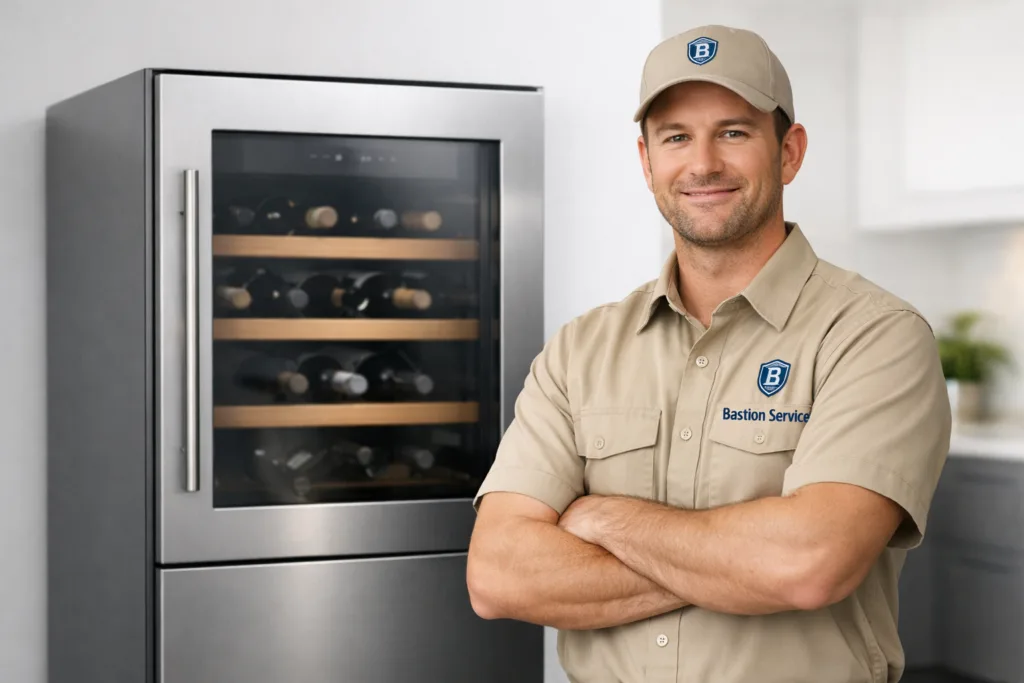




Temperature instability in a wine cooler is not always caused by the same part, even when the symptoms look similar. A Fisher & Paykel unit that feels slightly warm one day and noticeably off the next may be dealing with restricted airflow, a sensor problem, a fan issue, a control fault, or a more serious cooling-system problem. Identifying the pattern early helps protect stored bottles and prevents unnecessary wear on the appliance.
Related Fisher & Paykel and wine cooler service paths in Inglewood include Fisher & Paykel Appliance Repair in Inglewood, Wine Cooler Repair in Inglewood, and Fisher & Paykel Refrigerator Repair in Inglewood.
Common Fisher & Paykel wine cooler problems in Inglewood homes
Most wine cooler issues show up in a handful of recognizable ways. The useful part is understanding what each symptom may point to, rather than assuming every cooling complaint means the same repair.
Not cooling enough
If the cabinet temperature stays above the set point, cooling may be reduced by weak air circulation, dirty condenser surfaces, a failing sensor, thermostat or control trouble, or compressor-related faults. Some units cool for a while and then drift warm again, which often suggests an intermittent electrical or regulation issue rather than a simple setting problem.
Homeowners often notice this first when bottles no longer feel consistently chilled or when different shelves seem to hold different temperatures. That uneven performance usually means the unit is running, but not managing airflow or temperature feedback correctly.
Too cold or freezing bottles
Overcooling can happen when the control system is not reading cabinet temperature accurately or is not cycling the cooling components properly. A bad sensor, control board issue, or airflow imbalance may allow one area to become excessively cold while another area stays closer to normal.
This matters because wine storage depends on stability, not just low temperature. If the unit is freezing contents or creating frost where it normally should not, service is worth scheduling before the problem spreads to other components.
Condensation, moisture, or water buildup
Moisture inside or around the cabinet can come from warm air entering through a weak door seal, drainage issues, humidity exposure, or poor internal air movement. Even when the cooler still seems to run, repeated condensation is a sign that the unit is working harder than it should.
What starts as moisture on glass, shelves, or the door frame can lead to odor, interior residue, and cabinet wear over time. It can also be a clue that temperature regulation is already slipping.
Fan noise, buzzing, rattling, or constant running
Wine coolers make some normal operating sound, but louder fan noise, clicking, buzzing, or rattling usually points to a part that needs closer inspection. A worn fan motor, loose component, vibration issue, or compressor strain can all change how the unit sounds.
If the cooler runs almost nonstop, that is often a sign it cannot satisfy the selected temperature. Constant running does not always mean the compressor has failed, but it does mean the appliance is under stress and should not be left unchecked for long.
Display, control, or response problems
Some Fisher & Paykel wine coolers show trouble through an unresponsive panel, incorrect readings, blinking indicators, or settings that do not seem to take effect. When the display appears normal but cabinet conditions do not match it, the fault may involve the control system, temperature sensing, or communication between components.
These issues are easy to misread because the cooler may still power on and seem active. In practice, inaccurate control behavior can affect every part of performance, from cycling to temperature hold.
Why symptom-based diagnosis matters
One warm wine cooler may need a relatively contained repair, while another with the same complaint may have a deeper cooling issue. That is why symptom details matter so much. A unit that is warm with loud fan noise suggests a different path than a unit that is warm, quiet, and showing condensation.
Targeted diagnosis helps confirm what has failed, what related parts should be checked, and whether repair is likely to restore normal storage conditions. It also reduces the chance of replacing a visible part while the actual cause remains unresolved.
When service is worth scheduling
It is usually time to schedule service when the wine cooler cannot maintain temperature, develops repeated condensation, cycles erratically, becomes much louder than normal, or shows signs that the controls are no longer responding correctly. Even if the unit still runs, unstable storage conditions are a warning that performance is already compromised.
Prompt service is especially important if the appliance is running continuously, warming quickly after startup, tripping power, or showing a sudden change in sound. Continuing to operate it in that condition can increase wear on the compressor, fan system, and controls.
Repair or replacement: what usually makes sense?
For many households in Inglewood, the decision depends on the diagnosed failure, the age of the wine cooler, its overall condition, and whether the cabinet and core components have otherwise been reliable. Repairs often make sense when the issue involves a fan motor, sensor, thermostat, gasket, drain-related component, or a control-related part and the appliance is in good structural shape.
Replacement becomes a more serious consideration when the unit has major sealed-system trouble, a history of repeated breakdowns, or enough overall wear that long-term reliability is doubtful. The right choice is usually clearer once the actual fault is identified instead of judged by temperature symptoms alone.
What to check before the appointment
Before service, it helps to note a few details:
- Whether the display is on and responding
- Whether the interior light works
- Whether you can hear the fan or compressor running
- Whether the door closes tightly and the gasket looks intact
- Whether moisture is collecting inside, around the door, or underneath
- Whether the problem is constant or comes and goes
These observations can help narrow the fault more quickly and make the visit more productive. If your Fisher & Paykel wine cooler in Inglewood is no longer holding stable conditions, is making unusual noise, or is showing control problems, the next step should be diagnosis based on the exact symptom pattern rather than guesswork.


