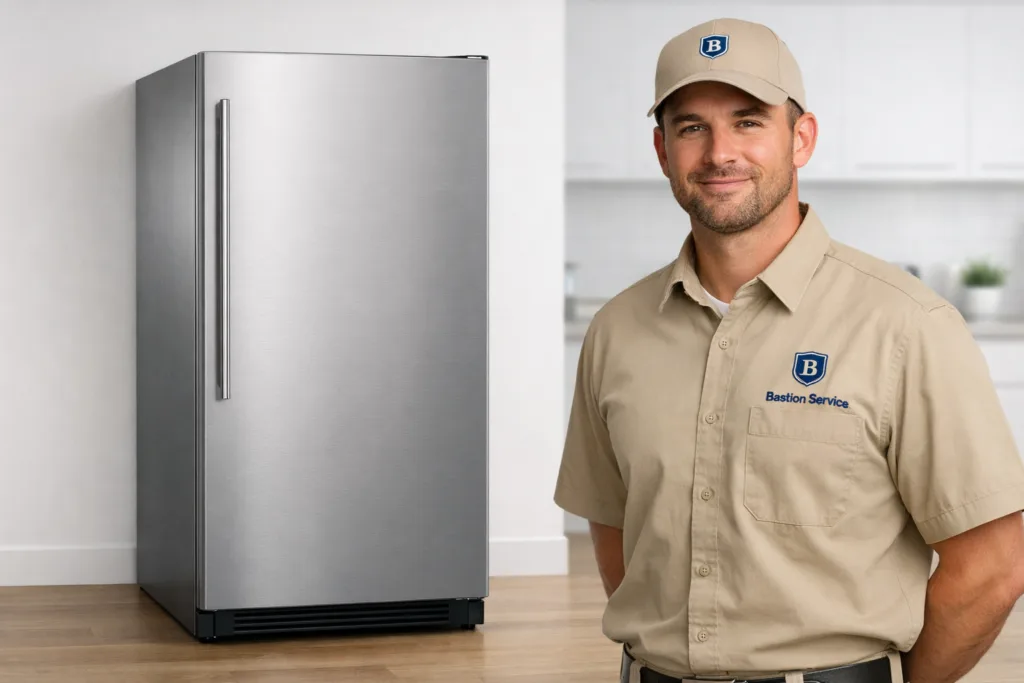
A freezer problem usually gets easier to solve once the symptom pattern is narrowed down. One Summit unit may run all day and still stay warm, while another cools unevenly, builds thick frost, or makes a repeated clicking sound before shutting off. Looking at how the failure shows up helps separate a door-seal issue from a fan problem, a defrost fault, or a more serious cooling-system concern.
Common Summit freezer symptoms and what they often mean
Most household freezer issues fall into a few recognizable categories. While different faults can create similar results, these symptom groups are a useful starting point for deciding how urgent the problem is and what kind of repair may be involved.
Freezer is running but not freezing properly
If the unit has power, the light works, and you can hear it running, but food is soft or partially thawed, the problem is often related to airflow or temperature control. A weak evaporator fan, blocked vents, dirty condenser coils, failing control, or frost-covered evaporator can all reduce cooling performance. In other cases, the compressor may be struggling to start or the sealed system may no longer be moving refrigerant effectively.
This symptom often starts gradually. Ice cream softens first, frozen vegetables clump together, and the freezer may seem to recover for short periods before warming again. That pattern usually points to a mechanical or airflow issue rather than a total power failure.
Heavy frost on walls, shelves, or around the door
Frost buildup usually means warm, moist air is getting into the cabinet or the defrost system is not clearing ice as it should. A worn gasket, a door that is slightly out of alignment, or a freezer that was left cracked open can create widespread frost. A failed defrost heater, thermostat, or control can also cause ice to build behind interior panels where it blocks airflow.
When frost gets thick enough, the freezer may still seem cold near certain areas while the rest of the compartment warms up. Drawers may become hard to open, the door may not close smoothly, and the fan may begin rubbing against ice.
Clicking, buzzing, humming, or louder-than-normal fan noise
Repeated clicking followed by silence can point to a start relay or overload problem, and sometimes to a compressor that is having trouble starting. Buzzing or scraping may come from a fan blade hitting frost. A steady hum that suddenly becomes louder than usual can also mean the unit is running longer because it cannot reach the set temperature.
Noise matters most when it appears together with poor cooling, temperature swings, or moisture. Sound by itself does not always mean a major repair, but a freezer that repeatedly tries and fails to start should not be ignored.
Leaks, condensation, or water on the floor
Water near the base of the freezer can come from a blocked defrost drain, melting ice from excessive frost buildup, or condensation caused by a sealing issue. In some homes, homeowners first notice a damp floor before they notice a cooling problem. Moisture around the cabinet can also lead to recurring ice formation and damage nearby flooring if it continues long enough.
Why symptom-based testing matters
Freezer problems can look deceptively similar from the outside. A unit with a thick layer of ice may appear to have stopped cooling when the actual issue is a failed defrost component. A freezer that seems dead may still have power but be stuck in a failed start cycle. A cabinet that feels only mildly cold may not need a compressor if the evaporator fan is not circulating air.
That is why the most useful first step is a diagnosis based on the exact symptom pattern instead of replacing parts by guesswork. For homeowners in Inglewood, this makes it easier to decide whether the repair is likely to be straightforward or whether the unit may be approaching replacement territory.
Signs the problem should be checked soon
Some freezer issues can wait a day or two for scheduling. Others deserve faster attention because they can lead to food loss or added strain on the appliance.
- Food is softening or thawing even though the freezer is still running
- Frost is spreading quickly across the back panel or door opening
- The compressor clicks repeatedly and does not stay on
- The unit runs almost constantly without reaching normal temperature
- Water is collecting under or around the freezer
- The door does not seal evenly or pops open easily
- Fan noise suddenly becomes loud, irregular, or starts scraping
When these symptoms appear together, continuing to use the freezer can make the situation worse. A door left slightly open, a clogged airflow path, or a fan working against heavy frost can quickly turn a marginal cooling problem into a full thaw.
Simple things to check before scheduling repair
There are a few basic observations that can help narrow down the issue before a service visit. These are not a substitute for repair, but they can make the problem easier to describe and sometimes reveal a simpler cause.
- Confirm the freezer is receiving power and the outlet is working properly
- Check whether the interior light turns on
- Listen for a steady compressor hum, repeated clicking, or fan noise
- Look for frost on the back interior panel or around air vents
- Inspect the door gasket for gaps, tears, or sections that do not sit flat
- Note whether the problem began suddenly after a power interruption or gradually over time
- Consider whether the freezer was recently moved, overpacked, or left open
It also helps to know whether only some items are thawing or whether the entire compartment is warming. Uneven temperature can point to airflow or fan issues, while full loss of freezing may indicate a control, start, compressor, or sealed-system problem.
Repair or replacement: how the decision is usually made
Many Summit freezer problems are worth repairing, especially when the fault is limited to a gasket, fan motor, drain blockage, thermostat, control issue, or defrost component. These repairs are often more practical when the cabinet is in good shape and the appliance has otherwise been reliable.
Replacement becomes a more serious consideration when the freezer has major compressor trouble, sealed-system failure, repeated breakdowns, or multiple age-related issues at the same time. The decision usually comes down to the condition of the appliance, the type of failure, and whether the repair is likely to restore stable performance without leading to another major problem soon after.
What homeowners in Inglewood often want to know first
In most homes, the first concern is not the part name but whether the food can be saved and whether the freezer is still worth fixing. If the unit is only slightly off temperature and the issue is caught early, repair may be straightforward. If there is widespread thawing, heavy ice behind panels, or a compressor that will not stay running, the repair path can be more involved.
For residential Summit freezer repair in Inglewood, the most helpful approach is to match the repair plan to the actual failure rather than to the broad symptom alone. That keeps the process more efficient and gives homeowners a clearer sense of what to expect before investing further in the appliance.
Household impact of a failing freezer
A malfunctioning freezer affects more than one appliance. It can interrupt meal prep, spoil stored groceries, create cleanup problems, and add stress when the failure happens overnight or before a busy week. Even issues that seem minor, such as small frost patches or intermittent fan noise, can develop into more disruptive cooling loss if left alone.
When a Summit freezer starts showing persistent signs of trouble, early service usually gives the best chance of preventing bigger losses and avoiding unnecessary wear on the rest of the system.