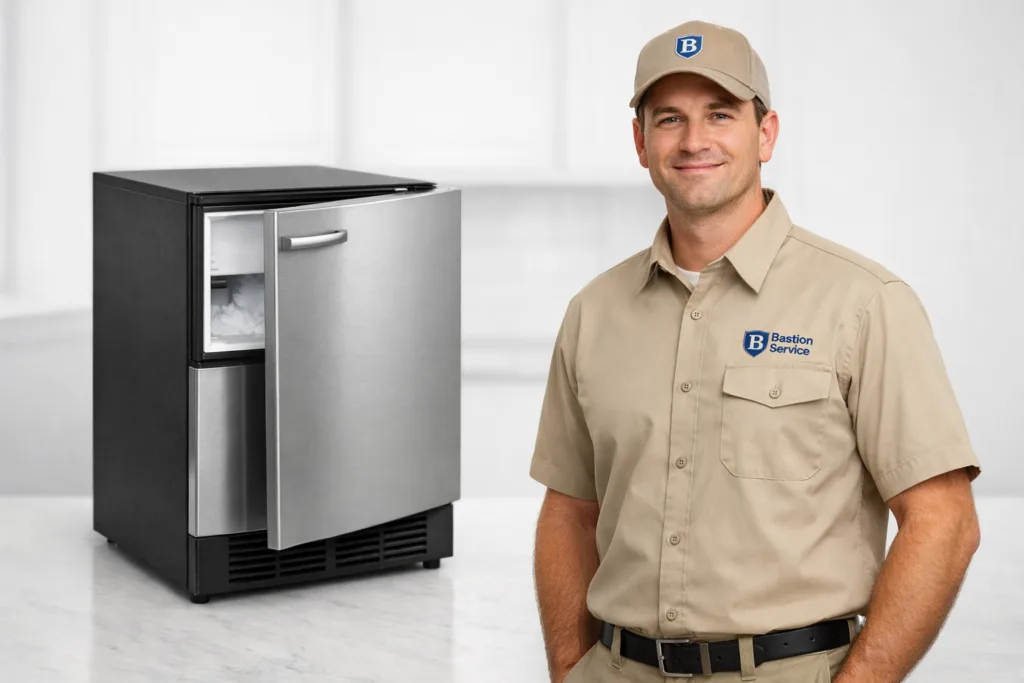
Ice maker problems often start as a small annoyance and turn into a daily inconvenience. A bin that stays empty, cubes that come out tiny or clumped together, or water collecting where it should not are all signs that the unit needs attention. With Summit models, the same symptom can come from several different causes, so the best repair path depends on how the problem is showing up in the home.
Common Summit ice maker problems in Inglewood homes
Most households notice the issue during regular use rather than all at once. Ice production may slow down over several days, the freezer may start showing frost near the fill area, or the first sign may be a puddle, a sheet of ice, or cubes that no longer look normal. In Inglewood homes, these patterns usually fall into a few repair categories.
No ice production at all
If the ice maker has stopped making ice completely, the problem may involve the water inlet valve, a frozen fill tube, a faulty shutoff mechanism, a control issue, or the ice maker assembly itself. It is also important to rule out freezer temperature trouble. If the compartment is not cold enough, the ice maker may never complete a normal cycle even though the real fault is elsewhere in the refrigerator.
Slow ice production
When the unit still makes ice but not enough for normal use, that usually points to restricted water flow, mild cooling loss, frost affecting airflow, or a valve that is no longer opening consistently. Slow production can be easy to underestimate at first, but it often signals an early-stage problem that becomes more noticeable over time.
Small, hollow, or misshapen cubes
Odd cube shape usually means the mold is not filling correctly or freezing under normal conditions. Low water pressure, a partially blocked supply line, mineral buildup, or a weak valve can all reduce fill volume. In some cases, incomplete cubes also reflect temperature instability inside the freezer.
Clumped ice in the bin
Clumped ice often means cubes are partially melting and refreezing together, or that water is dripping into the bin between cycles. That can happen when the freezer temperature is fluctuating, the fill volume is off, or the ice maker is overproducing moisture in one area. If clumping keeps returning after the bin is emptied, the underlying cause usually needs repair rather than routine cleanup.
Leaks, drips, or ice buildup
Water under the unit, frozen overflow near the mold, or thick ice sheets around the ice maker can point to overfilling, a valve that is not closing fully, a cracked line, or a drain-related issue. These symptoms should not be ignored, because repeated leaking can create larger ice blockages and interfere with normal freezer operation.
Why symptom patterns matter
Ice makers depend on timing, water delivery, freezer temperature, and harvest function all working together. A homeowner may only see “no ice,” but the source could be a supply issue, a control fault, an airflow problem, or a cooling problem affecting the whole compartment. That is why symptom-based testing matters. Replacing the ice maker itself will not solve a temperature problem, and replacing a valve will not help if the unit is failing to cycle.
Looking at the pattern usually helps narrow things down:
- No ice plus a warmer freezer: often points to a broader cooling issue.
- No ice but normal freezer temperature: more often suggests a valve, fill tube, control, or ice maker assembly problem.
- Thin or hollow cubes: commonly tied to water supply or fill problems.
- Overflow or frozen drips: often linked to valve or fill control trouble.
- Clumping and wet ice: may suggest temperature swings or repeated overfill.
Signs the problem may be bigger than the ice maker
Sometimes the ice maker is only the first part of the refrigerator to show that something is wrong. If the freezer seems softer than usual, food texture has changed, frost is building on interior panels, or the refrigerator section is also acting inconsistent, the issue may involve airflow, defrost performance, or cooling system function rather than the ice maker alone.
That distinction matters because a Summit unit that has stable temperatures and only one failed ice-making component is often a straightforward repair case. A unit with wider cooling symptoms may need a broader refrigeration diagnosis before any repair decision is made.
When to schedule service
It usually makes sense to schedule service when the ice maker has stopped producing for longer than a normal cycle period, output has dropped enough to affect daily use, cubes are regularly coming out malformed, or leaking is showing up inside or under the appliance. Waiting too long can turn a small fault into a messier one, especially when water is freezing where it should not.
Prompt service is especially worthwhile if you notice:
- the bin stays empty even after the freezer has had time to recover
- cube size has recently become smaller or more fragile
- water is dripping, pooling, or freezing near the ice maker
- the fill area has visible frost or solid ice blockage
- the freezer temperature seems less consistent than before
Repair or replacement: what usually makes sense
For many Summit ice maker problems, repair is reasonable when the refrigerator is otherwise in good shape and the fault is limited to a valve, sensor, switch, fill tube, control component, or the ice maker module. These are often isolated failures that can be addressed without replacing the entire appliance.
Replacement becomes more likely when the unit has multiple refrigeration issues, repeated breakdowns, heavy wear, or repair costs that no longer make sense compared with the condition of the appliance. If the ice maker issue comes with unstable cooling, frost management problems, and age-related decline, the conversation is different than it is for a single failed component.
What homeowners can check before the visit
A few observations can make the service call more efficient. You do not need to disassemble anything, but it helps to note what the appliance has been doing recently and whether the symptoms changed gradually or suddenly.
- Has the unit stopped making ice completely, or is it just making less?
- Are the cubes normal, hollow, small, stuck together, or melting together?
- Do you see frost, drips, or ice accumulation near the fill area?
- Does the freezer feel colder, warmer, or unchanged?
- Did the issue begin after a power interruption, filter change, or period of low use?
These details often help separate water supply problems from temperature-related issues and control failures.
Focused help for Summit ice maker issues in Inglewood
Bastion Service helps homeowners in Inglewood assess whether a Summit ice maker problem is a targeted repair or part of a larger refrigerator issue. The most useful approach is to match the repair plan to the actual symptom pattern, appliance condition, and likely failure point so the next step is sensible for the household, not just fast on paper.
When the problem is identified correctly, repairs are more likely to restore normal ice production without unnecessary parts swapping. That means less disruption in the kitchen and a better chance of getting the appliance back to reliable everyday use.