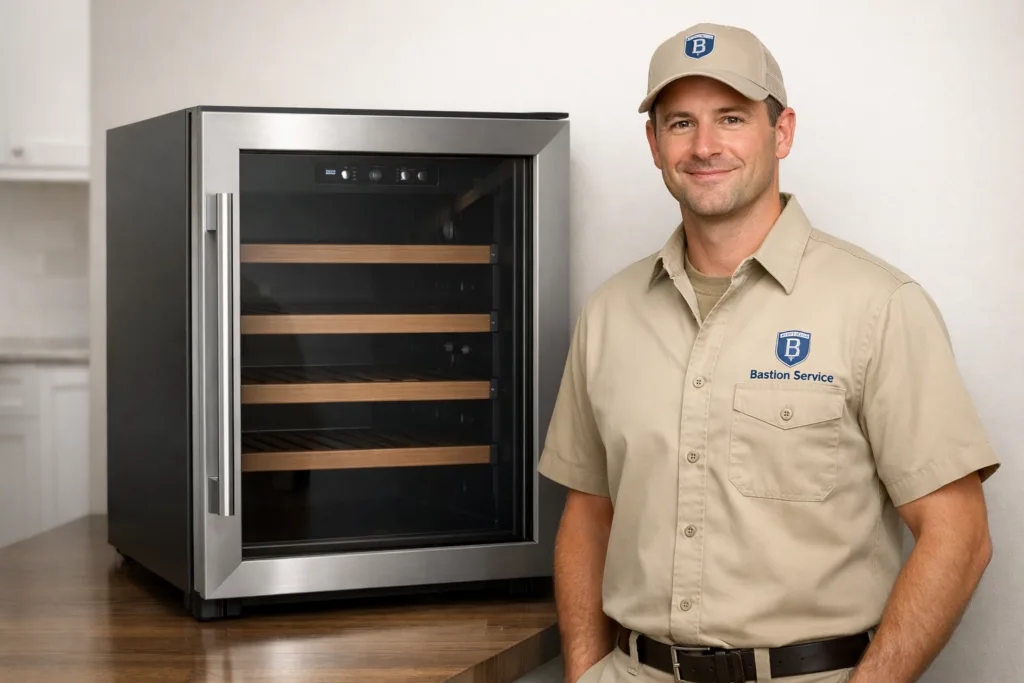
Temperature instability in a wine cooler is more than a convenience issue. Even small swings can affect storage conditions, and the cause is not always obvious from the first symptom alone. An EdgeStar unit may appear to have a cooling problem when the real issue is airflow, a control fault, a weak door seal, or a component beginning to fail under load.
Common EdgeStar Wine Cooler Problems in Inglewood Homes
Not cooling enough
If bottles are no longer reaching the expected temperature, several faults are possible. Restricted ventilation, dust buildup around the condenser area, a failing fan, inaccurate temperature sensing, or declining cooling performance can all lead to a warmer cabinet. Homeowners often notice this first when one shelf seems acceptable but the overall interior feels uneven or slow to recover after the door is closed.
This is usually worth checking sooner rather than later because prolonged warming can stress the system and undermine consistent wine storage.
Overcooling or freezing in parts of the cabinet
An EdgeStar wine cooler that starts freezing bottles or creating very cold zones may have a thermostat, sensor, or control issue. In some cases, poor internal airflow causes one area to get much colder than another. This is not normal operation, even if the display looks correct, because the appliance is no longer regulating temperature evenly.
Constant running or frequent cycling
When the compressor seems to run nearly all the time, the cooler may be struggling to reach or maintain the set point. Common reasons include dirty coils, poor ventilation clearance, warm air leaking past the door gasket, or a cooling system that is losing efficiency. On the other hand, rapid on-and-off cycling can point to sensor or control trouble.
Either pattern suggests the unit is working harder than it should, which can shorten the life of other components if ignored.
Condensation, water, or interior moisture
Moisture on the glass, damp shelving, or water collecting inside the cabinet often means warm air is entering where it should not. A worn gasket, alignment problem, drain issue, or airflow imbalance may be involved. In a home setting, this can seem minor at first, but repeated moisture exposure can damage labels, create odors, and make storage conditions less stable.
Fan noise, rattling, or new vibration
Wine coolers are not silent, but a noticeable change in sound usually means something has changed mechanically. A fan motor may be wearing out, a panel may be loose, or the appliance may no longer be sitting evenly. Clicking, buzzing, or rattling that starts suddenly is worth evaluating before a minor issue turns into a larger repair.
What These Symptoms Often Point To
Symptom patterns matter because the same complaint can come from very different faults. A warm cabinet with heavy condensation may suggest a sealing problem. A warm cabinet without much moisture may lean more toward airflow, controls, or cooling performance. A unit that is cold in one section and warm in another may indicate uneven circulation rather than a total loss of cooling.
- Warm interior: airflow restriction, dirty condenser area, fan trouble, sensor error, or sealed-system weakness
- Freezing bottles: thermostat fault, sensor misread, control issue, or poor air distribution
- Runs nonstop: heat exchange problem, leaking door seal, blocked ventilation, or low cooling efficiency
- Condensation: gasket wear, door alignment issue, drain problem, or repeated warm air intrusion
- Noise changes: fan motor wear, loose hardware, compressor stress, or leveling issues
That is why a useful repair visit starts with symptom-based testing rather than assumptions about a single part.
Signs the Problem Is Getting Worse
Some wine cooler issues begin subtly. The display may still light up, the cabinet may still feel somewhat cool, and the unit may seem usable for a while. But a few warning signs suggest the fault is progressing:
- The interior takes much longer to return to temperature after opening the door
- Condensation appears more often than it used to
- The cooler is louder during operation or vibrates more than before
- Temperatures vary from shelf to shelf
- The unit runs almost continuously during normal household use
When these patterns continue, ongoing use can put extra strain on the compressor, fan motors, and controls.
When to Schedule EdgeStar Wine Cooler Repair in Inglewood
Service usually makes sense when the cooler cannot hold its setting, develops recurring moisture, begins freezing contents, or starts making new noises that do not go away. It is also a good time to schedule repair if the controls respond but performance remains inconsistent, since that often points to a deeper issue than a simple setting change.
If the temperature was briefly off after heavy restocking or frequent door openings, short-term monitoring may be reasonable. If the same issue returns, however, it is less likely to be a one-time event.
When Continued Use Can Lead to More Damage
An EdgeStar wine cooler with unstable cooling may keep running in a way that increases wear without solving the underlying problem. A poor door seal can draw in warm air continuously. A failing fan can cause uneven temperatures and force the system to work longer. A control problem can trigger overcooling in one area and warming in another.
In addition to possible component damage, prolonged moisture and temperature fluctuation can affect cork condition, labels, shelving, and overall storage quality.
Repair or Replace?
Many wine cooler problems are repairable, especially when the issue involves fans, sensors, controls, gaskets, drains, switches, or other accessible components. Repair is often the more practical choice when the cabinet is in good condition and the unit has otherwise been reliable.
Replacement may make more sense when there is major cooling system failure, repeated breakdown history, or a repair cost that approaches the value of a comparable new cooler. The better decision depends on the exact fault, the age of the appliance, and how consistently it has performed.
What to Note Before a Service Visit
A few details can make diagnosis faster and more accurate. Before service, it helps to note:
- The approximate current cabinet temperature
- Whether the issue affects the whole interior or one section
- How long the symptom has been happening
- Whether there was a recent power interruption or appliance move
- Whether moisture, unusual sounds, or display irregularities appeared at the same time
Those observations help separate one-off operating conditions from developing mechanical or electronic faults.
Focused Help for Household Wine Cooler Problems
For homeowners in Inglewood, the main goal is to restore steady storage conditions without guessing at parts. When an EdgeStar wine cooler shows repeated temperature swings, condensation, fan noise, or control problems, a careful inspection is the best way to determine whether repair is practical and what needs attention first.