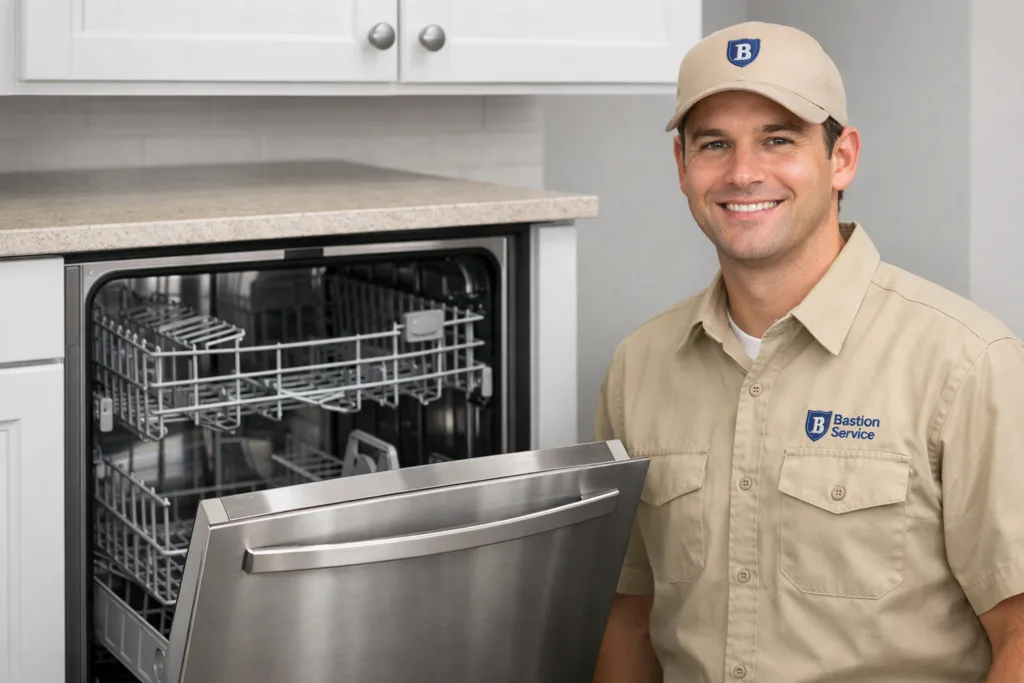
A Summit dishwasher that starts leaving standing water, cloudy glassware, or wet dishes at the end of the cycle usually gives warning signs before it fully stops working. The most useful next step is to match the symptom to the part of the wash cycle that is failing, whether that is filling, circulation, heating, draining, or latching.
Common Summit dishwasher problems in Inglewood homes
In residential kitchens, the same complaint can come from several different causes. A dishwasher that seems to run normally may still have weak spray pressure, low water fill, a drain restriction, or a heating problem that affects how detergent dissolves. Looking at the full pattern of symptoms usually tells more than one issue alone.
Standing water after the cycle
Water left in the tub often points to a drain problem, but not always the same one. A blocked filter, kinked drain hose, restricted air gap if present, or a failing drain pump can all leave water behind. Some units also pause the drain sequence when the control does not read the cycle correctly.
If the water is dirty or has food debris in it, the machine may not be clearing waste effectively between wash and drain stages. If the water looks relatively clean, the issue may be happening near the final drain. Repeated use in this condition can lead to odor buildup and extra strain on pump components.
Dishes come out dirty, gritty, or cloudy
Poor wash results usually mean the dishwasher is not moving enough water, not heating correctly, or not rinsing thoroughly. Summit dishwashers may show this as detergent residue on the door, food particles left on plates, or a white film on glasses and dark dishware.
- Blocked spray arm holes can reduce water coverage.
- A weak wash motor can lower spray pressure.
- Low incoming water fill can prevent proper circulation.
- Heating problems can leave detergent partially dissolved.
- Heavy filter buildup can recirculate soil back onto dishes.
Cloudiness is not always a detergent issue. If the rinse temperature is too low or the wash action is weak, dishes may never reach a properly clean finish even when the cycle appears to complete.
Leaks at the door or underneath the dishwasher
Leaks deserve attention early because small drips can become flooring or cabinet damage over time. Water around the front of the machine may come from a worn door gasket, misaligned door, over-sudsing, or spray patterns hitting the inner panel improperly. Water under the unit may come from hose connections, the pump area, or a fill-related problem.
Homeowners often notice leaks only during certain parts of the cycle. That detail matters. A leak during fill suggests one path, while a leak during circulation or drain suggests another. If towels are repeatedly needed around the base, the dishwasher should stay out of regular use until the source is identified.
Dishwasher will not start or stops mid-cycle
When a Summit dishwasher does not respond, starts only sometimes, or shuts off before finishing, the cause may involve the door latch, user interface, control board, power supply, or a safety interruption. In some cases, the machine powers on but will not actually begin washing, which can point to a latch or fill issue rather than a total electrical failure.
Mid-cycle shutdowns can also happen when the dishwasher struggles with heating, draining, or motor operation. A cycle that stalls at the same point each time usually provides a strong clue about which function is failing.
Wet dishes and low rinse temperature
If dishes are clean but still come out wet, the dishwasher may not be heating properly during the final stage. A failed heating element, thermostat-related issue, or control fault can leave the unit without enough heat for effective drying. This often shows up along with detergent residue, cooler interior temperatures, or longer-than-normal cycles.
Plastic items naturally retain water more easily than ceramic or glass, but a full load of unusually wet dishes often means the machine is not reaching the expected rinse or drying conditions.
Grinding, humming, or unusual wash noises
New noises are often an early sign of a developing failure. Grinding may indicate debris in the pump area or wear in moving components. A loud hum without normal washing action can point to motor trouble or a jammed pump. Repetitive knocking can come from a spray arm striking a dish, but it can also happen when wash action becomes uneven.
Noise matters most when it is paired with another symptom such as poor cleaning, incomplete draining, or a cycle that does not finish.
Why symptom-based diagnosis matters
Dishwashers often fail in ways that overlap. Poor cleaning can come from low fill, wash motor weakness, blocked spray arms, or a heat problem. A leak may be caused by a door seal, but it may also start with overfilling or abnormal circulation pressure. Replacing parts based only on the visible symptom can miss the real fault and lead to repeat service.
That is why a good service visit focuses on what the dishwasher is doing at each stage of operation. Fill level, circulation strength, drain response, heating behavior, and door function all help determine whether the problem is isolated or part of a broader wear pattern.
When repair is usually worth considering
Many Summit dishwasher problems are repairable when the issue is limited to a pump, valve, latch, heating component, hose, or control-related part and the rest of the machine is in solid shape. Repair tends to make sense when the cabinet is sound, the racks and interior are in decent condition, and the unit has not developed multiple unrelated failures.
Replacement becomes more likely when there is significant rust, structural deterioration, repeated breakdown history, or several major systems failing close together. For homeowners in Inglewood, the most sensible choice usually comes down to the age and condition of the dishwasher versus the scope of the current repair.
Signs you should stop using the dishwasher until it is checked
- Water is leaking onto the floor.
- The dishwasher will not drain and the water level keeps returning.
- You notice a burning smell or unusual electrical behavior.
- The machine trips power during operation.
- Grinding or harsh pump noise starts suddenly.
- The cycle stalls repeatedly and leaves dirty water inside.
Stopping use early can help prevent secondary damage to cabinetry, flooring, and adjacent kitchen surfaces. It can also prevent a pump or motor problem from worsening through repeated attempts to run the machine.
What homeowners usually want from a service visit
Most households are not looking for a long technical explanation. They want to know what failed, whether the dishwasher can be repaired sensibly, and whether it is safe to keep using in the meantime. That is especially true when the problem affects daily cleanup or creates a risk of leaks and water damage.
For Summit dishwasher repair in Inglewood, the most helpful outcome is a diagnosis tied to the exact symptom pattern, followed by a straightforward repair path based on the condition of the appliance. That gives homeowners a realistic way to decide between moving forward with repair or planning for replacement.