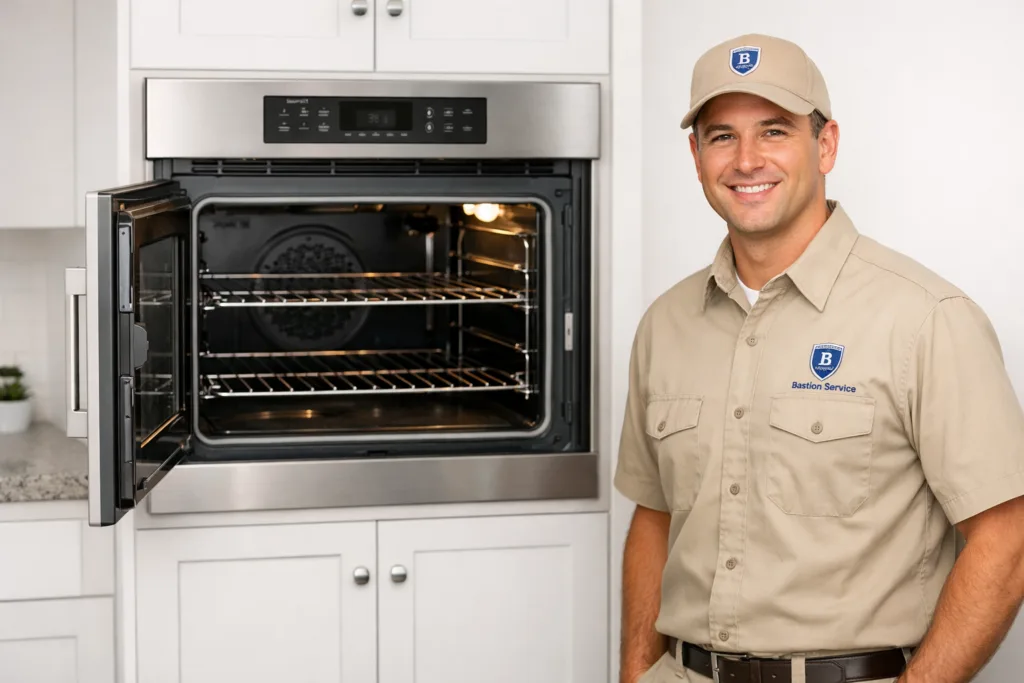
Built-in ovens can fail in ways that seem similar at first but come from very different causes. A Summit wall oven that will not reach temperature, heats unevenly, or shuts off during cooking may have a problem with the heating circuit, sensor feedback, electronic controls, wiring, or even the door seal. Identifying the pattern before replacing parts is the best way to avoid unnecessary expense.
How Summit wall oven problems usually show up
Most service calls start with one of a few complaints: the oven does not heat, preheating takes too long, baking results are inconsistent, or the controls stop responding normally. Because wall ovens combine high-heat components with electronic controls, a small fault in one area can affect overall cooking performance.
In many homes in Inglewood, the first sign is not a total breakdown. It may be cookies browning unevenly, casseroles needing extra time, or a unit that appears to preheat but never cooks as expected. Those symptoms often point to a part that is still working intermittently rather than failing completely.
Common symptoms and what they can mean
Oven will not heat at all
If the display is on but the cavity stays cold, possible causes include a failed bake element, broil element, temperature sensor, relay, wiring connection, or electronic control issue. On some models, a power supply problem can leave part of the oven responsive while the heating system does not operate correctly.
If the oven is completely unresponsive, the issue may involve incoming power, a failed control, a blown thermal safety component, or damaged wiring. A built-in appliance should not be forced to keep running when the cause is unknown.
Slow preheating
Slow preheat often develops gradually. The oven may eventually reach the set temperature, but only after much longer than normal. This can happen when an element is weakening, a sensor is reading inaccurately, or the control is not cycling heat properly. Homeowners sometimes adapt by adding extra cooking time, but that usually does not fix the underlying problem.
Uneven baking or temperature swings
When one rack cooks faster than another or dishes come out overdone at the edges and undercooked in the middle, the problem may involve temperature sensing, heating consistency, or heat retention. A worn door gasket, a hinge issue, or poor element performance can all contribute to uneven results.
Temperature fluctuation is especially frustrating because the oven may seem normal during a quick check but fail during longer baking cycles. If the same recipe starts producing inconsistent outcomes, the oven is often telling you that regulation is no longer accurate.
Control panel or keypad problems
An unresponsive keypad, flashing display, random resets, or error messages may indicate a failing user interface, control board issue, loose connection, or power-related fault. Some control problems also affect heating commands, which makes the oven appear to have a heat failure when the real issue starts in the electronics.
Door not closing properly
A wall oven door that will not shut evenly can let heat escape and make the appliance work harder to maintain temperature. Damaged hinges, a worn gasket, or alignment issues can reduce performance even when the heating components are still functioning. If the lock mechanism is involved, the oven may also refuse to start or may interrupt certain cycles.
Why symptom patterns matter
Two ovens can show the same complaint for different reasons. For example, “not heating” might mean a bad element on one unit and a control failure on another. “Runs too hot” could come from a sensor problem, relay issue, or calibration drift. Looking at when the problem happens, how often it appears, and whether it affects bake, broil, or both helps narrow down the repair path.
- If the oven heats sometimes but not always, intermittent control or wiring faults become more likely.
- If broil works but bake does not, the bake circuit deserves close attention.
- If preheat seems normal but cooking results are poor, temperature regulation or heat retention may be the bigger issue.
- If the display behaves oddly along with heating problems, the electronics may be involved rather than only the heating parts.
Signs you should stop using the oven
Some issues are more than a cooking inconvenience. It is smart to stop using the unit and have it checked if you notice any of the following:
- Breaker trips during operation
- Burning smell near the controls or wiring area
- Visible element damage
- Shutting off mid-cycle repeatedly
- Sparking, arcing, or unusual buzzing
- Door lock problems that interfere with normal operation
Because a wall oven is installed into cabinetry, access and heat management matter. Continuing to use a unit with an electrical or overheating issue can increase the chance of more extensive damage.
Repair or replace?
Many Summit wall oven issues are still repairable when the problem is limited to a sensor, heating element, wiring repair, gasket, latch, or a specific control-related component. Repair becomes less appealing when the appliance has multiple failures at once, recurring electronic problems, severe cavity damage, or a repair cost that is too close to replacement value.
A useful decision usually depends on:
- The exact failed part or system
- The overall condition of the oven
- Whether the problem is isolated or part of a longer history
- How likely the repair is to restore normal everyday cooking
What homeowners in Inglewood should note before service
A few details can make troubleshooting faster and more accurate. Before scheduling service, it helps to note whether the oven fails during bake, broil, or both; whether the display stays on; whether preheat completes; and whether the issue is constant or intermittent. Error codes, unusual noises, and the presence of heat escaping around the door can also be useful clues.
If the problem seems tied to a recent power interruption, self-clean cycle, or sudden temperature change in performance, mention that as well. Those details can point toward control, lock, or thermal safety issues that may not be obvious from the symptom alone.
Focused help for Summit wall ovens in Inglewood
For Summit wall oven repair in Inglewood, the most helpful next step is an inspection based on how the oven is actually failing in the home. Whether the issue is no heat, slow preheat, uneven baking, or a control panel that no longer responds correctly, symptom-based testing helps determine if the repair is straightforward or if replacement is the better investment.
That gives homeowners a more realistic answer about what failed, what it will take to fix it, and whether the oven is likely to return to stable daily use.