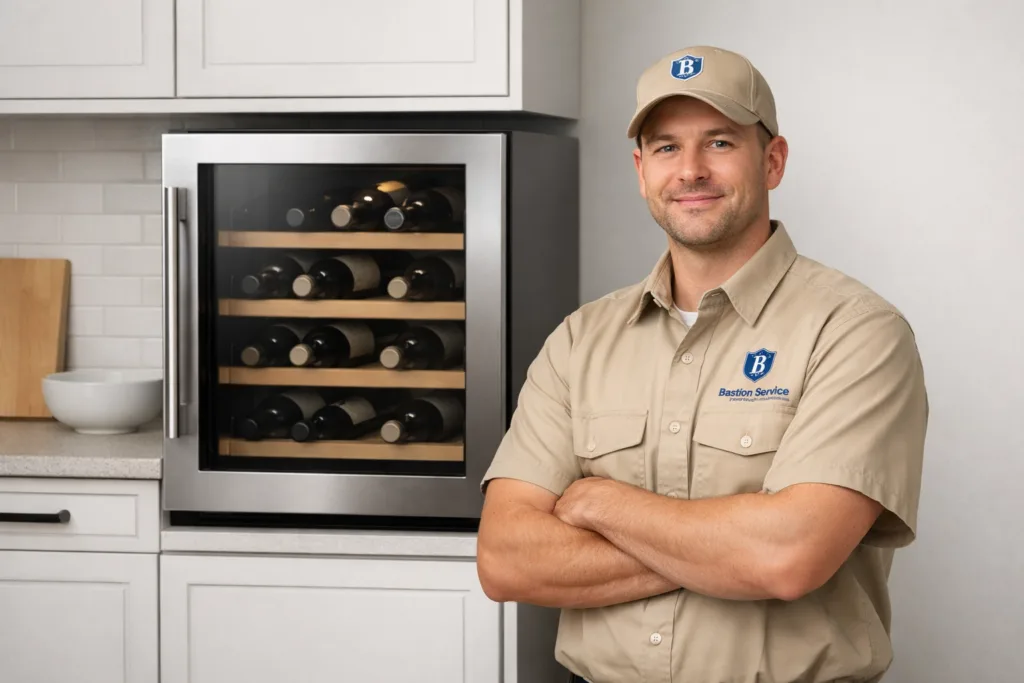
Common wine cooler problems and what they may indicate

A wine cooler can fail in ways that seem minor at first, then become more disruptive over time. A cabinet that feels only slightly warm, a display that looks normal even though bottles are not staying at the right temperature, or a fan noise that gets louder each week can all point to a real cooling problem. In many homes, the cause turns out to be restricted airflow, a worn door gasket, a faulty thermostat or sensor, a failing evaporator fan, or a control issue that is interrupting normal cycling.
Uneven temperatures are also common. If the top shelves feel warmer than the lower ones, or one zone holds temperature while another drifts, the issue may be related to circulation, sensor placement, frost buildup, or a control board problem. When the appliance has to run longer to recover after the door opens, it can also suggest airflow trouble similar to what homeowners see with freezer temperature recovery and frost-related performance problems. Freezer Repair in Inglewood
Water inside or beneath the unit is another symptom that deserves attention. Condensation can be caused by a door that is not sealing properly, a drain restriction, high humidity, or a cabinet that is cycling incorrectly. If moisture appears along with unstable temperatures, that often means the appliance is working harder than it should and still not protecting the interior storage environment.
Noise, vibration, and cycling changes
Wine coolers are usually designed to operate quietly, so a sudden rattle, buzz, clicking sound, or persistent hum often signals a part that is wearing down or shifting out of place. A fan blade may be striking nearby housing, the cabinet may no longer be level, or the compressor may be straining during startup. If the sound is paired with reduced cooling or longer run times, that usually means the issue has moved beyond a simple nuisance.
Short cycling can be especially misleading. A unit may turn on, run briefly, then shut off before reaching its target temperature. That pattern may point to a thermostat problem, relay trouble, sensor inaccuracy, or overheating around the compressor area. When ignored, these conditions can lead to bigger electrical or cooling-system damage.
Why diagnosis matters before repair decisions
Different faults can create the same symptom. A cooler that seems to have a serious sealed-system issue may actually have dirty condenser coils, blocked ventilation, a failed fan motor, or a control fault. Likewise, a unit that appears to be overcooling may not have a thermostat set too low at all; it may be misreading temperature and running longer than necessary.
That is why diagnosis should include more than checking whether the cabinet feels cold. Useful testing looks at temperature behavior, door sealing, fan operation, drainage, electrical supply, sensor response, and how the compressor is cycling. For homeowners in Inglewood, that process helps separate a repairable part failure from a more expensive cooling-system problem and avoids replacing components based only on guesswork.
In homes with several refrigeration appliances, symptom comparison can also help. If a primary kitchen unit is showing similar temperature drift, moisture, or airflow issues, broader refrigeration patterns may be worth checking. Refrigerator Repair in Inglewood
Signs the problem should not be ignored
Some wine cooler issues are inconvenient but manageable for a short time. Others should be addressed quickly because they tend to worsen with continued use. If the unit is no longer holding a stable temperature, running constantly, leaking, tripping a breaker, or giving off a hot or burnt smell, service should not be delayed.
- Interior feels cool sometimes but not consistently
- Display temperature does not match actual cabinet temperature
- Fan runs loudly or starts and stops unusually often
- Condensation forms repeatedly on glass or around the door
- Compressor clicks, hums, or struggles to restart
- Cabinet stays warm after door openings longer than it used to
Intermittent cooling is especially important to take seriously. A cooler that works only part of the time is often in the early stages of a larger failure. The appliance may still appear functional, but repeated warm-up cycles can affect storage conditions long before the cooler stops completely.
Repair versus replacement considerations
Not every wine cooler problem leads to replacement. Many service calls involve issues that are often practical to repair, such as a damaged gasket, thermostat fault, fan motor failure, drain blockage, sensor issue, or electronic control problem. If the cabinet is in good condition and the cooling system is otherwise stable, repair may restore reliable operation without the cost of replacing the whole appliance.
Replacement becomes more likely when the unit has major sealed-system failure, compressor wear in an older appliance, widespread corrosion, or several worn components failing close together. Age alone does not decide the outcome. The better measure is the overall condition of the cooler, how severe the current failure is, and whether the repair meaningfully improves long-term performance.
What a service visit should evaluate
A thorough wine cooler diagnosis should focus on how the appliance is actually operating in the home, not just whether it powers on. That usually includes checking temperature consistency, condenser condition, evaporator airflow, fan function, door alignment, gasket contact, drainage, control response, and signs of electrical stress. Installation conditions matter too, especially when a built-in or under-counter unit has limited ventilation around the cabinet.
If the home also has an ice system nearby, shared moisture or supply concerns can sometimes complicate diagnosis around refrigeration spaces, particularly where water lines, fill components, or nearby leaks are involved. Ice Maker Repair in Inglewood
For many households, the most helpful result of a service visit is understanding not just what failed, but why the symptom showed up the way it did. That makes it easier to decide whether the repair is straightforward, whether related wear should be monitored, and whether any placement or maintenance changes could help prevent the same issue from returning.
Care tips that can help prevent repeat cooling problems
While some failures are unavoidable, a few habits can reduce strain on a residential wine cooler. Keep vents clear, avoid overloading shelves in a way that blocks circulation, clean dust from accessible condenser areas when recommended, and check that the door closes fully every time. If the appliance is in a warmer part of the home, pay attention to changes in cycling during hotter periods, since poor ventilation can make small issues show up faster.
Specialty cooling appliances also benefit from early attention when performance changes. A small shift in cabinet temperature, a bit of new condensation, or a light vibration can be the first sign that the unit needs service before cooling loss becomes more severe. That same early-warning approach is useful with other dedicated cooling appliances as well.
Residential wine cooler repair in Inglewood
For homeowners in Inglewood, wine cooler problems are usually easiest to solve when they are checked before complete cooling loss sets in. Whether the symptom is temperature instability, water buildup, unusual fan noise, or a unit that runs but does not cool properly, a focused diagnosis gives a clearer path forward and helps protect the appliance from unnecessary additional wear.