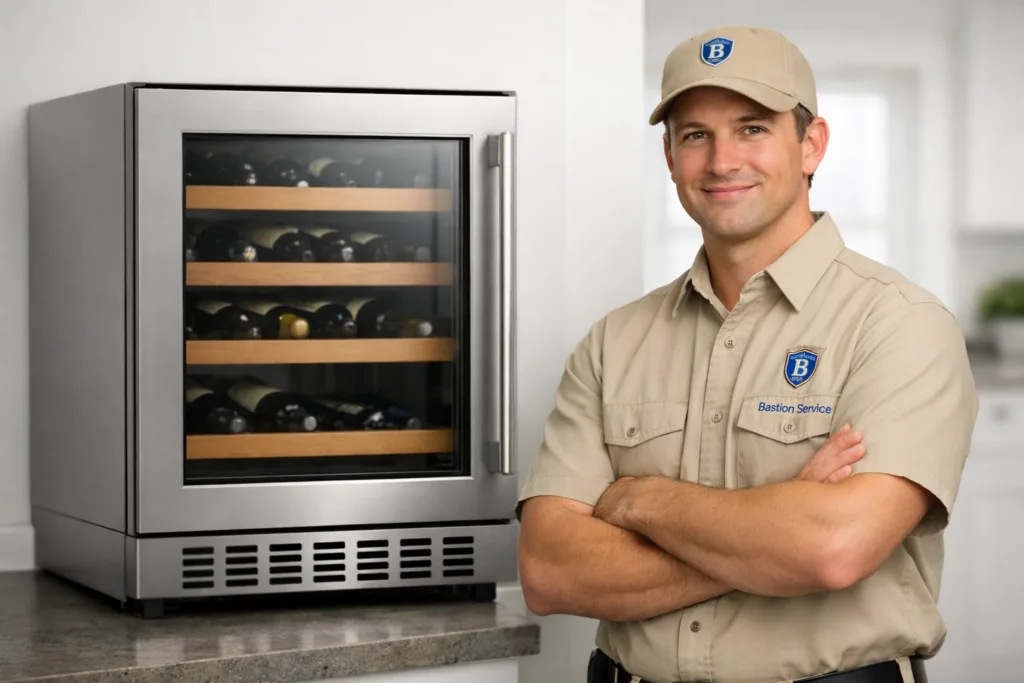
A Perlick wine cooler that stops holding a steady cabinet temperature, begins short cycling, or develops moisture inside the compartment can put stored bottles at risk quickly. The same outward symptom can come from very different causes, so accurate testing matters before any parts are replaced.
Why symptom patterns matter with a wine cooler
Wine coolers are designed for stability more than raw cooling power. When temperatures drift, bottles freeze near the back, or humidity starts building inside the cabinet, the issue may involve airflow, temperature sensing, control response, door sealing, drainage, or compressor startup. Looking at the full pattern helps separate a minor service issue from a larger refrigeration problem.
That matters because a unit may still run, light up, and respond on the display while the actual storage conditions are no longer consistent. In many homes in Inglewood, the first sign is not complete failure but gradual performance change.
Common Perlick wine cooler problems in Inglewood homes
Not cooling enough
If the cabinet feels warmer than the setting, several faults are possible. Restricted condenser airflow, a failing evaporator fan, a weak start device, a bad sensor, or sealed system trouble can all cause poor cooling. A warmer interior with a normal-looking display is especially common when the control side and the actual refrigeration performance are no longer matching.
- Upper shelves warming first
- Cabinet temperature drifting during the day
- Long run times without reaching the set point
- Bottles feeling noticeably warmer than expected
Too cold or freezing bottles
Overcooling usually points to a control or sensing problem rather than “extra strong” cooling. If a sensor is out of range, airflow is uneven, or the control board is not reacting properly, parts of the cabinet can become colder than intended. This can be especially noticeable near vents, rear walls, or tighter shelf areas.
Freezing is worth addressing early because it often comes with wider temperature swings that affect the entire storage environment.
Constant running or frequent cycling
A wine cooler that rarely shuts off may be struggling to remove heat efficiently or may be losing cold air through a poor door seal. If it starts and stops too often, that can point to control faults, electrical issues, or compressor startup problems. Either pattern increases wear over time.
Frequent cycling can also create unstable temperatures even when the average cabinet temperature seems close to normal.
Condensation or water inside the unit
Moisture inside the cabinet can come from a blocked drain, excess humidity, air leaks around the door gasket, or a defrost-related problem. Water under the unit should also be taken seriously, since it may damage flooring and can indicate an ongoing drainage or temperature-control issue.
- Water collecting near the bottom of the cabinet
- Droplets on shelves or inner walls
- Recurring puddles under the cooler
- Musty odor from trapped moisture
Buzzing, clicking, rattling, or fan noise
Some operating sound is normal, but a noticeable change in noise often points to a developing fault. Clicking during startup may suggest trouble with the start relay or related electrical components. Uneven humming can reflect compressor strain. Scraping or repetitive fan noise may come from a worn motor, obstruction, vibration, or ice buildup affecting the blade path.
Signs the problem may be getting worse
Some issues stay relatively stable for a while, while others tend to escalate. If the cooler is overheating around the machine compartment, running nearly nonstop, leaking repeatedly, or showing larger temperature swings from one day to the next, continued use may put more stress on the compressor, fan motors, and controls.
Turning the temperature lower to compensate usually does not fix the underlying cause. It often only hides the problem temporarily while performance continues to decline.
What may be checked during service
A thorough evaluation usually includes more than reading the display. The goal is to confirm how the cooler is actually performing and which component is responsible for the symptom.
- Actual cabinet temperature versus set temperature
- Evaporator and condenser airflow
- Fan operation and abnormal noise sources
- Door gasket condition and cabinet sealing
- Sensor and control response
- Drain condition and signs of excess condensation
- Compressor startup behavior
This kind of testing helps determine whether the fault is isolated and repairable or whether it points to a larger refrigeration issue.
When repair is often worthwhile
Many Perlick wine cooler problems can be resolved without replacing the appliance. Repairs are commonly worthwhile when the issue involves sensors, controls, fan motors, startup components, drainage, or door sealing. These faults can affect performance significantly, but they do not always mean the cooling system itself has failed.
Addressing these problems early can help restore stable operation and reduce the chance of added wear on other parts.
When replacement may be the better choice
Replacement becomes more worth considering when testing points to major sealed system failure, repeated expensive repairs, or broad wear across an older unit. The decision usually comes down to the confirmed fault, the overall condition of the cooler, and whether a repair is likely to restore dependable temperature control rather than only improve it briefly.
What homeowners in Inglewood should expect
For a household wine cooler, the priority is straightforward: identify the exact cause of the symptom, explain how serious it is, and determine whether repair makes sense for the unit in its current condition. For Perlick Wine Cooler Repair in Inglewood, that gives homeowners a practical way to decide whether to repair now, stop using the cooler until the problem is corrected, or plan for replacement if the failure is more extensive.