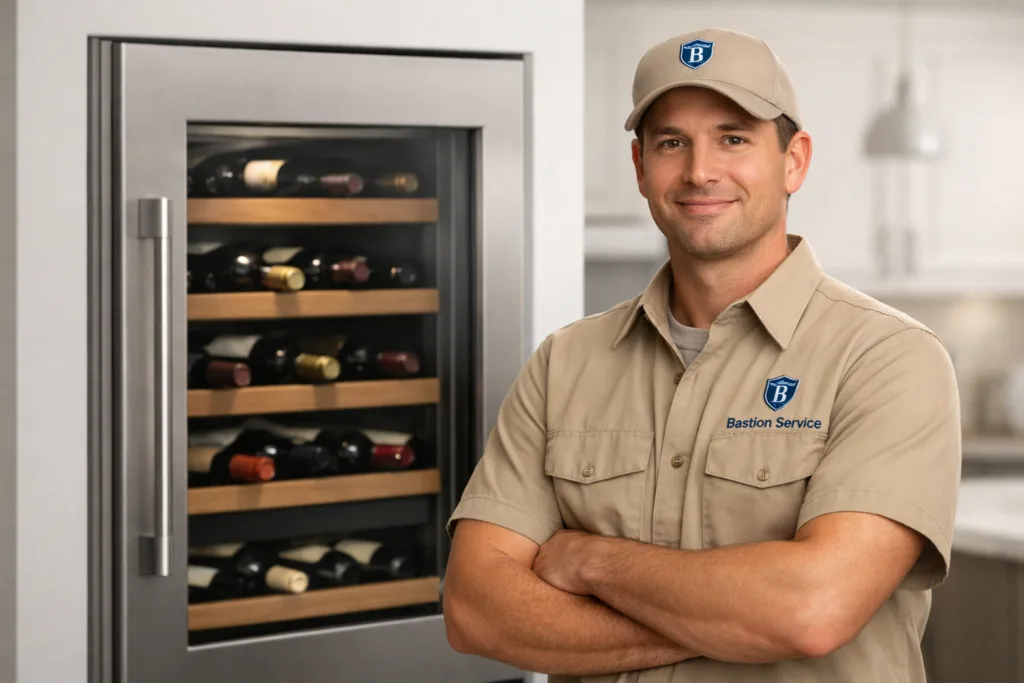
Wine coolers tend to show a small symptom before they fail outright. A slight temperature drift, extra humidity on the glass, or a new fan noise can all point to an issue that is still manageable if it is checked early. For homeowners in Inglewood, the main goal is protecting steady storage conditions while identifying whether the problem is related to airflow, controls, the door seal, or the cooling system itself.
Common Sub-Zero wine cooler symptoms and what they often mean
Several problems can look similar at first, which is why symptom patterns matter. A cabinet that feels warm may have a failed fan, a sensor reading problem, or a sealed system issue. Condensation may come from warm air leaking past the gasket, a door alignment problem, or poor internal circulation. A unit that runs constantly may be trying to recover from temperature loss, or it may be struggling to cool at all.
Pay attention to what changed first. If the unit began making noise before the temperature shifted, airflow components may be more likely. If the display seems normal but bottles are not staying cool enough, the actual cabinet temperature may not match the reading on the controls. If moisture appeared around the same time the door started closing poorly, the gasket or door fit may be part of the problem.
Temperature swings or a cabinet that runs warm
Sub-Zero wine coolers are built to maintain a stable environment, so repeated temperature swings usually mean something is interfering with normal operation. In some cases, bottles are packed too tightly against vents and block circulation. In others, the evaporator fan is weak, a thermistor is drifting out of range, or the controls are not responding correctly to actual cabinet temperature.
If the cabinet is warming slowly over several days, that can suggest declining cooling performance rather than a one-time setting issue. If it warms suddenly, electrical components, fan operation, or a control fault may be involved.
Condensation inside the cabinet or around the door
Moisture is more than a cosmetic issue. It can affect labels, wood shelving, and storage consistency. Condensation usually points to humid room air entering the cabinet or cold surfaces not being managed properly by airflow. A worn gasket, misaligned door, or repeated short cycling can all contribute.
Some homeowners notice droplets on shelves or near the glass. Others see moisture around the perimeter of the door. In either case, the pattern helps narrow the cause. Moisture concentrated near the seal often suggests an air leak, while general interior dampness may be tied to circulation or cooling behavior.
Buzzing, clicking, rattling, or fan noise
Not every sound means a major failure, but new sounds should be checked if they are persistent. A rattle may be vibration from a loose panel or fan blade interference. A repeated click can indicate a start or control issue. A louder hum than usual may mean the system is working harder to maintain temperature.
Noise matters most when it appears alongside another symptom. Sound plus warming is more concerning than sound alone. Sound plus condensation can indicate airflow imbalance or overrun conditions inside the cabinet.
Why wine cooler diagnosis should be symptom-based
A wine cooler is a system of related parts, and one visible symptom does not always identify the failed component. Replacing a thermostat because the cabinet feels warm will not help if the real problem is a fan motor. Swapping a gasket will not solve condensation caused by circulation trouble. The most reliable repair path starts with how the unit behaves during operation, not just what the display says.
That process usually includes checking actual cabinet temperature, confirming fan movement, evaluating compressor behavior, inspecting gasket condition, and verifying that the controls respond properly. This kind of clear diagnosis helps avoid unnecessary parts replacement and gives the homeowner a better sense of whether repair is practical.
Signs the problem is getting more urgent
Some issues can wait a short time for a scheduled appointment. Others should be addressed sooner because continued use may add strain or put stored bottles at risk. If the unit cannot hold temperature, is running nearly nonstop, or has repeated control problems, delaying service can make the repair path less favorable.
- The interior is noticeably warmer than the setting.
- The cooler runs for very long periods or seems to never cycle off.
- Condensation keeps returning after you wipe it away.
- The door does not seal evenly or pops back open slightly.
- The display flashes, resets, or does not respond normally.
- You hear fan scraping, repeated clicking, or louder-than-usual compressor noise.
When higher-value bottles are stored inside, steady temperature becomes even more important, so it makes sense to schedule service before the symptom turns into a full cooling loss.
Repair issues that are often fixable
Many Sub-Zero wine cooler problems are repairable when they are caught before major system damage develops. Common serviceable issues include worn door gaskets, circulation fan failures, sensor or thermistor faults, control response problems, and some electrical component failures. These types of repairs are often more straightforward when the cabinet condition is otherwise good and the cooling system has not been overstressed for a long period.
Homeowners in Inglewood often want to know whether an inconsistent wine cooler automatically means replacement. In many cases, it does not. If the problem is isolated and the unit has been reliable overall, repair can still make good sense.
When replacement becomes part of the conversation
There are situations where repair is less attractive. Major sealed system trouble, repeated breakdowns, or a cabinet with multiple compounding issues can change the decision. Age matters, but age alone does not decide the outcome. The more useful question is whether the diagnosed fault is targeted and repairable, or whether the unit is showing signs of broader decline.
A repair recommendation should account for the exact failure, the overall condition of the appliance, and the likelihood of stable performance after the work is completed. That gives the homeowner a realistic basis for deciding what to do next.
Simple checks to make before service
Before an appointment, a few basic observations can help speed diagnosis:
- Note the set temperature and, if possible, the actual temperature inside.
- Write down when the problem started and whether it is constant or intermittent.
- Pay attention to any recent noise changes.
- Check whether the door closes flush and the gasket looks fully seated.
- Look for bottles or shelves blocking interior vents.
Avoid repeatedly changing settings in an attempt to force the cooler colder. That can make the symptom pattern harder to interpret. It also helps to keep door openings to a minimum until the unit is checked.
What homeowners in Inglewood should expect from a repair visit
A useful service visit should leave you with more than a guess. You should understand what symptom was confirmed, what component or system appears to be causing it, and whether the repair is likely to restore dependable storage conditions. For a household appliance like a built-in wine cooler, that explanation matters because the decision is not just about getting it running again, but about whether it can hold temperature consistently after the repair.
For Sub-Zero wine cooler issues in Inglewood, the best outcome usually comes from matching the repair plan to the actual fault instead of treating every warm cabinet, moisture problem, or noise complaint as the same issue.