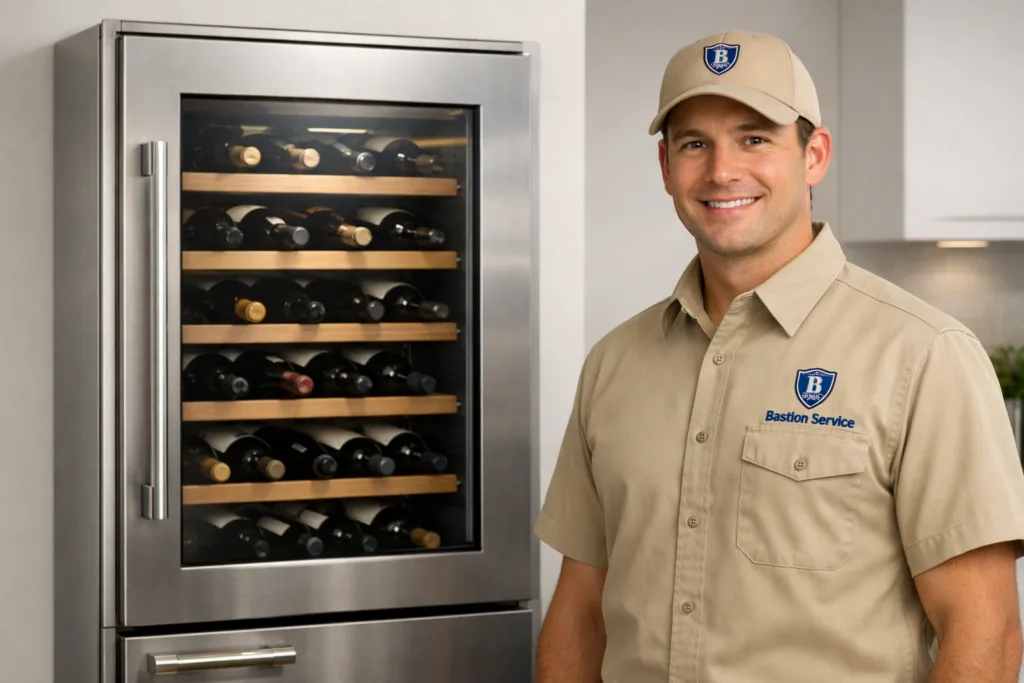
A Viking wine cooler that runs warm, develops moisture, or starts making new noises can put stored bottles at risk faster than many homeowners expect. Similar symptoms can come from very different causes, including restricted airflow, fan failure, sensor drift, control problems, drain issues, or a door that no longer seals tightly. Sorting out the exact pattern is the fastest way to understand whether the problem is minor, repairable, or pointing to a larger cooling-system issue.
What homeowners in Inglewood often notice first
Temperature problems are usually the first sign. You may notice bottles feel warmer than expected, one section of the cabinet stays cooler than another, or the unit seems to run for long stretches without holding a steady setting. On a Viking wine cooler, that can point to anything from poor ventilation and dirty condenser areas to faulty fans, controls, or sealed-system performance problems.
Moisture is another common complaint. Condensation on the glass, damp shelving, water under the unit, or recurring frost can all suggest air leaks, drainage issues, interrupted cooling cycles, or an alignment problem that keeps the door from closing properly. Even a small seal problem can make the cooler work harder than it should.
Noise changes also deserve attention. Buzzing, clicking, rattling, humming that seems louder than usual, or fan noise that starts and stops irregularly can indicate wear in moving parts or vibration related to mounting, airflow, or compressor operation. Not every sound means a major failure, but a noticeable change should not be ignored.
Symptom-based repair guidance
Wine cooler not cooling enough
If the cooler is powered on but not reaching the set temperature, the cause may be as simple as restricted airflow or as serious as a sealed-system fault. Common possibilities include a dirty condenser, weak fan performance, a bad temperature sensor, a control issue, or an overheating compressor. Because several different faults can create the same “not cooling” complaint, testing matters more than guessing.
In daily use, this problem may show up as bottles that never feel properly chilled, a cabinet that seems cool only near one shelf, or a unit that briefly cools and then loses ground again. Those details help narrow down whether the problem is airflow-related, electronic, or mechanical.
Temperature swings or overcooling
Some Viking wine coolers do not simply run warm. They may swing between too cold and too warm, or cool unevenly through the cabinet. If labels feel damp, bottles near one area are much colder than others, or the displayed setting does not match actual cabinet conditions, the issue may involve sensor accuracy, thermostat logic, control board behavior, or uneven air circulation.
These symptoms can be frustrating because the unit may appear to be working part of the time. In reality, unstable temperatures often mean the cooler is not regulating properly, which is exactly what a wine storage appliance is supposed to do well.
Unit runs constantly
A wine cooler that rarely shuts off is often compensating for heat gain or reduced efficiency. Causes can include dusty condenser components, blocked ventilation space, weak fans, failing door gaskets, or cooling-system strain. If the cabinet still is not reaching the selected temperature while running nonstop, continued operation may add wear to the compressor.
This is especially important if the outside of the cabinet feels unusually warm or the sound of operation has changed. Long run times without proper cooling usually mean the appliance is working harder while delivering less.
Condensation, leaks, or frost buildup
Visible moisture usually means more than a cosmetic issue. Condensation on the door can develop from warm air entering through a weak gasket or from inconsistent cooling inside the cabinet. Water underneath the unit may point to a drain problem, while repeated frost can indicate air intrusion or cooling-cycle faults.
If the same moisture problem keeps returning after wiping things down, the issue is likely mechanical rather than just environmental. Left alone, excess moisture can affect shelving, labels, nearby flooring, and overall storage conditions.
Fan noise, buzzing, or rattling
Fan-related problems often start with sound before they become performance issues. A fan blade may be obstructed, a motor may be weakening, or vibration may be developing around mounted components. Buzzing can also come from compressor operation, while rattling may result from panels, internal parts, or placement issues.
The key sign is change. If the cooler always made a soft operating hum and now sounds sharper, louder, or more erratic, the shift is worth checking before another component is affected.
Controls, lights, or display problems
If the display is blank, settings do not respond, interior lights stop working normally, or the controls behave inconsistently, the fault may be electrical rather than purely cosmetic. Wiring issues, interface failure, power-supply problems, or control board faults can all affect how the appliance regulates temperature.
Homeowners sometimes assume a display problem is separate from cooling performance, but on a Viking wine cooler the two can be closely connected. A unit that powers on yet fails to hold settings should still be treated as a functional refrigeration problem.
Why door seal and airflow issues matter so much
Wine coolers depend on stable interior conditions. A door gasket that has become loose, brittle, or uneven allows warm room air to enter the cabinet. That forces longer run times, creates condensation, and can lead to uneven temperatures. In the same way, blocked vents or poor airflow inside the unit can create warm and cold spots that make the cooler seem unreliable even when some components are still working.
These issues may sound minor, but they often sit at the center of larger complaints about temperature drift, constant cycling, and moisture. A service visit should look at sealing surfaces, hinge alignment, internal circulation, and surrounding ventilation rather than focusing on only one visible symptom.
When to stop relying on the unit
If the cabinet is clearly warming, bottles are no longer being held at a stable temperature, water is collecting beneath the cooler, or mechanical noise becomes pronounced, continued use may not be the best choice. An unstable wine cooler can affect both the appliance and what is stored inside it.
It also makes sense to pause use if the cooler is running constantly but not cooling correctly, if frost keeps returning, or if the cabinet feels unusually hot around operating areas. Those signs can indicate a problem that may worsen with extended operation.
When service makes sense
Schedule service when the selected temperature no longer matches actual cabinet conditions, the door does not seal firmly, moisture keeps coming back, or new sounds continue for more than a short period. Service is also appropriate when the cooler appears to have power but cannot regulate cooling the way it should.
Waiting too long can make repair more expensive. A fan issue may strain other components over time, and a moisture problem can spread beyond the appliance itself. What begins as a control or airflow fault can become a larger failure if the cooler keeps operating under the wrong conditions.
Repair or replacement: how to evaluate the choice
Many Viking wine cooler problems are repairable, especially when they involve fans, sensors, controls, drainage, lighting, wiring, or door-seal issues. Replacement usually enters the conversation when there is major sealed-system failure, repeated high-cost breakdowns, or broad age-related wear across multiple parts of the unit.
The real question is not simply whether the cooler can be repaired, but whether it can return to stable, reliable operation without creating another round of problems soon after. For homeowners in Inglewood, that decision is easiest when the failed system has been identified clearly and the likely repair path is laid out in practical terms.
What a focused service visit should accomplish
A worthwhile appointment should do more than confirm that the cabinet is not cooling correctly. It should narrow the fault to the real source by checking temperature performance, airflow, condenser condition, fan operation, controls, sensors, drainage, door sealing, and overall operating behavior. That kind of inspection helps separate routine repair issues from larger cooling-system concerns.
When a Viking wine cooler starts losing temperature control, developing condensation, or making unfamiliar noise, the best next step is to identify the exact cause and determine whether repair will restore dependable storage conditions in your home.