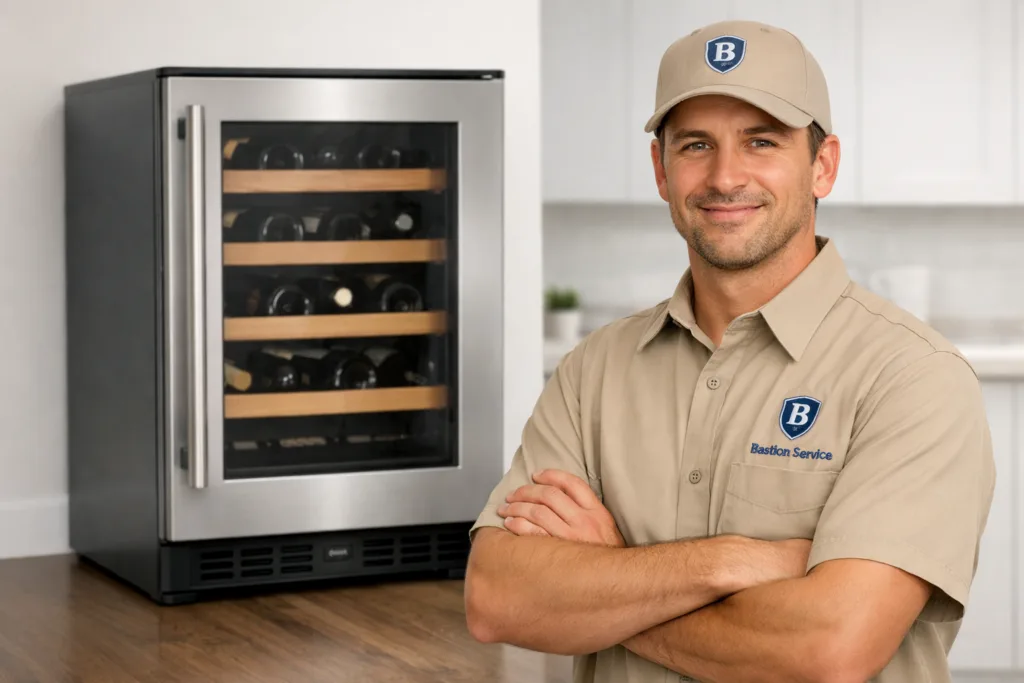
Common U-Line Wine Cooler Problems in Inglewood Homes

Wine coolers usually give warning signs before they fail completely. In many Inglewood homes, the first clue is a cabinet that no longer feels consistently cool, bottles that are warmer than expected, or a unit that seems to run far longer than normal. Other owners notice condensation on the glass, water near the base, or a new buzzing or rattling sound that was not there before.
Those symptoms can come from very different causes. A blocked airflow path, dirty condenser area, weak door gasket, failing fan motor, inaccurate temperature sensor, control problem, or sealed-system issue can all change how the cooler performs. Because the repair path depends on the exact fault, symptom-based troubleshooting is usually the best way to decide what should be repaired and what should simply be ruled out.
What Temperature Problems Usually Mean
The cooler runs warm
If the cabinet stays above the selected temperature, the problem may be relatively straightforward or more serious. Airflow restrictions, condenser buildup, a door that is not sealing tightly, or a fan that is not moving air properly can all leave the interior too warm. In other cases, weak cooling can point to a sensor or control issue, or to a compressor or refrigerant problem that needs closer evaluation.
Warm operation should not be ignored for long. Even if the unit still cools somewhat, extended strain can lead to heavier wear and less stable storage conditions.
Temperature swings from one cycle to the next
Fluctuating temperatures often suggest that the cooler is having trouble reading or maintaining conditions accurately. A thermistor that is out of range, a control fault, intermittent fan operation, or warm air entering through a poor seal can all cause the temperature to drift up and down instead of staying steady.
Occasional recovery after the door is opened is normal. Repeated swings during normal closed-door use are not.
The unit runs almost constantly
A U-Line wine cooler that rarely shuts off is usually trying to overcome heat gain or weak cooling performance. Dust around the condenser, restricted ventilation, gasket leakage, control issues, or a developing sealed-system problem may all cause long run times. Constant operation does not just affect efficiency. It can also place added stress on the compressor and shorten the life of other components.
Noise, Condensation, and Water Issues
Buzzing, rattling, or vibration
Some sound is normal, especially when the compressor starts or the fans are moving air. Trouble is more likely when the sound changes noticeably, becomes much louder, or starts happening with poor cooling at the same time. Rattling can come from loose mounting hardware, shelving vibration, or contact with surrounding cabinetry. Buzzing or humming that seems strained may point to fan trouble or compressor-related stress.
Condensation on the door or moisture inside
Moisture buildup often starts with warm air entering the cabinet. That can happen when the door gasket is worn, the door is slightly misaligned, or the unit is cycling irregularly and allowing humidity to collect. If the problem continues, moisture can affect labels, shelving, and the general condition of the interior.
Water under the cooler
Water near the base can come from a clogged drain path, heavy condensation, or operating conditions that cause moisture to collect faster than it should. Even a small recurring leak deserves attention, since it can damage nearby flooring and may indicate that the cooler is not managing temperature and humidity correctly.
Frost Buildup Is a Useful Clue
Frost where it does not belong usually means the cooling system is not balancing airflow and temperature properly. Common causes include a door seal leak, fan problems, sensor errors, or control faults that affect normal defrost behavior. Ice buildup can reduce storage space, interfere with circulation, and make temperature stability worse over time.
If frost keeps returning after being cleared, that is a sign the underlying issue has not been solved.
Basic Checks Homeowners Can Make First
Before scheduling service, it helps to rule out a few simple issues:
- Confirm the cooler has power and the display is functioning normally.
- Check that the door closes fully and is not being held open by shelf placement or bottle positioning.
- Look for visible dust buildup in accessible ventilation areas.
- Make sure stored items are not blocking internal airflow.
- Note whether the problem is constant or only happens at certain times of day.
These checks do not replace diagnosis, but they can help separate an obvious use or airflow issue from a true component failure.
When to Schedule Service
Service is worth arranging when the cooler no longer holds temperature, runs nonstop, leaks repeatedly, develops recurring frost, or starts making unfamiliar noise. It is also smart to act early when performance is slipping but the unit has not fully stopped cooling. Problems involving fans, sensors, drains, controls, or gaskets are often easier to address before they contribute to broader cooling failure.
If the cabinet is clearly off-temperature, the compressor area seems excessively hot, or the unit is cycling with unusual sounds, continued use may worsen wear on already stressed parts.
Repair Versus Replacement Considerations
Not every U-Line wine cooler problem leads to the same decision. Repair is often sensible when the issue involves a fan, sensor, control component, drain problem, gasket, or other accessible part and the cabinet itself is still in good condition. Replacement becomes more likely when there is major sealed-system failure, repeated expensive breakdowns, severe corrosion, or overall age-related wear that makes future reliability doubtful.
The most useful repair decision usually comes down to three things: what failed, what condition the rest of the unit is in, and what the repair is expected to restore. A good service visit should make that distinction clear instead of relying on guesswork.
What a Service Visit Should Clarify
For homeowners in Inglewood, the goal is not just to confirm that the wine cooler is underperforming. The real value is identifying why it is happening, whether continued operation risks additional damage, and whether repair is likely to return the cabinet to stable operation. That is the point where a wine cooler problem becomes easier to act on, because the next step is based on the actual failure rather than on symptoms alone.