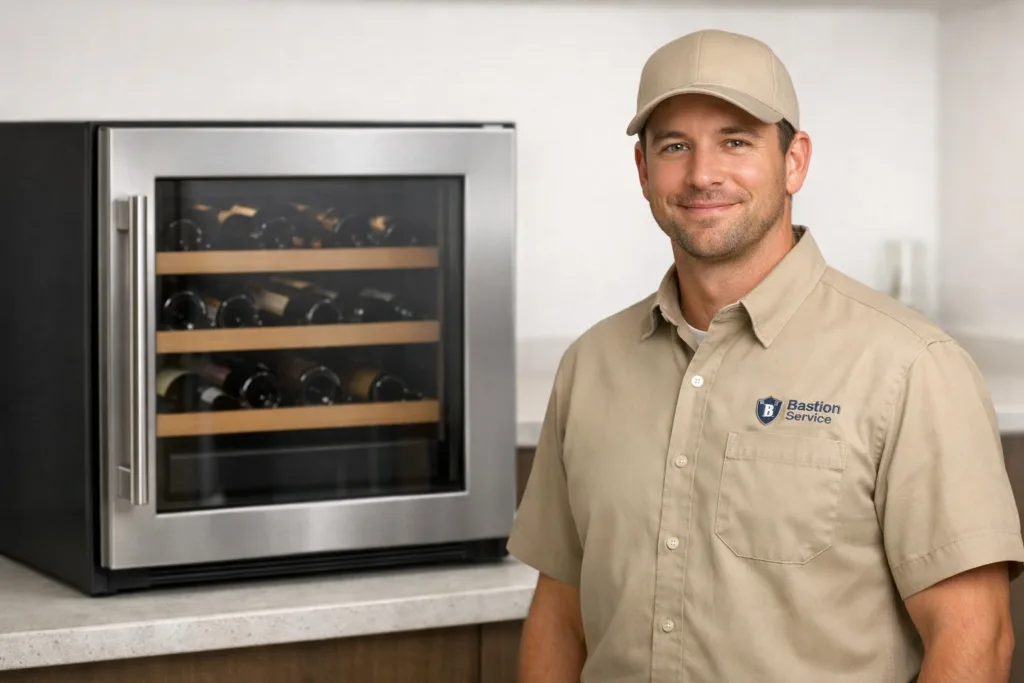
A Marvel wine cooler that starts warming, overcooling, or collecting moisture can put both everyday use and long-term storage at risk. The most useful next step is to match the symptom pattern to the most likely failure points so the repair decision is based on what the unit is actually doing, not on guesswork.
Common Marvel Wine Cooler Problems in Inglewood Homes
Most household wine cooler issues show up in a few familiar ways: unstable temperature, excess condensation, unusual sound, poor airflow, or controls that no longer respond normally. What matters is that the same symptom can come from more than one cause, so the details of how the unit behaves are important.
Not Cooling Enough
If the cabinet is running warm or takes too long to recover temperature after the door is opened, the issue may involve restricted airflow, dust buildup around the condenser area, a weak evaporator fan, a faulty sensor, or a compressor-side problem. In some cases, the display looks normal even though the actual cabinet temperature is off, which can point to a sensing or control problem rather than a simple setting issue.
Too Cold or Freezing Bottles
When a wine cooler starts freezing contents or dropping well below the selected range, the problem often involves a sensor that is reading incorrectly, a control board fault, or a cooling system that is not cycling off when it should. This is especially important to address if one shelf or section feels much colder than the rest of the cabinet.
Water Inside the Cabinet or on the Floor
Moisture can come from condensation, a drainage issue, frequent warm-air intrusion, or a door gasket that is no longer sealing evenly. Even a small amount of repeated water buildup should be taken seriously, because it can affect surrounding cabinetry and flooring while also making temperature control less stable.
Buzzing, Rattling, Clicking, or Fan Noise
Some sound is normal during operation, but a change in noise level usually means something has shifted. A rattle may come from a loose panel or bottle contact. A louder hum can suggest compressor strain. Clicking or irregular fan noise may point to a fan motor problem, obstruction, or an issue with startup components.
Runs Constantly or Cycles Too Often
Long run times can happen when the unit is struggling to remove heat efficiently. Common reasons include dirty coils, tight ventilation clearance, room conditions that are too warm, leaking door seals, frost buildup, or internal cooling faults. Repeated short cycling can be a warning sign of electrical or compressor-related trouble and is worth checking sooner rather than later.
What a Symptom Can Tell You
Small details often help narrow the problem:
- If the cabinet is warm but the fan is unusually quiet, airflow may be failing.
- If the display changes settings but the cooling behavior does not, the issue may be in the controls or sensor circuit.
- If condensation is heaviest near the door, warm-air leakage is more likely than a cooling failure.
- If the unit runs continuously and the temperature still drifts, the system may be losing efficiency rather than simply needing an adjustment.
These patterns do not confirm the exact repair on their own, but they do help explain why replacing parts based only on one visible symptom can miss the real cause.
Why Diagnosis Matters Before Repair
Two wine coolers in Inglewood can appear to have the same problem and still need very different repairs. One warm cabinet may need airflow correction and cleaning, while another may have a failing fan motor, control issue, or a more serious sealed-system fault. Checking temperature behavior, fan operation, gasket sealing, frost pattern, compressor activity, and control response helps separate a straightforward repair from a larger problem.
This is also why a practical repair plan depends on the condition of the appliance as a whole. If the issue is isolated to a sensor, fan, drain path, lighting circuit, or seal, repair often makes sense. If the problem involves repeated failures or major cooling-system wear, the recommendation can change.
When to Schedule Service
It is usually time to schedule service when you notice any of the following:
- The cabinet will not hold a stable temperature
- Bottles are getting too cold or freezing
- Water keeps appearing inside or under the unit
- The fan or compressor sounds noticeably different
- The controls are unresponsive or inconsistent
- The door no longer closes or seals properly
- The cooler runs nonstop or starts and stops repeatedly
These issues are more than minor annoyances. Continued operation under the wrong conditions can place more stress on the compressor, fan motors, and electronic components.
Problems That Can Get Worse With Continued Use
Letting a malfunction continue can turn a manageable repair into a larger one. A unit that runs constantly may overwork the compressor. Poor airflow can lead to temperature drift and uneven cooling. Frost or moisture buildup can interfere with circulation and control accuracy. A leaking door seal may seem small at first, but it can cause longer run times, excess condensation, and premature wear on other components.
If temperatures are clearly outside the expected range, it is usually better to limit use until the cause is identified rather than assume the cooler will stabilize on its own.
Repair or Replace?
For many households in Inglewood, repair is the better option when the problem is limited to controls, sensors, fans, drainage components, door seals, or other isolated parts. Replacement becomes more likely when the unit has a major compressor or sealed-system issue, multiple recurring problems, or overall wear that makes another repair hard to justify.
The deciding factors are usually the appliance’s age, condition, repair history, and the seriousness of the current failure. A symptom-based evaluation helps determine whether the issue is localized and fixable or whether the cost and risk of further repairs outweigh the value of keeping the unit.
What Homeowners Should Check First
Before service, it helps to note a few basics:
- Whether the display temperature matches the actual cabinet condition
- Whether the noise is constant or only happens during startup
- If moisture appears near the door, under the unit, or on interior walls
- Whether the problem affects the entire cabinet or one section
- If the issue began suddenly or developed gradually over time
Those observations can make it easier to identify whether the problem points more toward airflow, controls, sealing, or a cooling-system failure.
Household-Focused Marvel Wine Cooler Repair in Inglewood
In a residential setting, the goal is simple: find out why the cooler is no longer maintaining proper storage conditions and determine whether the fix is worth doing. Bastion Service helps homeowners in Inglewood assess Marvel wine cooler problems based on the actual symptom pattern, the appliance condition, and the most realistic repair path.