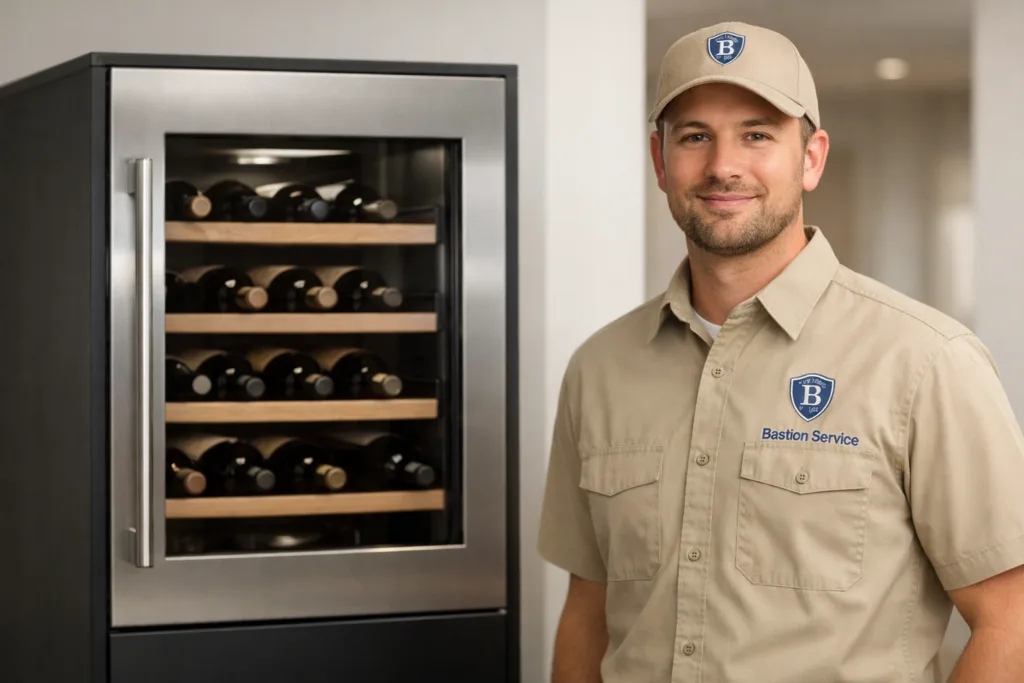
Small changes in a wine cooler can affect storage conditions faster than many homeowners expect. If your Miele unit in Inglewood is drifting off temperature, collecting moisture, or sounding different than usual, the main priority is figuring out whether the problem is related to airflow, controls, sealing, or the cooling system itself. Those issues can look similar on the surface, but they do not lead to the same repair path.
Common Miele Wine Cooler Problems in Inglewood Homes
Most service calls start with a symptom the homeowner can see or hear. The most useful approach is to match that symptom to how the appliance is actually behaving during operation.
Not cooling enough
If bottles feel warmer than expected or the cabinet never seems to reach the selected setting, possible causes include a faulty temperature sensor, evaporator fan trouble, control issues, blocked airflow, or a more serious cooling-system fault. In some cases, the unit may still appear to be running normally even though storage temperatures are no longer stable.
This is usually a sign to stop guessing based on the display alone. A wine cooler can have power, lights, and active controls while still failing to cool properly.
Running too cold or freezing sections
Overcooling can be just as important as warming. If one area is freezing bottles or the cabinet temperature feels lower than the setting suggests, the problem may point to sensor misreads, thermostat faults, or control board errors. Uneven cooling between zones can also indicate airflow imbalance inside the unit.
Condensation, fogging, or water inside
Moisture problems often come from warm air entering the cabinet, poor door sealing, restricted drainage, or inconsistent internal temperature. You might notice water droplets on shelves, fogging on the glass, damp labels, or recurring moisture that returns shortly after wiping the interior dry.
When condensation keeps coming back, it is usually a performance issue rather than a housekeeping issue. Repeated moisture can also make the appliance run longer than it should.
Fan noise, humming, clicking, or constant operation
A change in sound matters, especially if it shows up together with poor cooling. A fan motor may be wearing out, a panel may be vibrating, or the compressor may be under strain because the unit is trying too hard to maintain temperature. Repeated clicking can sometimes point to start or control-related issues.
Not every sound means a major failure, but a new sound pattern is worth attention when the wine cooler used to run quietly.
Display and control problems
If settings do not respond, the temperature reading seems inaccurate, alerts appear unexpectedly, or interior lighting behaves irregularly, the issue may be electrical or electronic rather than mechanical. Control problems can also create misleading symptoms, such as incorrect temperature behavior that looks like a cooling failure at first.
What Different Symptoms Can Mean
Wine cooler issues overlap more than homeowners expect. One symptom can have several causes, and one failing part can create several symptoms at once.
- Warm interior plus constant running: often suggests airflow restriction, fan trouble, a sealing problem, or cooling-system strain.
- Condensation plus louder operation: may indicate warm air intrusion through the door gasket, unstable temperature control, or longer compressor run times.
- Uneven cooling plus no obvious error: can point to internal circulation issues or sensor problems.
- Working lights and display but poor performance: usually means the unit has power, not that it is cooling correctly.
That is why symptom-based diagnosis matters. It separates cosmetic or minor issues from faults that can place extra stress on expensive components.
When Service Should Not Wait
Some wine cooler problems are easy to postpone. Others are not. If your Miele unit in Inglewood is no longer holding a reliable temperature, delaying service can affect both the appliance and the contents inside.
It is smart to schedule service when you notice:
- temperature swings from day to day
- the cabinet staying warm despite normal settings
- water or condensation that repeatedly returns
- unusual fan noise, clicking, or buzzing
- the unit running almost constantly
- controls or display behavior that no longer seems accurate
These symptoms rarely resolve on their own. Continued use can increase wear, especially when the compressor is overworking or internal airflow is compromised.
Repair Versus Replacement for a Miele Wine Cooler
Whether repair makes sense depends on the exact failure, the age of the appliance, the condition of the cabinet and major components, and the overall cost relative to the unit’s remaining life. Many problems involving door gaskets, fan motors, sensors, drains, controls, and related electrical components are often repairable when caught early.
Replacement becomes a more serious discussion when there are multiple major faults, recurring performance issues, or sealed-system problems that significantly change the value of the repair. The right answer depends less on the symptom name and more on what testing shows once the unit is inspected.
What a Service Visit Should Clarify
A useful service visit should answer practical questions that help a homeowner decide what to do next:
- Is the wine cooler actually reaching and holding the selected temperature?
- Is airflow moving properly through the cabinet?
- Are the controls and sensors reading accurately?
- Is moisture caused by a door-seal issue, drainage issue, or unstable cooling?
- Has the current problem begun to affect other components?
Once those points are clear, the next step is easier. Instead of replacing parts based on assumptions, the repair plan can match the real cause of the problem and the condition of the appliance.
Homeowner Checks Before Booking Repair
Before scheduling service, there are a few simple things worth checking. Make sure the door is closing fully, shelves or bottle placement are not interfering with the seal, and the temperature setting has not been changed accidentally. It also helps to look for visible gasket wear, interior frost, or heavy condensation around the door area.
If the cooler still is not performing correctly after those basic checks, the issue is likely beyond routine adjustment. At that point, professional testing is the safer way to avoid misdiagnosis and unnecessary parts replacement.
Keeping a Wine Cooler Reliable
Wine coolers perform best when ventilation is unobstructed, the door seal stays clean and intact, and early warning signs are not ignored. A unit that starts running longer, gets noisier, or develops recurring moisture is usually telling you something has changed in how it operates.
For homeowners in Inglewood, timely Miele wine cooler repair is often the best way to protect temperature stability before a smaller issue grows into a larger one. When the fault is identified early, the repair decision is usually more straightforward and the appliance has a better chance of returning to normal operation.