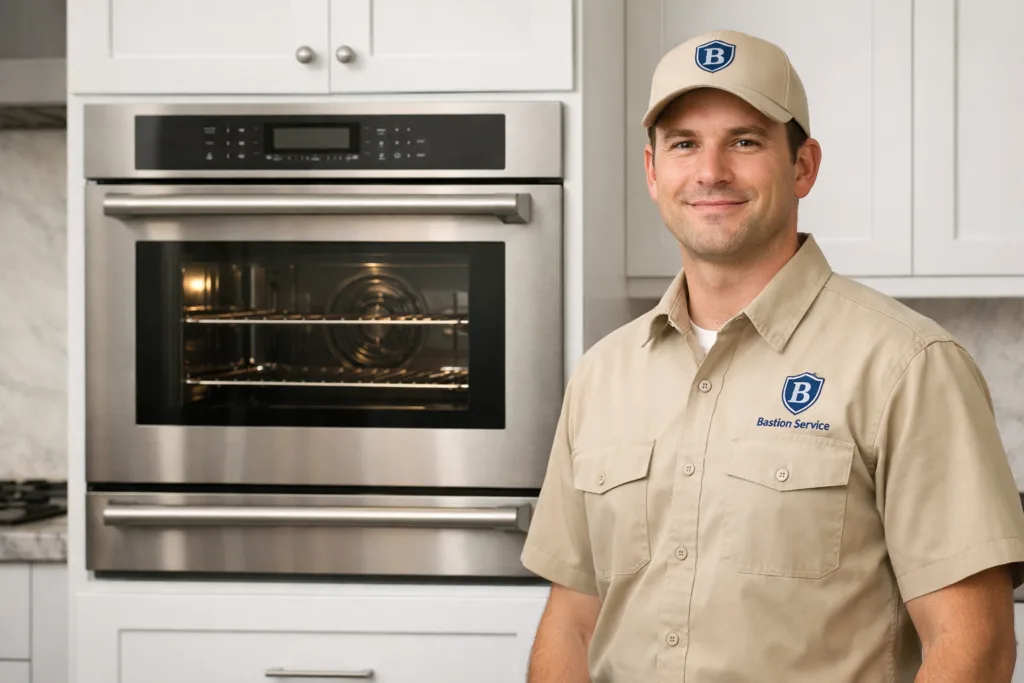
Cooking problems with a built-in oven rarely stay minor for long. A Thermador wall oven that runs cool, bakes unevenly, or stops mid-cycle can disrupt everyday meals and make it hard to trust the appliance for anything timing-sensitive. The most useful next step is to match the symptom pattern to the likely failure points so the repair decision is based on what the oven is actually doing.
What Thermador wall oven problems often look like in everyday use
Many wall oven failures are easy to misread at first. The display may turn on, the lights may work, and the oven may appear to start normally even though it is not heating correctly. In other cases, preheat finishes far too slowly, food browns unevenly, or the oven shuts off before cooking is complete.
Because these symptoms can come from different parts of the system, guessing can waste time and money. A temperature complaint may involve an element, sensor, relay, control board, door seal, or power issue. Looking at the full symptom pattern helps narrow the repair path much faster.
Common Thermador wall oven symptoms and what they may indicate
Not heating at all
If the oven powers on but never gets hot, common possibilities include a failed bake element, a broil element problem, a blown thermal cutoff, a defective sensor, or an electronic control issue. On some units, a latch or door-related fault can also prevent heating functions from starting properly.
This is usually a good time to stop repeated restart attempts. If the oven is calling for heat but a key component is not responding, continued use will not fix the issue and may create added strain elsewhere in the circuit.
Slow preheat
Slow preheat is one of the most common complaints with wall ovens. Sometimes the oven eventually reaches temperature, but only after much longer than normal. That can point to a weak heating element, inaccurate temperature sensing, relay problems, or a heat-loss issue around the door.
When preheat drags out, cooking times become less predictable and recipes start failing in ways that seem inconsistent. If this has become a regular pattern instead of a one-time event, service is usually worth scheduling.
Uneven baking or roasting
If one side of a dish browns faster than the other, or one rack cooks very differently from the next, the problem may be more than routine calibration. Uneven results can be tied to sensor drift, poor element performance, airflow issues, or a door gasket that is no longer sealing well.
Homeowners often notice this first with baked goods, casseroles, and sheet-pan meals. When the oven cycles incorrectly, even familiar recipes can become unreliable.
Temperature swings during cooking
An oven that overshoots, drops too low, or cannot hold a stable temperature may have a sensor problem, control board fault, or relay issue affecting how heat is regulated. This symptom can show up as overcooked edges, undercooked centers, or meals that need far more time than expected.
Small calibration adjustments can help only when the oven is otherwise functioning normally. Larger or inconsistent swings usually point to a repair issue rather than a settings issue.
Display works, but bake functions do not
A responsive display does not always mean the oven is fully operational. If the touch controls light up but bake will not start, settings will not hold, or the cycle stops unexpectedly, the failure may involve the interface, control board, relays, or door lock system.
This is a common source of confusion because the appliance still looks alive. In reality, the parts responsible for commands and the parts responsible for heating are not always failing together.
Error codes or intermittent shutdowns
Error codes can point to sensor faults, overheating conditions, communication problems, or power irregularities. Intermittent shutdowns are especially frustrating because the oven may seem normal during testing and then fail during actual cooking.
That kind of stop-and-start behavior usually needs a proper diagnosis rather than trial-and-error part replacement. Intermittent faults are often the ones that lead to the most wasted time when the root cause is not confirmed first.
Door, hinge, or self-clean latch problems
A door that does not close firmly can affect both heating performance and cooking consistency. A worn gasket, misaligned hinge, or latch issue after self-clean can let heat escape or prevent normal operation. In some cases, the oven may seem to have a heating failure when the larger issue is that heat is not being contained properly.
If the door feels loose, the lock will not release, or the oven behaves differently after a self-clean cycle, that is worth mentioning during service because it can change the repair approach.
When a service visit makes sense
Scheduling Thermador wall oven repair in Los Angeles is usually the right call when the appliance is no longer dependable for normal household cooking. That includes no-heat problems, repeated fault codes, long preheat times, unstable temperatures, mid-cycle shutdowns, or a door issue that affects performance.
It also makes sense to stop using the oven and have it checked if it trips a breaker, smells unusually hot, overheats cabinets around the opening, or behaves unpredictably during longer cooking cycles. Built-in appliances should be evaluated carefully when electrical or heat-control symptoms appear, especially in a busy home kitchen.
Repair or replace: what usually matters most
For many households, the decision comes down to the condition of the specific oven rather than the symptom alone. Repair is often the better option when the problem is isolated to a sensor, element, gasket, latch, or another single component. A focused repair can restore normal operation without the disruption of replacing a built-in unit.
Replacement becomes more likely when there are multiple major failures, recurring control problems, severe electrical issues, or repeated breakdowns over a short period. With wall ovens, installation complexity also matters. Because built-in replacement is a bigger project than swapping a small countertop appliance, a repair can be the more practical path when the fault is well defined.
What to note before service
A few details can make diagnosis easier and faster. Try to note whether the oven fails during preheat, after reaching temperature, or only during longer cooking cycles. It also helps to know whether the broil function still works, whether the problem affects all cooking modes, and whether any error codes appear on the display.
- Whether the oven heats at all
- How long preheat is taking compared with normal
- If food is undercooking, overbrowning, or cooking unevenly
- Whether the issue started after self-clean
- Any beeping, resets, or fault codes
- Whether the door closes tightly and seals properly
Those observations can help separate a heating problem from a control issue and help determine whether the repair is likely to be straightforward or more involved.
Why symptom-based diagnosis matters for a built-in oven
Wall ovens are integrated into the kitchen and expected to perform consistently for daily cooking, holiday meals, and longer baking sessions. When they become unreliable, the inconvenience is only part of the issue. A hidden control fault, failing sensor, or door-related heat loss can keep producing the same cooking problems until the underlying cause is corrected.
For Los Angeles homeowners, the most helpful service experience is one that explains what failed, whether continued use is safe, and whether the repair is worth doing based on the oven’s actual condition. That gives you a practical repair plan instead of another round of guessing.