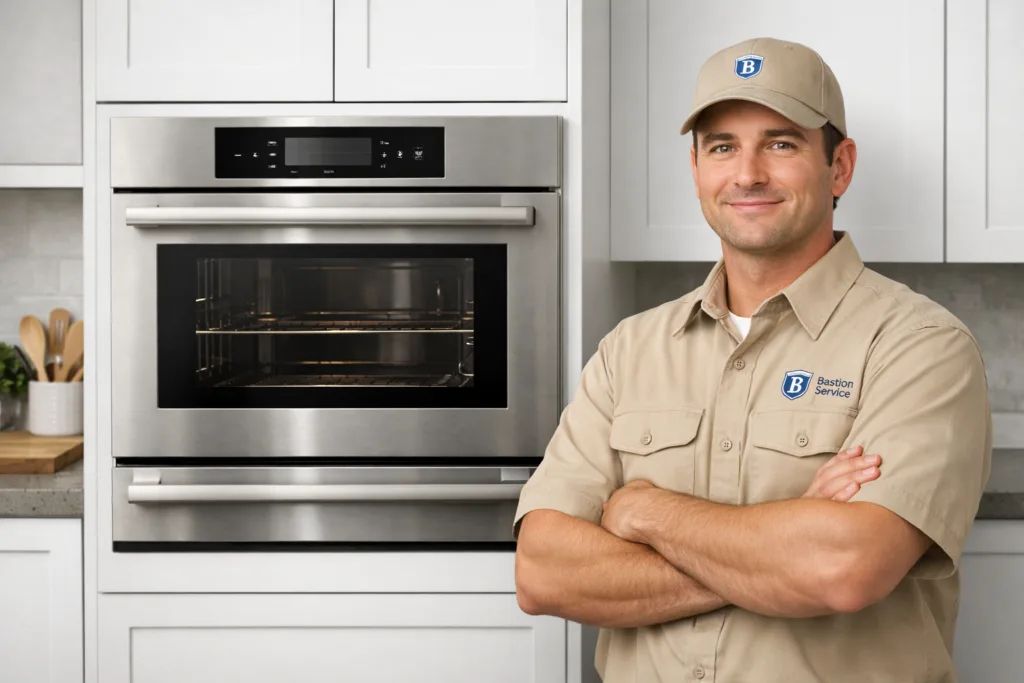
Wall ovens often fail in ways that look similar from the outside but come from very different causes inside the appliance. A unit that seems to preheat normally may still cycle at the wrong temperature, and an oven that appears completely dead may actually have a power, door-switch, or control problem rather than a failed heating component. On a built-in JennAir model, testing the heating circuit, sensor readings, control response, and installation-related electrical connections helps narrow the issue down before any repair decision is made.
Common JennAir Wall Oven Problems Seen in Los Angeles Homes
Most service calls start with one of a few familiar complaints: food is no longer cooking evenly, preheat takes too long, the oven shuts off mid-cycle, or the display starts flashing an error. Because a wall oven is used for everything from quick weeknight meals to holiday baking, even a minor temperature problem can become noticeable fast.
Not heating at all
If the oven will not heat, the cause may be a failed bake element, broil element, temperature sensor, relay, electronic control, thermal cutoff, or power supply issue. On some JennAir wall ovens, the display and lights may still work even when the heating circuit is not operating correctly. That can make the appliance look functional while the actual cooking system is down.
Signs this problem is more than a simple calibration issue include:
- The cavity stays cool after several minutes of preheat
- The broil function works but bake does not, or the reverse
- The oven never reaches the set temperature
- The unit clicks or starts a cycle but produces little or no heat
Uneven baking or temperature swings
When one rack browns too quickly while another lags behind, the problem may involve weak heat output, inaccurate sensor feedback, convection fan trouble on equipped models, or control issues affecting cycling. These symptoms often show up as scorched edges, pale centers, or recipes that suddenly need much longer cook times than before.
Temperature swings can also be mistaken for recipe problems. If the same dishes that used to turn out well now come out underdone or overdone, the oven may be drifting outside its normal operating range rather than holding steady heat.
Slow preheating
A slow preheat complaint is common on aging wall ovens. In some cases, one heating circuit is weak rather than fully failed, so the oven still warms up but does so much more slowly than it should. A sensor reading out of range or a control that is not energizing components properly can create the same symptom.
If preheating has gradually gotten worse, that pattern can point to a component weakening over time instead of a sudden total failure.
Error codes, beeping, or unresponsive controls
JennAir wall ovens rely on electronic controls to manage temperature, timing, safety functions, and in some models, locking systems and convection features. When the display shows an error code, the keypad stops responding, or the unit starts beeping without a clear reason, the issue may be tied to the user interface, main control, wiring, or heat-related stress affecting electronics.
Intermittent control problems deserve attention even if the oven starts working again later. A fault that appears only during long bake cycles or after the oven gets fully hot can point to a component beginning to fail under load.
Door, hinge, and lock problems
A door that will not close fully can cause heat loss, long cook times, and uneven results. On self-cleaning models, a stuck lock or latch issue may prevent normal use even after the cleaning cycle is over. Hinges, springs, latch assemblies, and alignment problems can all affect both safety and cooking performance.
In built-in units, homeowners sometimes focus first on the temperature complaint when the real issue is poor door sealing. If heat is escaping, the oven may run longer and still struggle to maintain consistent internal temperature.
Symptom Patterns That Help Point to the Cause
Paying attention to when the problem happens can make service more efficient. A few examples:
- Fails only during preheat: often associated with heating element, relay, or sensor issues
- Works briefly, then shuts off: may involve overheating controls, wiring faults, or safety cutoffs
- Runs but cooks unevenly: often tied to sensor accuracy, weak heat output, fan trouble, or door sealing problems
- Problem started after self-clean: can indicate thermal stress affecting controls, fuses, locks, or nearby wiring
- Display is on but oven will not bake: may point to a failed heating circuit rather than total loss of power
Even small details matter, such as whether broil still works, whether the issue affects only one cavity on a double wall oven, or whether the breaker has tripped more than once.
When Continued Use Is Risky
Some wall oven problems are mostly about performance, while others raise safety concerns. Service should not be delayed if the oven is tripping breakers, overheating, showing repeated error codes, smelling like hot wiring, shutting off unpredictably, or failing to respond to controls in a normal way.
It is also wise to stop using the appliance if:
- The door will not latch or stay closed correctly
- The oven gets much hotter than the set temperature
- The control panel behaves erratically during cooking
- There are signs of arcing, burning, or electrical irregularity
What begins as a single failed part can sometimes lead to added strain on controls, wiring, or adjacent components if the oven continues operating in a fault condition.
Repair or Replace?
For many Los Angeles homeowners, repair makes sense when the JennAir wall oven is otherwise in good condition and the problem is limited to a repairable part such as an element, sensor, fan motor, latch assembly, or control-related component. Built-in appliances are not as simple to replace as freestanding models, and cabinet fit, trim compatibility, and kitchen appearance all factor into the decision.
Replacement becomes more likely when the unit has multiple significant failures, recurring electronic problems, substantial wear, or repair costs that no longer make sense for the oven’s overall condition. The most useful answer usually comes after the actual fault is identified, not before.
What a Service Visit Should Clarify
A productive appointment should explain what symptom was confirmed, what part or circuit is causing it, whether the oven can be used safely in the meantime, and whether the recommended repair fits the age and condition of the appliance. That kind of practical repair guidance helps homeowners in Los Angeles decide whether to move forward with repair or start planning for replacement without guessing at parts first.
Helpful Steps Before Scheduling JennAir Wall Oven Service
Before an appointment, it helps to note the exact symptom and when it occurs. If possible, write down any error code, whether the problem affects bake, broil, or both, and whether it started suddenly or gradually. For double wall ovens, note which cavity is affected. These details can make diagnosis faster and more accurate.
You can also check a few basic things safely:
- Confirm the display has power and settings are responding normally
- Notice whether the door closes firmly and evenly
- Watch whether preheat starts but stalls
- Pay attention to unusual noises from fans or relays
Avoid disassembly or repeated reset attempts if the appliance is showing electrical symptoms, overheating, or shutting down unpredictably.