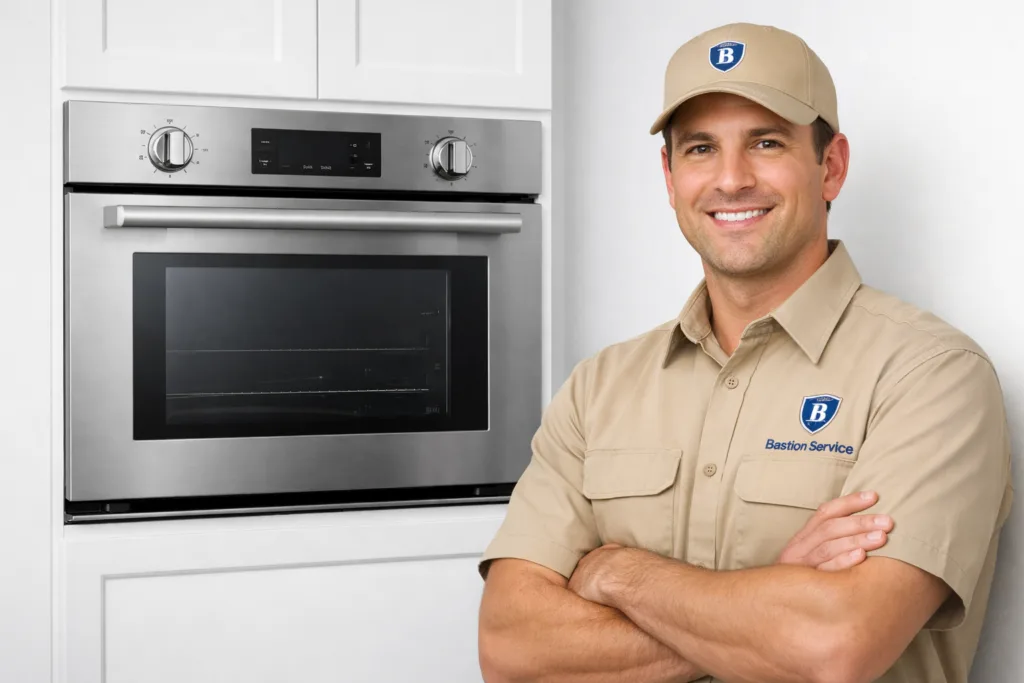
Wall ovens usually give warning signs before they fail completely. You might notice cookies browning unevenly, casseroles needing extra time, a cavity that seems too hot one day and too cool the next, or a control panel that only works part of the time. With a built-in Summit unit, those symptoms can come from the heating system, the temperature feedback circuit, the door assembly, or the electronic controls, so the most useful approach is to match the repair plan to the exact behavior of the oven.
What Los Angeles homeowners often notice first
In many households, a wall oven problem shows up during normal daily cooking rather than as a total breakdown. A roast may take much longer than expected. Baked goods may be done on top but raw in the middle. Preheat may appear to finish, yet the cavity never seems to stabilize. On other calls, the first complaint is electrical: the display goes blank, the keypad becomes inconsistent, or the oven shuts off partway through a cycle.
Because wall ovens are installed into cabinetry, even a modest problem can become disruptive quickly. A loose door seal can waste heat and affect cooking results. A failing relay can create temperature swings. A worn latch or control fault can interfere with self-clean and normal baking alike. Looking at the symptom pattern helps separate a simple component failure from a broader reliability issue.
Common Summit wall oven symptoms and what they may mean
Not heating at all
If the oven powers on but never produces heat, the fault may involve the bake element, broil element, thermal protection components, wiring, or the control board that sends power to the heating circuit. In some cases, one failed part is the entire issue. In others, the root cause is electrical and requires testing before parts are chosen.
Heating, but not reaching the set temperature
An oven that warms up but stalls below the selected temperature often points to a weak element, inaccurate sensor readings, a control problem, or heat loss through the door area. This symptom is especially frustrating because the unit appears functional while still producing poor cooking results.
Uneven baking
When one side of a pan browns faster, the top cooks before the center, or results change from one rack position to another, the issue may be tied to temperature regulation rather than a complete heating failure. A sensor drifting out of range, an element that is only partially operating, or a door gasket that is no longer sealing well can all create uneven performance.
Slow preheat
Slow preheat is often treated like a minor annoyance, but it can be an early sign of a larger problem. If the oven eventually gets hot but takes far too long, the heating system may be running below full output. That can happen when an element is weakening, a control is not energizing the circuit correctly, or the oven is losing heat faster than it should.
Temperature swings during cooking
Some cycling is normal, but wide temperature swings are not. If food comes out overcooked one day and undercooked the next using the same settings, the sensor and control system deserve attention. Repeated overshoot or underheating can also point to relays sticking or failing intermittently.
Display or keypad problems
A blank display, unresponsive keypad, flashing indicators, or settings that change on their own usually suggest a control-side issue. That may involve the user interface, the main electronic control, or the incoming power to the appliance. Intermittent control problems are worth addressing early, because they often become more frequent over time.
Door not closing, latching, or unlocking properly
Door problems affect more than convenience. If the door does not seal tightly, the oven can struggle to hold temperature and cooking times can become unreliable. If the latch sticks, self-clean and normal operation may both be affected. Hinges, latch assemblies, switches, and related hardware all need to be considered.
Error codes and shutdowns
Error codes can narrow the search, but they are not a final diagnosis by themselves. The same code can sometimes be triggered by more than one failed component. If the oven shuts down during cooking, throws repeat errors, or needs to be reset to work again, testing the related circuit is the safest next step.
Signs the issue may be getting worse
Some wall oven problems stay stable for a while. Others tend to escalate. It is smart to stop and reassess if you notice:
- Preheat getting slower week by week
- Food quality becoming less consistent even with familiar recipes
- The display fading, flickering, or resetting during use
- The door needing extra pressure to close fully
- New odors from the control area or wiring compartment
- A breaker tripping while the oven is heating
Those symptoms often indicate a fault that is moving beyond inconvenience and into reliability or safety concerns.
When to stop using the oven until it is checked
Some issues should not be pushed through for one more dinner. If the appliance is sparking, giving off a burning smell, tripping the breaker repeatedly, showing visible heat damage near the controls, or shutting off unpredictably during operation, it is best not to continue using it. Built-in cooking appliances operate on high heat and significant electrical load, so recurring electrical symptoms deserve prompt attention.
Repair may make sense when the problem is limited
Many Summit wall oven repairs are reasonable when the appliance is otherwise in solid condition and the fault is confined to a specific part or circuit. Heating elements, sensors, some latch components, and certain control-related failures can be practical to address if the rest of the unit is holding up well. The key question is whether the symptom points to one repairable failure or to multiple aging systems at once.
Wall ovens also require a little more thought than freestanding models because replacement involves cabinet fit, installation constraints, and the overall kitchen layout. That can make a targeted repair more attractive when the appliance is still a good match for the home and the problem is straightforward.
Replacement may be the better path if problems are stacking up
Replacement tends to become more practical when several issues are appearing together, such as inconsistent heat combined with failing controls, door problems, and recurring error codes. The same is true when parts support is limited or when the cost of restoring the oven approaches what homeowners are comfortable investing in an older built-in unit. A symptom-based evaluation helps show whether you are dealing with one clear defect or a broader decline in reliability.
Helpful details to gather before service
If you are scheduling service for a Summit wall oven in Los Angeles, a few observations can speed up the troubleshooting process:
- Whether the problem happens in bake, broil, or both
- Whether preheat completes and how long it takes
- Whether the display stays on consistently
- Any error code shown before or after shutdown
- Whether the issue started suddenly or gradually
- Whether the breaker has tripped during operation
- Whether the door feels loose, misaligned, or hard to latch
Even small details can matter. An oven that fails only after it has been hot for twenty minutes points in a different direction than one that never heats at all.
What a good service visit should clarify
By the end of a useful evaluation, you should have a clearer picture of what failed, whether the repair addresses the full complaint, and whether the appliance is a good candidate for continued use after the work is done. For homeowners in Los Angeles, that means understanding not just why the oven is underperforming today, but whether the proposed repair is likely to restore stable, everyday cooking performance without guesswork.