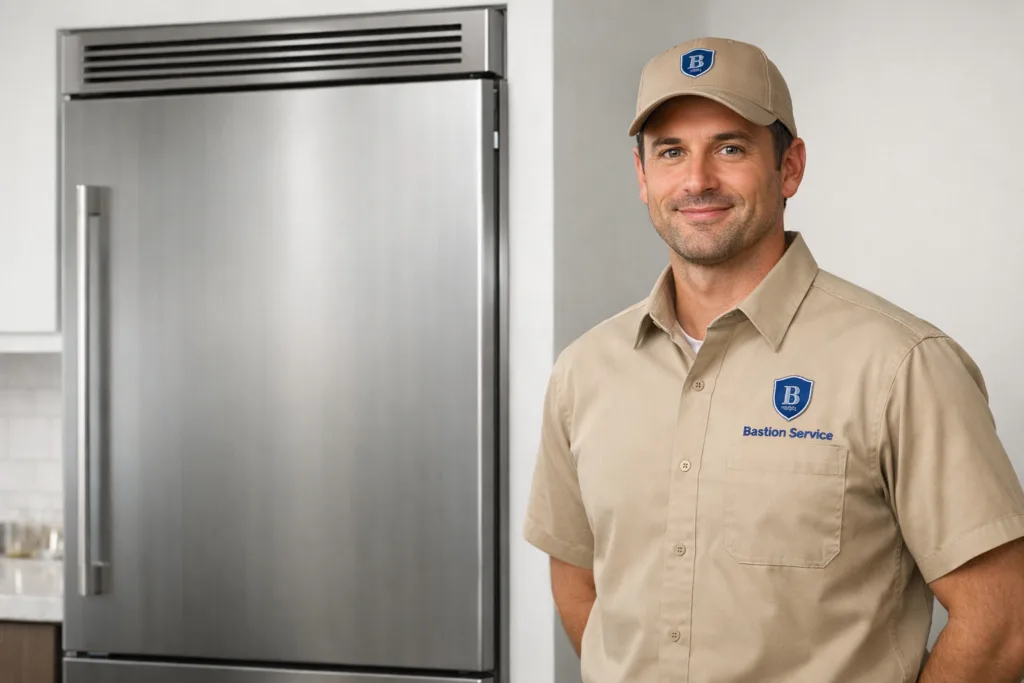
A Thermador freezer that starts softening food, forming heavy frost, or running nonstop can become an expensive household problem quickly. The most useful first step is to match the symptom pattern to the likely system involved, because similar freezer complaints can come from very different causes. Weak airflow, a failing fan motor, a defrost problem, a poor door seal, or an electronic control issue can all show up as “not freezing right,” but the repair path is different for each one.
Common Thermador freezer symptoms homeowners notice
Freezer problems often begin gradually rather than with a complete shutdown. Performance changes may show up in everyday use before the appliance stops cooling altogether.
Food not staying fully frozen
If frozen foods are soft, ice cream is no longer firm, or items thaw slightly and refreeze, the freezer may be struggling to maintain stable temperature. This can happen when interior airflow is restricted, frost has built up around the evaporator area, the fan is not circulating cold air properly, or the cooling system is losing efficiency. A freezer can still sound like it is running while failing to pull temperatures down far enough to protect food consistently.
Heavy frost or ice buildup
Frost on drawers, shelves, or the rear interior panel usually means moisture is getting in or the defrost system is not clearing ice the way it should. A door that is not sealing tightly can let warm air enter repeatedly. Once frost accumulates, it can block vents and reduce airflow, which leads to warmer temperatures and longer run times.
Fan noise, buzzing, or clicking
Unusual sounds can be one of the clearest clues. A fan blade hitting ice may create a scraping or ticking sound. Buzzing or repeated clicking can point to startup trouble or an overworked component. Rattling may come from vibration, loose panels, or a fan motor beginning to fail. Noting whether the sound happens constantly, during startup, or only part of the time can help narrow down the cause.
Water inside or under the unit
Moisture around a freezer can come from melting frost, a blocked defrost drain, or excess condensation caused by warm air entering the cabinet. In built-in kitchen layouts, even a small leak deserves attention before it affects surrounding flooring or cabinetry.
Freezer running too long or almost nonstop
When a freezer seems to run continuously, it is usually trying to overcome a temperature problem rather than working normally. Causes may include dirty condenser conditions, weak cooling performance, a gasket leak, sensor or control issues, or ice buildup affecting airflow. Continuous operation puts extra strain on major components and can lead to a larger failure if left unchecked.
Why symptom patterns matter on Thermador freezer repair
Thermador freezers can show the same outward symptom for multiple reasons, which is why guesswork often leads to unnecessary part replacement. Frost buildup, for example, may come from a door sealing problem, a defrost heater issue, a sensor fault, or a control problem. A freezer that is too warm may involve the fan system, temperature sensing, airflow blockage, or deeper cooling-system trouble.
Looking at the full pattern matters more than focusing on one complaint alone. Where the frost forms, how the temperature changes during the day, whether the fan can be heard, and whether the door closes cleanly all help identify which system is most likely at fault. This is especially important when the freezer still cools somewhat, because partial operation can make a serious issue appear less urgent than it really is.
Signs the problem should not be delayed
Some issues can wait a short time for scheduling, but others should be addressed promptly. Service is worth arranging sooner when:
- food repeatedly softens, thaws, or refreezes
- frost returns quickly after being removed
- airflow seems weak from interior vents
- the door does not close or seal consistently
- the freezer clicks but does not seem to start properly
- water is collecting under the appliance
- fan noise grows louder or becomes more frequent
Delaying service can allow an airflow or defrost problem to spread into heavier ice buildup. In other cases, a freezer that keeps running under strain may put added wear on the compressor or fan motors. When food safety is already becoming a concern, continued use is usually not a good long-term option.
What Los Angeles homeowners can check before scheduling service
A few simple observations can make the next step more straightforward. Check whether the door is closing fully and whether food packages are preventing a proper seal. Look for visible frost and note where it is concentrated instead of forcing panels open or scraping aggressively. Confirm that temperature settings were not changed accidentally and that interior vents are not blocked by large items.
It also helps to pay attention to timing. Does the noise happen only at startup? Is the freezer warm all the time, or only during part of the day? Is frost appearing near the door, along the back panel, or around vents? These details often help separate a sealing issue from a defrost problem, an airflow issue, or a more serious cooling fault.
Repair versus replacement considerations
For many households, repair makes sense when the freezer is otherwise in good condition and the problem is limited to a specific component or system. That is often especially true with built-in refrigeration, where replacement can be more disruptive than the appliance itself suggests. Fit, finish, and kitchen integration can make a targeted repair the more practical path.
Replacement becomes a stronger consideration when there are multiple major issues at once, when the cooling system has a significant sealed-system failure, or when the cost of restoring performance no longer makes sense for the age and condition of the unit. The best decision usually comes after the failed system is identified and the expected scope of repair is clear.
What a focused service call should accomplish
On a Thermador freezer repair visit in Los Angeles, the goal should be to identify why the unit is losing performance, whether continued use risks added damage or food loss, and what repair path is realistic for the actual fault. That may involve temperature behavior, airflow performance, frost pattern, fan operation, drain condition, door sealing, and control response.
When the diagnosis is tied to the exact symptom rather than trial-and-error parts replacement, homeowners get a clearer picture of whether the issue is relatively contained or part of a broader decline. That makes it easier to decide on the next step with confidence and avoid turning a manageable freezer problem into a larger kitchen disruption.