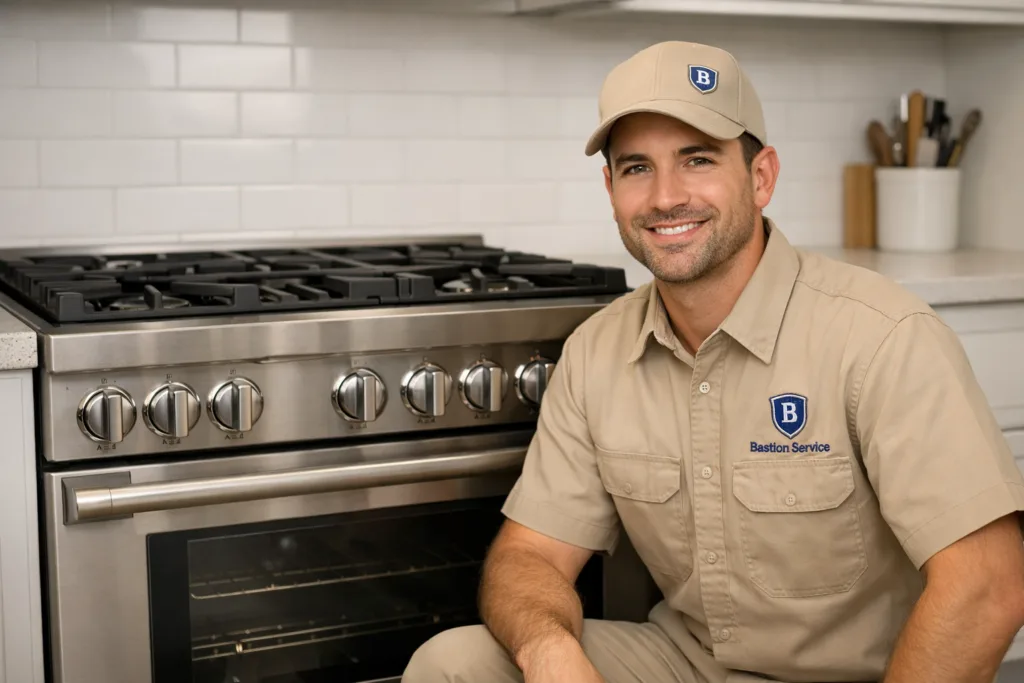
Common Thermador range problems and what they often mean

Thermador ranges are built for high-performance cooking, but when one part of the system starts failing, the symptoms can show up in ways that are easy to misread. A burner that keeps clicking may not have the same cause as a burner that will not spark at all. An oven that seems slow to heat may be dealing with a different issue than one that overheats and burns food. For homeowners in Los Angeles, the most useful starting point is matching the symptom pattern to the most likely repair path.
Burners that click, spark, or fail to light
If a surface burner clicks repeatedly, lights after several tries, or fails to ignite, the problem may involve the igniter, spark module, burner cap placement, clogged burner ports, or moisture around the ignition area. In some cases, the burner will light but continue clicking, which can point to an ignition switch issue or a problem sensing a proper flame. These symptoms should not be dismissed as minor annoyance if they keep happening.
Watch for patterns such as one burner acting up while the others work normally, or all burners showing the same delayed ignition behavior. A single affected burner often suggests a localized component or burner assembly issue, while broader ignition trouble can indicate a system-level fault.
Oven not heating properly
When the oven stays cold, takes much longer than usual to preheat, or cannot maintain the selected temperature, likely causes can include a weak igniter, failed heating element, temperature sensor problem, relay issue, or electronic control fault. On gas models, a worn igniter may glow yet still fail to draw enough current to open the gas valve consistently. On electric models, a partially failed bake or broil element can lead to uneven or incomplete heating.
Many households first notice this issue through cooking results rather than a total no-heat condition. Cookies may brown unevenly, casseroles may stay undercooked in the center, or roasting times may start drifting from what used to be normal.
Temperature swings and uneven cooking
An oven that overheats, undershoots, or cycles unpredictably can be frustrating because the range still appears to be working. These cases often involve sensor drift, control calibration problems, element cycling issues, or airflow problems inside the oven cavity. If one rack cooks noticeably faster than another, or the rear of the oven runs hotter than the front, the problem may be more than simple recipe variation.
Repeated temperature inconsistency is worth addressing before it becomes a complete failure, especially if the range is used often for baking or family meals.
Control panel and display issues
If the display flashes, goes blank, stops responding, or shows recurring fault codes, the issue may be tied to the control board, keypad, wiring, or a related sensor. Because Thermador ranges rely on electronic coordination for temperature regulation, timers, and cooking modes, control issues can affect much more than the display itself.
Homeowners may notice that settings do not register correctly, the oven shuts off unexpectedly, or certain functions work while others do not. Intermittent control problems usually do not improve on their own and can become more disruptive over time.
Signs the problem may be getting worse
Some range issues begin as occasional inconvenience and gradually turn into a full loss of cooking function. If the clicking is becoming more frequent, preheat times are getting longer, or error codes are appearing more often, the condition is usually progressing rather than resolving.
- Burners need repeated attempts before they light
- The oven reaches temperature inconsistently from one use to the next
- The range shuts off during cooking or resets unexpectedly
- Flames appear weak, uneven, or irregular
- The control panel only works part of the time
When a range still works intermittently, it can be tempting to wait. But inconsistent operation often means additional strain on ignition, heating, or control components.
When to stop using the range
Certain symptoms call for more caution than others. If the burner ignition is delayed, the smell of gas appears during repeated lighting attempts, the range trips power, or the controls behave unpredictably during use, it is best to stop using the appliance until the problem is evaluated. The same goes for an oven that overheats badly enough to scorch food quickly or seems unable to regulate temperature at all.
In a busy Los Angeles household, a range is used often enough that small failures can become bigger ones quickly. Early attention can help prevent a more disruptive breakdown.
Repair or replace?
Many Thermador range problems are still good repair candidates, especially when the issue is limited to igniters, elements, sensors, switches, burner components, or control-related parts. If the appliance is otherwise in solid condition and the problem is isolated, repair is often the more sensible option.
Replacement becomes a more serious consideration when the range has multiple major failures at once, has a long history of repeat repairs, or shows broader condition problems beyond the current symptom. The right decision depends on the confirmed fault, the age and overall condition of the appliance, and how much reliable daily use can reasonably be restored.
What to note before scheduling service
A few details can make troubleshooting faster and more accurate. Before the visit, it helps to note whether the issue affects the oven, broil, bake, or surface burners; whether the symptom is constant or intermittent; whether clicking continues after ignition; and whether any fault code appears on the display. It is also useful to remember if the problem started suddenly after normal use or developed gradually over time.
That kind of symptom history often helps narrow down whether the likely cause is ignition-related, heating-related, or electronic. For Thermador range repair in Los Angeles, that makes the service visit more focused and helps determine whether the repair path is straightforward or involves multiple systems.
Why symptom-based diagnosis matters with premium cooking appliances
Premium ranges pack several systems into one appliance, including surface cooking, oven heating, ignition, sensors, ventilation paths, and electronic controls. Because these systems interact, one visible symptom does not always point directly to the failed part. A burner issue may be caused by contamination rather than a bad module. A heating complaint may come from a sensor or relay rather than the element itself.
That is why guessing at parts is rarely the most efficient path. The better approach is to identify how the range is failing in actual use, determine whether continued operation is safe, and then match the repair to the confirmed cause.
Keeping your kitchen routine on track
When a Thermador range begins acting unpredictably, the disruption is immediate. Weeknight meals take longer, baking becomes unreliable, and routine cooking can turn into trial and error. Addressing burner ignition trouble, oven heating issues, clicking, and control faults early gives homeowners a better chance of restoring normal kitchen use without letting the problem spread into additional components.
For households in Los Angeles, the most helpful next step is to have the symptom evaluated based on how the appliance is actually behaving in the home, not just on the most obvious surface complaint.