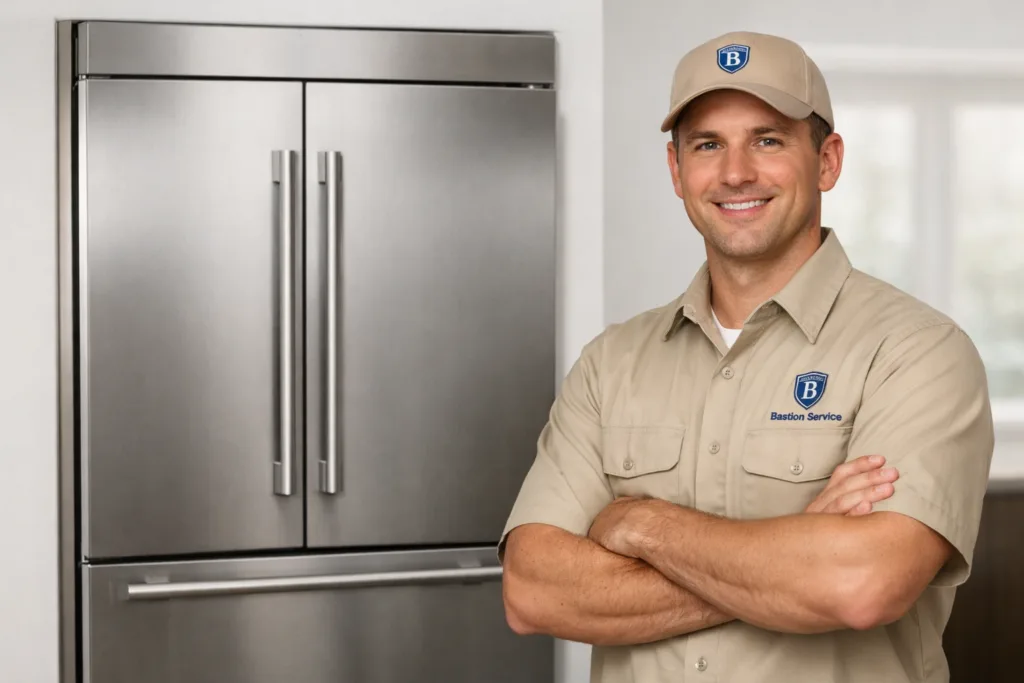
Thermador refrigerators often give warning signs before a complete cooling failure. A freezer that still seems cold but starts softening ice cream, a fresh food section that warms by afternoon, or moisture collecting under drawers can all point to different underlying problems. For homeowners in Los Angeles, the best repair outcome usually starts with matching the symptom to the part of the system that is no longer working as it should.
Common Thermador refrigerator problems in Los Angeles homes
Most refrigerator complaints fall into a few clear patterns: poor cooling, uneven temperatures, leaks, frost buildup, and unusual noise. What matters is not just the symptom itself, but where it shows up first and whether it is constant or intermittent. A refrigerator that is warm only in the fresh food section can suggest an airflow or fan issue, while poor cooling in both sections may point to a more serious refrigeration problem.
Fresh food section is warm but freezer still seems cold
This is one of the most common complaints. In many cases, the freezer is still producing enough cold air, but that air is not circulating correctly into the refrigerator compartment. Causes can include a failing evaporator fan, blocked vents, frost buildup around the evaporator cover, or a damper problem that prevents proper airflow between sections.
Homeowners sometimes lower the temperature setting and assume the refrigerator will recover, but if airflow is restricted, the display setting alone will not solve the problem. Continued use can lead to spoiled food even though the unit still sounds like it is running normally.
Freezer and refrigerator both losing temperature
When both compartments are warming, the issue may be broader than airflow alone. Dirty condenser areas, faulty start components, sensor problems, control faults, or sealed system trouble can all reduce cooling performance. If the compressor is running for long periods without reaching temperature, the unit may be struggling well before it stops altogether.
This symptom deserves quick attention because once both sections drift out of range, food preservation becomes unreliable. If the cabinet feels warm inside and the unit runs almost constantly, it is usually a sign that the refrigerator is no longer cooling efficiently.
Water under drawers or leaking onto the floor
Leaks inside the refrigerator or puddles below the unit are often tied to a clogged defrost drain, condensation problems, or an issue with the water supply connection on models with an ice maker or dispenser. Water can also collect when a door is not sealing properly and excess moisture forms inside the cabinet.
Even a small recurring leak should not be ignored. Besides creating a slipping hazard, it can damage flooring, baseboards, and surrounding cabinetry. If the same area keeps getting wet after cleanup, the source usually needs repair rather than simple drying.
Frost buildup, ice around vents, or blocked drawers
Frost that keeps returning is usually a sign of a failed defrost component, airflow restriction, or a door sealing issue that allows humid air to enter. Some homeowners remove visible ice and think the problem is solved, only to have the frost return within days. That pattern usually means the refrigerator is not completing the defrost cycle correctly or the cabinet is not staying properly sealed.
When frost collects around vents or the evaporator area, cooling often becomes uneven. The refrigerator may appear to cool normally for a short time, then gradually lose performance again as ice builds back up.
Buzzing, clicking, rattling, or fan noise
Not every sound is a problem. Ice production, normal compressor cycling, and periodic defrost operation can all create expected operating noises. The concern is when the sound changes noticeably or appears together with reduced cooling, leaking, or temperature swings.
A repeated clicking sound followed by weak or no cooling may indicate trouble with the compressor start circuit or another electrical component. A scraping or loud whirring sound can suggest fan blades striking ice buildup or a failing fan motor. Rattling can be as simple as vibration from panels or tubing, but it should still be checked if it is new or persistent.
Why symptom patterns matter on a Thermador refrigerator
Thermador refrigerators use brand-specific controls, sensors, and cooling layouts, so the same complaint can come from very different causes. A warm refrigerator section might be caused by a blocked air path, a sensor reading issue, a fan failure, or heavy frost hidden behind interior panels. Replacing parts based on guesswork can waste time and increase repair costs without fixing the real problem.
A more useful approach is to look at the full pattern. Which section warmed first? Is the compressor running? Did the ice maker stop before cooling changed? Is frost visible? Did the problem begin suddenly or gradually? These details help separate a routine repair from a more involved refrigeration issue.
Signs the refrigerator should be serviced soon
Some refrigerator issues can wait a short time for scheduling, but others tend to get worse quickly. Service is usually worth arranging promptly when the appliance can no longer hold a stable temperature, moisture keeps returning, or the unit sounds different while performance declines.
- The refrigerator compartment is warm even after temperature adjustments
- The freezer is no longer keeping food firmly frozen
- Water is pooling inside the cabinet or on the floor
- Heavy frost is blocking vents, shelves, or drawer movement
- The unit runs nearly all the time without cooling properly
- The ice maker stopped and cooling changed soon after
- New clicking or loud fan noise appears with weaker performance
When continued use can make the problem worse
Trying to stretch a few more days out of a struggling refrigerator can sometimes turn a manageable repair into a larger one. If airflow is blocked by frost, the refrigerator may run longer and place extra stress on motors and cooling components. If the unit is repeatedly trying to start, electrical parts can continue to wear each time it cycles.
Leaks also tend to cause secondary damage. Water that starts under a crisper drawer can end up beneath the appliance, where it may affect flooring and create hidden moisture problems. In Los Angeles kitchens, warmer ambient conditions can also make a borderline cooling issue show up faster, especially during periods of heavy refrigerator use.
Repair or replacement: what usually makes sense
Many Thermador refrigerator problems are still worth repairing, especially when the issue is tied to a fan motor, defrost component, sensor, drain problem, valve, gasket, or control-related failure. These are the kinds of faults that can disrupt performance without meaning the entire refrigerator has reached the end of its useful life.
Replacement becomes a more serious consideration when there are repeated major cooling failures, significant sealed system problems, or repair costs that are high relative to the refrigerator’s age and overall condition. The key is not to assume the worst too early. A symptom that seems major from the outside can sometimes trace back to a more limited repair.
What to note before a service visit
A few observations from the household can make diagnosis faster and more accurate. Before service, it helps to check and remember:
- Which section is warm: freezer, fresh food compartment, or both
- Whether the display shows an error or unusual reading
- Whether the ice maker or dispenser changed behavior first
- If doors are closing fully and gaskets look intact
- Whether leaking is constant or only appears after defrost cycles
- If unusual noise happens all the time or only during startup
- How long the problem has been developing
Photos of frost buildup, leaks, or display alerts can also be helpful if the symptom changes before the appointment.
What homeowners can do before repair
There are a few simple checks that may help limit food loss or prevent further damage while waiting for service. Make sure doors are closing completely, avoid overpacking vents with food containers, and wipe up standing water promptly. If frost is heavy enough to block drawers or airflow, do not force components open, since trim pieces and drawer parts can crack.
It is also wise to monitor actual food temperature rather than relying only on the display. If milk, leftovers, or frozen items are softening, the refrigerator may already be outside a safe holding range even if the control panel looks normal.
Focused Thermador refrigerator repair for Los Angeles households
Household refrigeration problems are easiest to solve when the repair path follows the actual symptom instead of a guess. Whether the issue is warming, leaking, frosting, or noise, the important step is identifying which part of the system has changed and whether the fault is limited or more extensive. For Los Angeles homeowners, that makes it easier to decide when repair is the right move and when a larger conversation about appliance condition is appropriate.