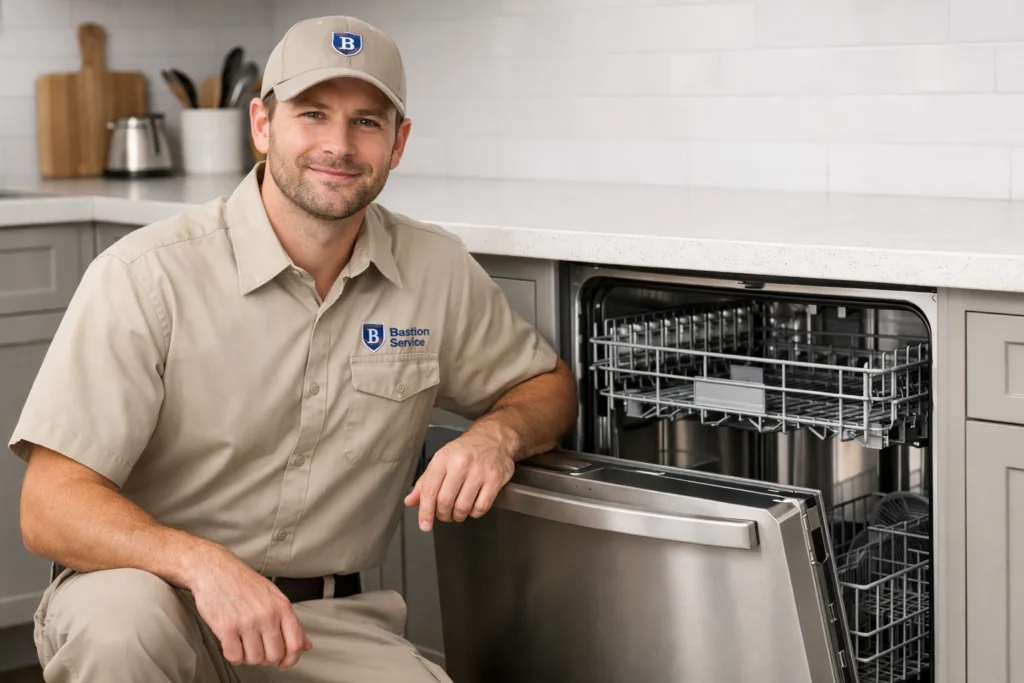
Thermador dishwashers are designed to run quietly and efficiently, so changes in performance usually show up as small warning signs before they become major interruptions. A dishwasher that starts leaving residue on glasses, holding water in the bottom, or needing multiple runs to finish a load is often telling you that one system is no longer working the way it should.
In Los Angeles homes, these issues are especially frustrating because a dishwasher problem tends to disrupt the whole kitchen routine. Before assuming the appliance needs a major repair, it helps to look at the exact symptom pattern. The way the machine fills, washes, heats, drains, and dries can reveal whether the problem is likely related to flow restrictions, a failing component, or an electronic fault.
Common Thermador Dishwasher Symptoms
Standing water after the cycle
If water remains in the tub after the dishwasher stops, the issue may involve the drain pump, a clogged filter area, a restricted drain hose, or a blockage farther along the drain path. In some cases, the machine may sound like it is draining even though water is barely moving out. Repeating cycles without fixing the cause can strain the pump and leave odors or residue inside the unit.
Drain problems often appear with other clues, including:
- Gurgling sounds near the sink connection
- Food particles left on dishes
- A sour smell inside the tub
- Water returning after the cycle appears to finish
Cloudy glasses or poor wash results
When dishes come out dirty, spotted, or gritty, the problem is not always detergent-related. A Thermador dishwasher may fail to clean properly because of weak spray pressure, clogged spray arms, low water fill, circulation issues, or wash temperatures that never get high enough. If dishes were coming out clean before and the change happened quickly, that usually points to a mechanical or electrical issue rather than normal wear from daily use.
Poor cleaning performance can also be tied to loading patterns, but if the problem affects nearly every load, the appliance itself should be checked.
Water leaking onto the floor
Leaks deserve prompt attention because even minor seepage can damage flooring, toe-kick areas, and nearby cabinetry. A Thermador dishwasher may leak from the door seal, lower door area, pump housing, hoses, or internal components that crack or loosen over time. Some leaks happen only during certain parts of the cycle, which is one reason symptom-based testing matters.
If you notice repeated water under the front edge of the dishwasher, stop using the appliance until the source is identified.
Dishwasher will not start
If the control panel lights up but the dishwasher will not run, the issue may be related to the door latch, control board, switch response, or a safety condition the unit is detecting. If the machine is completely unresponsive, power supply problems, interface faults, or internal electrical failures may be involved. A no-start complaint can look simple at first but often requires testing more than one system to confirm the cause.
Cycle stops in the middle
A dishwasher that starts normally and then stalls may be losing heat, failing to drain, misreading water levels, or encountering a control interruption. Mid-cycle failures are easy to mistake for random glitches, but when they repeat, they usually indicate a real fault. Inconsistent cycle completion can also lead to wet dishes, leftover detergent, or water still sitting in the base.
Humming, grinding, or rattling sounds
Unusual noise often points to foreign objects, circulation problems, pump wear, or spray arms striking dishes. A sudden change in sound is more important than a slight variation in normal operating noise. If the dishwasher becomes louder and cleaning performance also drops, both symptoms may be coming from the same failing component.
Dishes are wet at the end of the cycle
Drying complaints can be related to the heating circuit, rinse temperature, moisture sensing, or wash performance earlier in the cycle. If the dishwasher is not reaching proper rinse temperatures, drying will suffer even when the final part of the cycle appears normal. Plastic items naturally retain more moisture, but if glassware, plates, and silverware are all coming out wetter than usual, the heating or control system may need attention.
Why the Exact Symptom Matters
Two Thermador dishwashers can show the same visible problem and still need very different repairs. For example, standing water might come from a simple obstruction, but it can also point to a weak drain pump or a control issue that never sends the correct drain command. Poor drying might be caused by low heat, but it can also begin with incomplete washing or rinsing earlier in the cycle.
That is why homeowners usually benefit more from diagnosis than from guessing based on one visible symptom. A proper assessment looks at what the machine is doing before, during, and after the complaint appears.
Signs the Problem Is Getting Worse
Some dishwasher issues stay minor for a short time, while others escalate quickly. You should pay closer attention if you notice a pattern like this:
- The machine works on one cycle but fails on another
- Drain problems become more frequent over several loads
- Cleaning quality drops along with new noises
- Leaks begin as occasional drips and then spread
- The control panel starts behaving inconsistently
When symptoms start combining, the repair decision becomes more urgent because one failing part can affect multiple systems.
When to Stop Using the Dishwasher
It is usually best to stop running the appliance and arrange service if any of the following are happening:
- Water is leaking onto the kitchen floor
- The dishwasher repeatedly fails to drain
- There is a burning smell
- The unit shuts off unexpectedly during operation
- Noise becomes sharp, loud, or sudden
- The breaker trips when the dishwasher runs
Continuing to use the machine in these conditions can increase repair costs and create avoidable damage around the appliance.
Repair or Replace for a Thermador Dishwasher?
Many Thermador dishwasher problems are still worth repairing if the fault is limited to one system and the rest of the appliance is in good condition. That is often true for isolated drain, pump, latch, seal, or heating issues. Replacement becomes more likely when the dishwasher has repeated major failures, multiple systems breaking down at once, or broader wear that makes another repair less practical.
For homeowners in Los Angeles, the right choice usually depends on three things: the age of the dishwasher, the severity of the current fault, and whether the machine has been reliable up to this point. A unit with one confirmed repairable problem is very different from a unit showing leaks, poor cleaning, erratic controls, and heating problems all at once.
What to Note Before Scheduling Service
If you are preparing for Thermador dishwasher repair in Los Angeles, a few details can make the visit more productive. Try to note:
- Whether the issue happens on every cycle or only sometimes
- If the dishwasher fills with water normally
- Whether the problem appears during wash, drain, or dry
- Any unusual sounds, odors, or visible leaks
- Whether the control panel shows unusual behavior
Even small observations can help narrow down whether the problem is mechanical, electrical, or related to water movement through the machine.
What a Service Visit Should Clarify
A useful service appointment should explain what is failing, what symptom that fault is causing, and whether the repair makes sense for the current condition of the dishwasher. That includes more than replacing a suspected part. It means verifying how the appliance drains, circulates water, responds to controls, heats during operation, and seals during a full cycle.
For most households, the goal is straightforward: restore normal washing performance, prevent repeat problems, and understand whether the dishwasher remains a good candidate for repair. When the issue is identified correctly, the next step becomes much easier and far less frustrating.