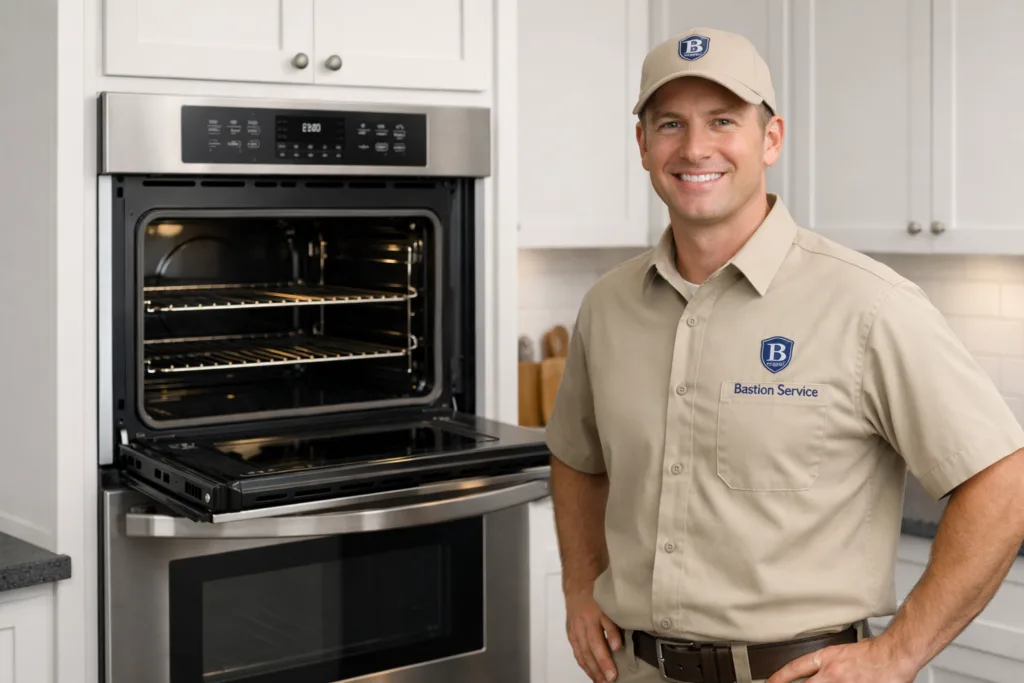
Built-in oven problems often show up in ways that seem inconsistent at first. One day the cavity takes far too long to preheat, and the next day it reaches temperature but bakes unevenly. With a Whirlpool wall oven, those patterns can point to different causes, including a weak heating element, a sensor reading issue, a failing control, wiring trouble, or a door and latch problem that affects heat retention.
For many Los Angeles households, the biggest concern is not just whether the oven turns on, but whether it can be trusted for normal cooking. If roast times suddenly change, cookies brown unevenly, or the display starts flashing errors, the appliance is already telling you that something is off. The sooner the symptom is identified, the easier it is to decide whether repair makes sense and whether continued use is a bad idea.
Signs your Whirlpool wall oven needs attention
Some wall oven failures are obvious, such as a unit that will not power on or a cavity that stays completely cold. Others are more gradual and easier to dismiss until meals start coming out wrong. Common signs include:
- Little or no heat during bake or broil cycles
- Slow preheating compared with normal performance
- Temperature swings that affect baking results
- Food cooking unevenly from front to back or rack to rack
- Error codes appearing repeatedly on the display
- Door lock or latch problems, especially after self-clean
- Shutoffs during cooking or an oven that will not start
Even when two ovens share the same symptom, the repair path may be different. An oven that is dead at the panel is not diagnosed the same way as one that has a working display but never produces heat.
What common symptoms can mean
Oven powers on but does not heat
If lights, clock, or touch controls still work but the oven cavity remains cool, the issue may involve the bake element, broil element, sensor circuit, relay function on the control board, or the incoming power supply. In some cases, the oven appears normal until preheat is started, then never reaches cooking temperature.
Because wall ovens rely on correct operation of multiple components at once, a no-heat complaint should not be reduced to a single part guess. A failed element and a control failure can feel similar to the homeowner but require very different repair decisions.
Uneven baking or inaccurate temperature
When dishes come out overdone at the edges and undercooked in the middle, the problem is often temperature regulation rather than cookware or recipe error. A drifting sensor, weakened heating element, poor cycling behavior, or electronic control issue can all cause temperature inconsistency.
This symptom is especially noticeable with baking that depends on stable heat, such as cookies, casseroles, pastries, and multi-rack meals. If you find yourself rotating pans more than usual or extending cook times every time you use the oven, it is worth having the appliance checked.
Very slow preheat
Slow preheat is a common complaint with aging wall ovens. Sometimes the oven eventually reaches the set temperature, but only after an unusually long wait. That can happen when one heating circuit is weak, when the sensor is reading inaccurately, or when the control is not managing the preheat cycle correctly.
If preheat times have changed significantly from the way the oven used to perform, that shift matters. It often appears before a complete no-heat failure.
Display works but oven behaves erratically
A responsive panel does not always mean the appliance is operating correctly behind the scenes. You may be able to select functions and set temperatures while the oven still overheats, shuts off unexpectedly, or never maintains the chosen setting. In those cases, the problem can involve control logic, relays, sensor communication, or wiring faults that become more noticeable as the oven heats up.
Error codes keep returning
Error codes are useful clues, but they are not a full diagnosis on their own. A code may point toward temperature sensing, communication faults, latch problems, or overheating protection. What matters is confirming which component actually failed and whether the code is reporting the cause or only the result.
If the same code returns after resetting power, that usually suggests an ongoing fault rather than a one-time glitch.
Door will not lock, unlock, or close correctly
Door issues affect more than convenience. A damaged gasket, worn hinge, or latch problem can let heat escape and make baking less predictable. If the door remains locked after self-clean, will not stay aligned, or does not seal well, performance and safety can both be affected.
Forcing a stuck door open can create additional damage, particularly around the latch system or trim.
Why self-clean often seems to trigger problems
Many homeowners notice trouble immediately after a self-clean cycle. That timing is not unusual. Self-clean exposes the oven to extreme heat, which can place extra stress on fuses, sensors, controls, door lock components, and nearby wiring. If a Whirlpool wall oven worked acceptably before self-clean and developed a fault right after, that sequence is an important diagnostic clue.
Post-self-clean problems can include:
- No heat after the cycle ends
- A locked door that will not release
- A blank or partially working display
- Error messages that were not present before
- Unexpected shutdowns during later use
When to stop using the oven
Some problems are frustrating but manageable for a short time, while others justify stopping use right away. It is smart to discontinue operation if you notice a burning electrical smell, visible sparking, repeated breaker trips, overheating around the control area, or a door that will not latch correctly during use.
You should also be cautious if the oven temperature is wildly inconsistent. An appliance that burns the outside of food while leaving the center undercooked is not just inconvenient; it can make everyday cooking unreliable and hard to time.
Repair or replacement: how the decision usually works
Many Whirlpool wall oven issues are still worth repairing, especially when the failure is limited to a sensor, element, latch component, or a specific electrical part. Built-in ovens also present a replacement challenge because cabinet fit, trim size, and electrical setup can complicate the process more than homeowners expect.
Replacement tends to become the stronger option when the oven has multiple major issues, repeated reliability problems, or repair costs that approach the value of installing a new unit. Age matters, but condition matters more. An older wall oven with one isolated failure may still be a better repair candidate than a newer one with several overlapping faults.
What makes wall oven service different from range repair
A built-in unit has to be evaluated with its installation in mind. Access, cabinet spacing, electrical configuration, airflow, and door alignment all play a role in how the oven performs and how service is approached. Problems that seem minor in a freestanding range can be more involved in a wall oven because the appliance is integrated into the kitchen.
Intermittent issues can be especially tricky. An oven that works for twenty minutes and then fails may be reacting to heat buildup, expansion in a weak connection, or a control component that breaks down only under operating conditions. That is why symptom details are so helpful.
Helpful details to note before service
If your oven has become unreliable, a few observations can make troubleshooting faster. Try to note:
- Whether the problem happens during preheat or after the oven is already hot
- If bake, broil, or both functions are affected
- Any error code shown on the display
- Whether the issue started after a power outage or self-clean cycle
- If the door has become harder to close, lock, or unlock
- Whether the display stays on when heat stops
These details do not replace testing, but they can help connect the symptom pattern to the most likely repair path.
Residential Whirlpool wall oven repair in Los Angeles
For homeowners in Los Angeles, the goal is usually straightforward: get the oven back to safe, predictable cooking without wasting time on trial-and-error parts changes. Bastion Service helps evaluate Whirlpool wall oven problems based on the actual symptom pattern, the condition of the appliance, and whether repair is the sensible next step for the kitchen you already have.