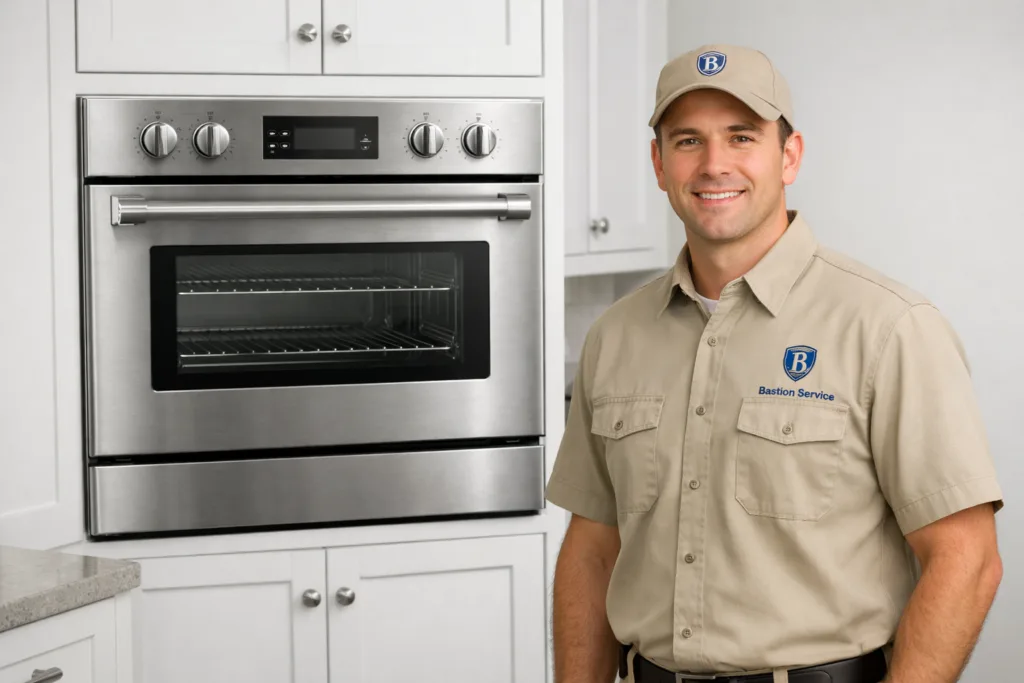
Wall oven problems often show up first in everyday cooking: preheat takes longer than usual, cookies brown unevenly, the display starts beeping, or the oven shuts down in the middle of a meal. With Viking units, those symptoms can come from several different systems, so the most helpful next step is to match the repair plan to the way the problem is actually behaving.
How Viking wall oven problems usually show up at home
Many homeowners notice a gradual change before a complete failure. The oven may still turn on, but it no longer reaches the selected temperature reliably, struggles to hold heat, or cooks differently from one week to the next. In other cases, the change is sudden: no heat at all, a locked door, a fault code, or controls that stop responding.
Because a built-in wall oven combines heating components, sensors, door systems, wiring, and electronic controls, similar symptoms do not always have the same cause. An oven that seems “slow” may have a weak heating component, a sensor reading problem, or a control issue affecting how the unit cycles on and off.
Common symptoms and what they often indicate
Not heating at all
If the oven powers on but never starts heating, the issue may involve the bake circuit, broil circuit, temperature sensing, relays, or the main control. In some homes, the display and lights continue to work normally, which can make the failure seem confusing. That is because the user interface can still appear active even when the heating system itself is not operating.
When there is no heat in any cooking mode, it is usually a sign that the problem is beyond simple recalibration. If only one function is affected, such as bake working poorly while broil still operates, that symptom can help narrow the diagnosis.
Slow preheat
A Viking wall oven that eventually gets hot but takes far too long to reach temperature may be dealing with a weakened heating component, sensor drift, or a control problem that is not energizing the oven properly. Slow preheat is easy to overlook at first, but it often points to a developing fault rather than normal aging.
Homeowners in Los Angeles often notice this symptom during routine use: weeknight meals take longer, roasting times no longer match the recipe, and the oven seems to labor before the preheat signal appears. If this pattern keeps repeating, service is usually warranted.
Uneven baking or roasting
Uneven results can show up as overbrowned edges, undercooked centers, or one rack cooking much faster than another. In a wall oven, that can be tied to temperature regulation, airflow issues, a partially failing heating source, or inaccurate sensor readings.
If rotating pans has become the only way to get acceptable results, the oven is no longer performing as intended. This is especially important for households that cook frequently, because small temperature inconsistencies tend to become more obvious over time.
Temperature swings or overheating
Some ovens run cooler than the set point, while others overshoot and burn food long before expected. A sensor that is sending inaccurate readings, a relay that is sticking, or a control board issue can all cause the oven to cycle incorrectly. Overheating deserves prompt attention, since it affects both cooking performance and safe operation.
If cabinet surfaces feel unusually warm, food scorches repeatedly, or the oven seems much hotter than the selected setting, it makes sense to stop using it until the problem is checked.
Error codes, beeping, or a dead control panel
Modern Viking wall ovens rely on electronic controls to manage timing, temperature, and operating modes. When the display flashes, buttons stop responding, or the unit repeatedly beeps without completing a cycle, the fault may involve the interface, control board, sensor circuit, or power supply to the oven.
A breaker reset may clear a code temporarily, but if the same behavior returns, the issue is still present. Repeatedly resetting the oven can make an intermittent fault harder to track, especially if the failure only appears after the unit heats up.
Door latch or self-clean problems
Wall oven door problems are frustrating because they can leave the appliance partly functional but not truly usable. A door that will not lock, will not unlock, or becomes stuck after self-clean may point to latch assembly problems, switch issues, or control faults. Forcing the door open or closed can damage hinges, trim, or the latch system itself.
If the problem started right after a high-heat cleaning cycle, that timing is useful information because self-clean places added stress on several components.
When repair is usually the right move
Repair is often worthwhile when the issue is isolated to a specific component or system and the oven is otherwise in solid condition. That can include sensor faults, heating failures, certain door issues, and many control-related symptoms where the rest of the appliance remains sound.
The decision becomes more complicated if the oven has a history of repeated electronic problems, visible wear, or multiple failures occurring close together. In those cases, the condition of the full appliance matters as much as the single symptom that prompted the call.
Signs the problem should not be put off
- The oven overheats or burns food at normal settings.
- It trips the breaker during preheat or while cooking.
- The display cuts out, flickers, or repeatedly shows fault codes.
- The door stays locked or does not close securely.
- The oven shuts off mid-cycle and becomes unpredictable.
- Preheat times keep getting longer from one use to the next.
These symptoms usually mean the issue is active rather than incidental. Waiting can turn a manageable repair into a more involved one, especially if overheating or electrical behavior is part of the pattern.
What to note before scheduling service
A few details can make troubleshooting much easier. Try to note whether the problem happens in bake, broil, convection, or self-clean; whether the display shows a code; whether the unit completes preheat; and whether the failure is constant or intermittent. If you have noticed that the oven is running too hot or too cool, an approximate temperature difference is helpful.
It also helps to think about when the symptom began. A problem that started after a power interruption, heavy holiday cooking, or a self-clean cycle may point the diagnosis in a different direction than a slow change that developed over months.
Why symptom patterns matter with built-in wall ovens
Built-in appliances can be difficult to judge by appearance alone. A Viking wall oven may look fine from the outside while still having a failed sensor circuit, a weak heating system, or a control fault hidden behind the panel. That is why symptom-based diagnosis matters more than guessing based on one visible issue.
For Los Angeles households that rely on a wall oven for regular meals, baking, and entertaining, the goal is not just to restore power to the unit. It is to restore stable cooking performance so the oven heats, cycles, and responds the way it should.
Residential Viking wall oven repair in Los Angeles
Bastion Service helps homeowners evaluate whether a Viking wall oven repair makes sense based on the symptom, the condition of the appliance, and the likely repair path. If your oven is not heating, baking unevenly, preheating slowly, showing control problems, or running at the wrong temperature, the next step is to have the specific fault identified so you can make an informed decision about repair.