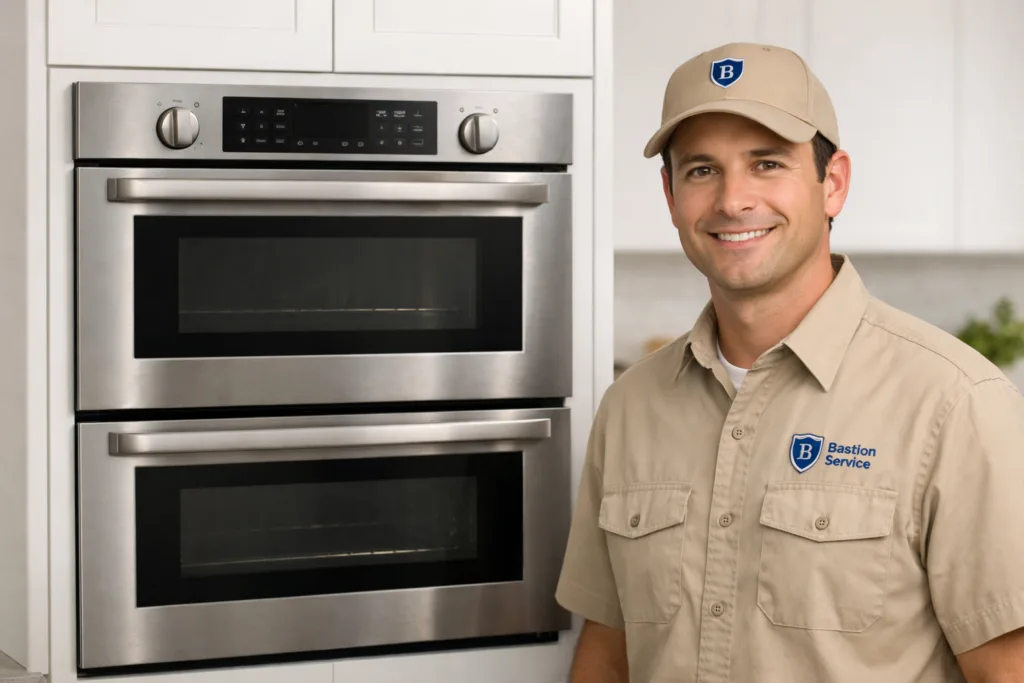
Common Bosch Wall Oven Problems in Los Angeles Homes

When a wall oven starts missing temperatures or refusing to cooperate, the biggest issue is usually not just the appliance itself but the disruption to everyday cooking. With Bosch wall ovens, the same outward symptom can come from several different components, so the most useful way to approach the problem is by matching the repair to the exact behavior of the unit.
In Los Angeles households, common complaints often fall into a few recognizable categories: heating failures, uneven baking, control problems, and door or latch issues. Paying attention to how the oven behaves in each mode can help narrow down what may be failing.
Oven not heating, heating slowly, or not reaching the set temperature
If the oven powers on but never gets hot enough, takes far too long to preheat, or leaves food undercooked, the fault may involve the bake element, broil element, temperature sensor, relay, or electronic control. In some cases, a power supply problem can create symptoms that look like a major internal failure.
Homeowners often notice this issue first when familiar meals suddenly need much more time than usual. If preheat seems unusually slow, the cavity stays lukewarm, or the oven says it has reached temperature when it clearly has not, heat regulation is likely not working the way it should.
Uneven baking, temperature swings, or overheating
A Bosch wall oven that runs too hot, too cool, or drifts throughout the cooking cycle may have a sensor problem, a calibration issue, a convection-related fault, or a control problem. These issues often show up as cookies that burn on one tray and stay pale on another, casseroles that cook inconsistently, or recipes that suddenly stop turning out the way they used to.
Temperature inconsistency is more than a convenience issue. Continued use can put added strain on heating and control components, especially if the oven is cycling incorrectly or overshooting the selected temperature.
Display, touch controls, and error codes
If the display goes blank, touch controls stop responding, or the oven begins showing recurring fault codes, the trouble may be tied to the interface, wiring, main control, or an intermittent electrical issue. Some failures start out sporadically, with the oven working one day and acting erratically the next.
Signs to watch for include random resets, beeping without a clear reason, start commands that do not register, or a unit that powers off during use. Intermittent electronic issues rarely improve on their own and usually become more disruptive over time.
Door, latch, and self-clean related problems
A door that will not shut correctly, a latch that stays engaged, or an oven that develops problems after a self-clean cycle may have a worn mechanism, failed switch, or heat-damaged control component. If the door will not unlock or the oven refuses to start because it thinks the door is open or locked, forcing the mechanism can make the repair more complicated.
Door-related faults can also affect heat retention and cooking performance. Even a slight misalignment can contribute to slow preheat, lost heat, or inconsistent results.
Why Symptom-Based Diagnosis Matters
Bosch wall ovens use brand-specific controls, sensors, and safety systems, which means a visible symptom does not always point directly to the failed part. An oven that appears to have a bad heating element may actually have a control issue preventing proper voltage from reaching that element. A fault code may identify one circuit while the root cause sits in a connected component.
This is why an exact-fit diagnosis matters. It helps determine whether the problem is isolated and repairable, whether continued use could worsen damage, and whether replacing parts based on guesswork is likely to waste time and money.
Signs It Is Time to Schedule Service
It is usually time to have the oven checked when it becomes unreliable for normal meal preparation. That can mean repeated underheating, long preheat times, erratic temperature performance, persistent fault codes, or a unit that will not start consistently.
- The oven trips a breaker or loses power during operation
- Preheat takes much longer than it used to
- Food bakes unevenly despite using normal settings
- The display flickers, resets, or stops responding
- The oven locks unexpectedly or the door will not latch properly
- There is an electrical smell or unusual buzzing during operation
If the oven is shutting down mid-cycle, overheating, or behaving unpredictably, repeated testing is not the best approach. Electrical and control-related issues can worsen with continued use.
Repair or Replace?
Many Bosch wall oven problems are repairable when the appliance is otherwise in good condition and the issue is limited to a serviceable part such as a sensor, fan motor, switch, heating component, latch assembly, or control-related part. In those cases, repair is often the more sensible option.
Replacement becomes more likely when the oven has multiple major failures, severe internal damage, recurring expensive electronic issues, or part availability limits that change the value of the repair. The key is to base that decision on the actual failed component and the overall condition of the unit rather than assuming the worst from one symptom.
Helpful Details to Note Before Service
A few observations from the homeowner can make the problem easier to isolate. If you are scheduling Bosch wall oven repair in Los Angeles, it helps to note exactly how the oven is failing rather than simply saying it is not working.
- Whether the problem happens in bake, broil, convection, or every mode
- Whether the display stays on when the oven stops heating
- Whether the issue started suddenly or developed gradually
- Any error code shown on the display
- Whether the door locks and unlocks normally
- Whether the trouble began after a power interruption or self-clean cycle
These details can help connect the symptom pattern to the most likely cause and reduce unnecessary trial-and-error.
Focused Help for Household Cooking Problems
Wall oven trouble is easiest to solve when the repair stays focused on the actual behavior of the appliance instead of broad assumptions. Whether the issue involves no heat, unstable temperatures, control failures, or door-related faults, the goal is to identify what failed and whether the unit can be returned to normal daily use without guesswork.
For homeowners in Los Angeles, Bosch Wall Oven Repair in Los Angeles is most useful when it answers the practical questions quickly: what is causing the problem, is it safe to keep using the oven, and is repair the right next step for this specific unit.