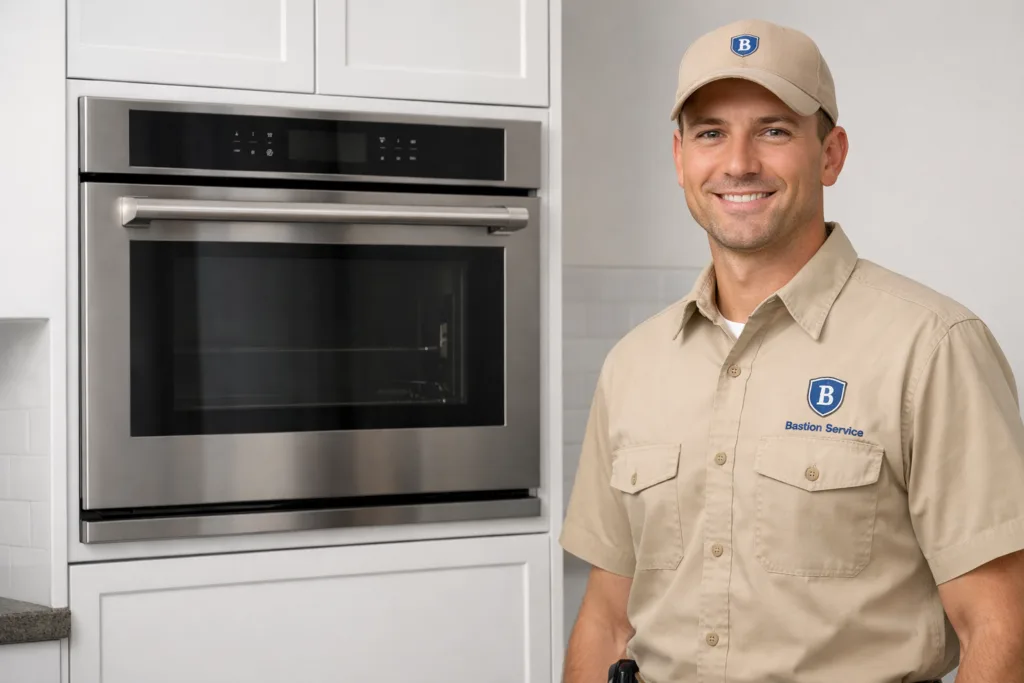
Built-in wall ovens tend to show problems in patterns. One household may notice longer preheat times first, while another sees uneven baking, a flashing error code, or a door that no longer closes the way it should. On a Dacor unit, those symptoms can come from the heating system, temperature sensing, airflow, controls, or door components, so the most useful next step is figuring out which system is actually failing.
What homeowners in Inglewood usually notice first
Most service calls start with cooking results that are no longer predictable. Cookies brown too fast on one side, casseroles need extra time, or the oven says it is preheated even though food still comes out underdone. In other homes, the display becomes unresponsive, the oven shuts off during use, or the control panel starts beeping without a clear reason.
Because a wall oven is built into the kitchen and often used several times a week, even small changes in performance become disruptive quickly. A problem that seems minor at first can also be an early sign of a larger component failure, especially when the issue starts happening more often.
Symptom-based troubleshooting that actually helps
Not heating at all
If the oven powers on but does not produce heat, the fault may involve a bake element, broil element, relay, control board, thermal protection issue, or wiring problem. In some cases, the display and lights still work normally, which can make the failure seem confusing. The appliance may look operational while the heating circuit is not functioning correctly.
When the oven is completely dead, the diagnosis can shift toward incoming power, terminal connections, control failure, or an issue with the user interface. Since built-in electric ovens depend on proper voltage, this is not a symptom to guess at.
Slow preheating
A slow preheat complaint does not always mean the oven simply needs more time because of age. It can point to a weak heating element, an inaccurate sensor, a control issue, or a problem with how the oven cycles heat during warm-up. Some ovens eventually reach the selected temperature but do so inefficiently, which leads to longer meal prep and inconsistent results.
This is one of the most common complaints because it starts gradually. Homeowners often adapt to it for a while before realizing the oven is no longer performing normally.
Uneven baking and temperature swings
If one tray cooks faster than another or recipes that used to be reliable suddenly turn out differently, the cause may be sensor drift, convection fan trouble, weakened heating output, or heat loss around the door. Temperature swings are especially frustrating because the oven may still appear to work, just not accurately.
These symptoms matter for more than convenience. Continued use with unstable temperature control can put added strain on the heating and control systems as the oven struggles to maintain the set point.
Error codes and random shutdowns
Fault codes, repeated beeping, or an oven that turns itself off mid-cycle usually indicate something more specific than general wear. Dacor wall ovens may flag overheating, sensor problems, latch issues, or communication faults between control components. If the oven resets and works again temporarily, that does not mean the issue is resolved. Intermittent failures often become more frequent over time.
When shutdowns happen during preheat or while food is cooking, it is usually best to stop relying on the oven until the cause is checked. A control-related fault can worsen and affect additional components.
Door not closing, locking, or unlocking properly
Door issues are easy to underestimate, but they can affect both safety and cooking performance. A misaligned door, worn hinge, damaged gasket, or latch problem can let heat escape and lead to longer cook times or uneven results. If the trouble starts after a self-clean cycle, thermal stress may also have affected nearby sensors, wiring, or electronic parts.
When the door will not unlock or the latch does not respond correctly, forcing it is rarely a good idea. A proper inspection can determine whether the problem is mechanical, electrical, or tied to the control system.
Why the same symptom can have different causes
Wall ovens are less forgiving than freestanding appliances when diagnosis is skipped. For example, underheating can come from a failing element, but it can also come from a sensor reading incorrectly or a control that is not sending power consistently. Replacing parts based only on the visible symptom can lead to repeat service and higher cost without solving the real problem.
That is why a methodical check matters. Heating performance, sensor response, control behavior, door sealing, and fault history all help narrow down whether the repair is likely to be straightforward or whether multiple systems are involved.
Signs the oven should not keep being used
- Burning or overheating smells during preheat or baking
- Repeated fault codes that return after being cleared
- The oven shuts off before food is finished cooking
- The breaker trips when the oven is turned on
- The door lock sticks or the oven will not turn off properly
- The display flickers or the controls respond inconsistently
These symptoms can indicate electrical stress, overheating, or a failure that may spread to additional components if normal use continues.
Repair or replace?
Many Dacor wall oven problems are repairable, especially when the failure is limited to a sensor, heating element, fan motor, latch assembly, or a specific electronic component. Replacement becomes a more serious consideration when several major problems appear at once, when the control system and heating system are both compromised, or when the overall condition of the oven suggests more failures may follow.
For homeowners in Inglewood, the decision usually comes down to everyday reliability. If the recommended repair is likely to restore stable cooking performance, repair often makes sense. If the oven has multiple costly issues or uncertain parts support, replacement may be the better long-term choice.
What a useful service visit should accomplish
A worthwhile appointment should do more than confirm that the oven is malfunctioning. It should identify the failed system, explain how that failure connects to the symptoms you are seeing, and make it easier to judge whether repair is practical for the age and condition of the unit.
For a household appliance that affects daily cooking, that kind of clarity matters. Whether the problem is no heat, slow preheat, uneven baking, control trouble, or a door issue, the goal is to pinpoint the cause and outline the next step in a way that helps you make an informed decision for your home in Inglewood.