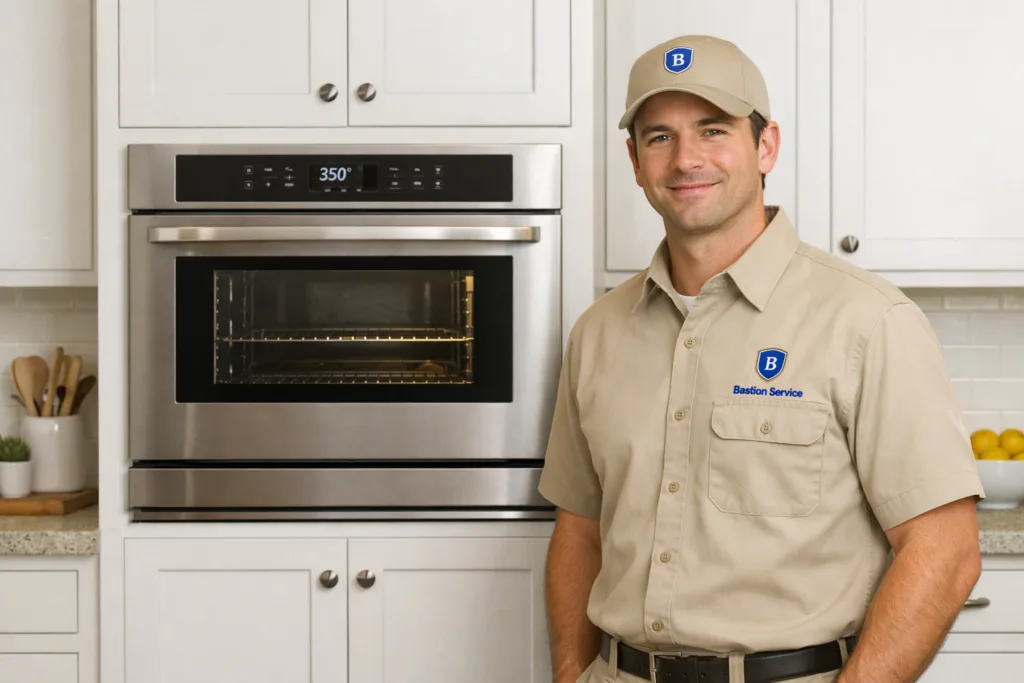
Wall oven problems tend to show up first in everyday cooking: cookies browning unevenly, casseroles taking far longer than expected, or a preheat cycle that seems to run forever. Those symptoms can come from very different causes, so the most useful first step is identifying whether the issue involves heat production, temperature sensing, power delivery, or the control system itself.
Common wall oven problems homeowners notice
A built-in wall oven may stop heating completely, heat only partway, run hotter than the display shows, or cycle on and off at the wrong times. Some households first notice inconsistent baking results, while others see fault codes, a blank display, or a door that will not unlock after self-clean. Even when the symptom seems simple, the actual cause may involve more than one part.
In electric models, weak or failed bake and broil elements are common sources of poor cooking performance. On gas-equipped units, ignition problems can prevent normal heating or cause delayed starts. Temperature sensors, relays, wiring connections, cooling fans, and electronic controls can also affect how well the oven reaches and maintains the set temperature. If your kitchen also has a separate surface unit with burner trouble, Cooktop Repair in Inglewood may be relevant for that cooktop issue, but the wall oven should still be diagnosed as its own built-in system.
What different symptom groups can indicate
Not heating or taking too long to preheat
If the oven turns on but never gets properly hot, the problem may be a failed heating element, igniter weakness, sensor fault, relay issue, or loss of one side of the power supply. A slow preheat is not always a minor inconvenience; it often points to a component that is working inconsistently and may fail fully soon after. In homes comparing symptoms across cooking appliances, Oven Repair in Inglewood can help when the issue involves a standard oven rather than a built-in wall unit.
Uneven baking or temperature swings
Food that burns on one side, stays pale in the center, or finishes differently from one rack to another can indicate sensor drift, reduced element output, poor heat circulation, or control calibration problems. These issues are especially noticeable during baking because baking depends on stable, even cavity temperature over time. Broil may still appear normal even when bake performance is poor, which is one reason symptom-based testing matters.
Display, keypad, or control failures
A flashing display, unresponsive keypad, repeated beeping, or random reset can point to the interface board, main control, touch panel, or related wiring. Electronic faults can also create heating complaints because the control may not be sending power to the proper component at the right time. When a home has a combined cooking unit instead of a separate wall oven and cooktop, Range Repair in Inglewood may fit that range configuration more closely.
Door, latch, and self-clean issues
A door that will not close tightly can let heat escape and make normal cooking difficult. A latch that sticks after self-clean may keep the unit unusable even if the heating system itself is intact. These problems are more than cosmetic, because door alignment, gasket condition, latch operation, and lock switches all affect safety and performance.
Signs you should stop using the wall oven
It is best to stop using the appliance if you notice sparking, repeated breaker trips, a burning electrical smell, smoke that is not caused by food residue, or intermittent power loss during operation. The same applies if the unit shuts off mid-cycle, overheats badly, or shows persistent error codes tied to temperature or door-lock systems. Continued use can damage wiring, stress the control board, or create a more expensive repair.
If the problem is tied to a freestanding cooking appliance with top burners and an oven below, Stove Repair in Inglewood may be the more relevant service path for that stove setup. For a built-in wall oven, though, cabinet installation, ventilation, and control access change the diagnosis and repair approach.
Why diagnosis matters before replacing parts
Wall ovens are easy to misread because different failures can create nearly identical symptoms. For example, poor baking may be caused by an element, but it may also come from a sensor that is reading incorrectly or a control that is cycling heat at the wrong time. Replacing parts based on guesswork often increases cost without fixing the real problem.
Accurate diagnosis also helps determine whether the issue is isolated or whether other components have been affected. A single failed part may make repair straightforward, while signs of heat damage, wiring deterioration, or repeated electronic faults can change the recommendation. Built-in units require extra attention because access, mounting, and surrounding cabinetry can influence labor and repair planning.
Repair versus replacement for a built-in oven
Repair is often the sensible choice when the wall oven has one clear failure and the rest of the appliance is in solid condition. That is especially true when replacement would involve sizing concerns, trim changes, or cabinet modifications. Many homeowners prefer repair when it restores reliable daily cooking without the disruption of replacing a built-in appliance.
Replacement may be worth stronger consideration if the unit has multiple major failures, severe interior wear, repeated control board issues, or repair costs that approach the value of a newer model. Age alone does not decide the answer. What matters more is the overall condition of the oven, the availability of parts, and whether the repair is likely to provide dependable continued use.
What to expect from wall oven service in Inglewood
A helpful service visit should focus on the actual symptoms you are seeing at home: preheat behavior, temperature accuracy, cooking results, error messages, shutdowns, or latch problems. From there, testing can narrow the fault to the heating circuit, sensor system, controls, door components, or power-related issues. That gives homeowners a clearer basis for deciding whether to proceed with repair.
For households in Inglewood, wall oven service is most useful when it stays centered on the built-in appliance you use every day rather than treating all cooking equipment as interchangeable. A wall oven has its own installation and performance considerations, and a proper assessment should reflect that before any parts are recommended or any repair plan is set.