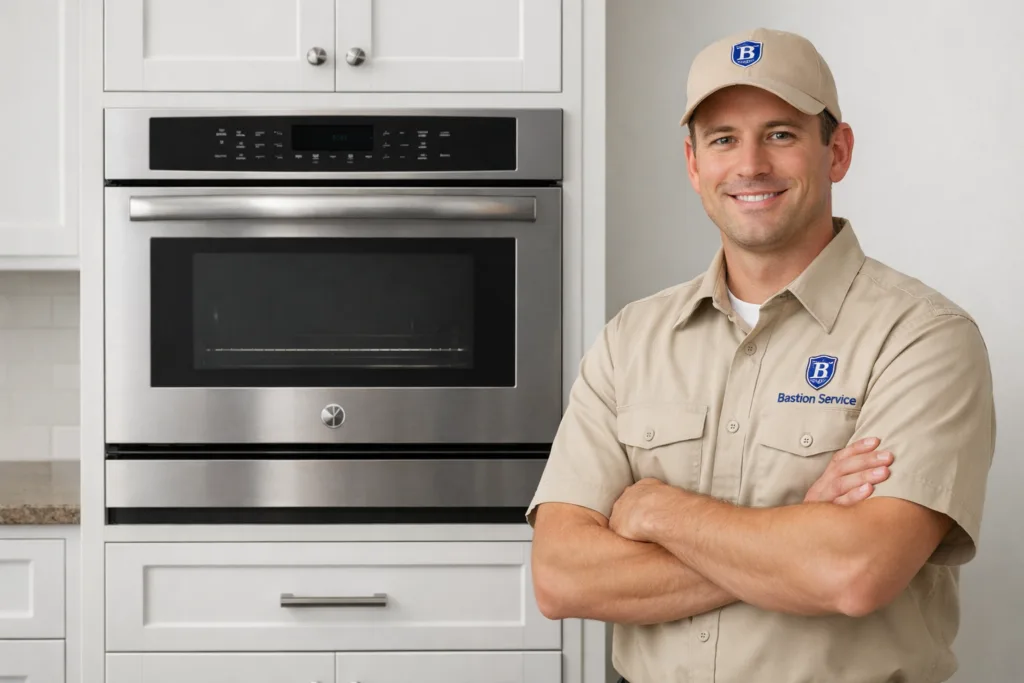
GE wall oven problems usually start with a pattern: preheat drags on, the cavity never reaches the set temperature, the display flashes a fault, or the oven works one day and fails the next. Because different failures can produce similar symptoms, the most useful starting point is to narrow down what the oven is doing before deciding on parts or replacement.
In many Inglewood homes, wall ovens are used heavily for daily meals, holiday cooking, and batch baking. That steady use can expose wear in heating components, sensors, door hardware, and electronic controls over time. A symptom-based approach helps separate a straightforward repair from a larger problem involving power, wiring, or multiple failing parts.
Common GE wall oven problems homeowners notice first
Most wall oven complaints fall into a few familiar categories. The details matter, though, because “not heating right” can mean several different things depending on how the oven behaves during preheat, baking, broiling, or self-clean.
Oven turns on but does not heat
If the display lights up and the controls respond, but the cavity stays cool, the issue may involve a failed bake element, a broil element that is no longer assisting with preheat, a temperature sensor reading out of range, or an electronic control problem. In some cases, the oven appears normal from the front while an internal wiring or relay fault prevents the heating circuit from operating.
This symptom is especially important to check promptly if the unit starts a cycle, clicks, and then seems to sit idle. That can point to a component that is no longer completing the heating sequence correctly.
Slow preheat or weak heating
A GE wall oven that eventually gets hot but takes much longer than before often has a weakening heating component or a control issue affecting temperature response. Slow preheat can also happen when one element is partially failed, allowing the oven to warm up unevenly and far more slowly than normal.
Homeowners sometimes notice this first through cooking results rather than timing. Frozen foods take longer, casseroles need extra minutes, and baked items look pale even after a full cycle.
Uneven baking or temperature swings
If one rack browns too quickly while another stays undercooked, the oven may be struggling with sensor accuracy, element performance, airflow, or door sealing. Some models show this as wide temperature swings during longer baking cycles, where results change from one use to the next without any recipe changes.
Temperature inconsistency often feels subtle at first. Cookies may bake unevenly, roasted foods may take longer in certain corners of the cavity, or the oven may seem hotter than the display suggests. These are useful clues because they often point toward calibration or control-related faults before a complete heating failure happens.
Error codes, random beeping, or display trouble
When a GE wall oven starts showing fault codes, resets unexpectedly, or loses part of the display, the problem may be in the control board, interface, sensor circuit, or power supply path. A blank or flickering display does not always mean the entire oven has failed, but it does mean the electrical side of the appliance needs proper testing.
Repeated beeping without a clear cause can also signal communication or sensor issues. If the oven stops mid-cycle or restarts on its own, continued use may risk added strain on the controls.
Door latch and self-clean problems
A door that will not close properly, will not unlock, or feels misaligned can affect both safety and performance. During self-clean, wall ovens put significant stress on latch assemblies, thermal devices, and electronics. If the problem began during or after a clean cycle, that timing is important because it often helps narrow down the likely failure area.
Door issues can also lead to heat loss, longer cook times, and inconsistent baking. Even when the latch problem seems minor, it may be tied to a control or sensor condition that should not be ignored.
What these symptoms can point to
Wall ovens are built around a few key systems working together: heat generation, temperature sensing, control input, door operation, and stable power. When one part of that chain fails, the symptoms may overlap. That is why a single complaint can have several possible causes.
- No heat: possible bake element, broil element, sensor, relay, thermal cutoff, or wiring issue
- Slow preheat: possible weak element, sensor drift, board issue, or poor door seal
- Uneven results: possible calibration problem, airflow issue, failing convection component, or heat loss at the door
- Dead or unstable display: possible control, interface, harness, or incoming power problem
- Door locked shut: possible latch motor, switch, control, or self-clean related failure
Because several of these faults can look alike during normal use, replacing parts by guesswork often wastes time and money. Testing the likely failure points first gives a better picture of whether the repair is isolated and worthwhile.
Signs the oven should not keep being used
Some wall oven problems are mainly inconvenient, but others can raise safety concerns. It is smart to stop using the unit and have it checked if you notice any of the following:
- The breaker trips during preheat or cooking
- There is a burning smell that does not clear quickly
- The display cuts out while the oven is heating
- Sparking, popping, or unusual electrical noises occur
- The door will not latch or unlock normally
- The oven overheats far beyond the set temperature
Built-in appliances can hide electrical and heat-related failures behind finished cabinetry, so recurring shutdowns or burning odors deserve prompt attention rather than repeated attempts to “see if it works next time.”
When intermittent problems are more serious than they seem
A wall oven that fails only part of the time can be harder to live with than one that stops completely. Intermittent faults often suggest a control issue, unstable connection, sensor problem, or component that is breaking down under heat. These failures may pass a quick casual check when the oven is cool, then act up again once temperatures rise.
If the unit sometimes preheats correctly and sometimes stalls, or if the display occasionally resets without warning, it is best to treat that as an early warning rather than a minor annoyance. In many cases, partial operation becomes full failure later.
Repair or replacement: how homeowners usually weigh it
Repair is often a sensible option when the problem is limited to a specific component such as an element, sensor, latch assembly, switch, or certain control-related parts, and the rest of the oven is in solid condition. A built-in GE wall oven can still be worth repairing when the cabinet fit is good, the cavity and door are in good shape, and the symptom points to a contained failure.
Replacement becomes more likely when there are multiple major issues at once, significant interior or door damage, or a high-cost electronic repair on an older unit already showing broader wear. Age alone does not decide it. The better questions are:
- Is the failure isolated or part of a larger pattern?
- Will the repair restore normal everyday use?
- Is the oven otherwise in good physical condition?
- Does the repair cost make sense for the appliance’s age and condition?
For many households in Inglewood, the decision comes down to whether the repair solves the actual problem without setting up another major issue soon after.
What a useful service visit should clarify
A productive GE wall oven service appointment should do more than confirm that the oven is acting up. It should identify the symptom group, check the most likely causes, verify whether the appliance is safe to use, and explain whether repair is practical based on the condition of the unit.
That matters when the same complaint could come from very different faults. An oven that seems dead may have a power supply issue rather than a failed control. One that bakes unevenly may need a sensor-related repair rather than a full heating assembly. Good diagnosis helps avoid guesswork and gives the homeowner a realistic next step.
Household cooking disruptions these problems often cause
Wall oven issues tend to affect the entire kitchen routine because the appliance is built into the home and not easy to swap out or bypass. Families may end up adjusting meal plans, relying on countertop appliances, or avoiding baking altogether while trying to figure out whether the oven can still be trusted.
If your GE wall oven in Inglewood is showing inconsistent heat, slow preheat, control faults, or door problems, the main goal is to determine exactly what is failing and whether the repair path makes sense for the appliance you have now. That gives you a clearer decision than relying on symptom guesses alone.