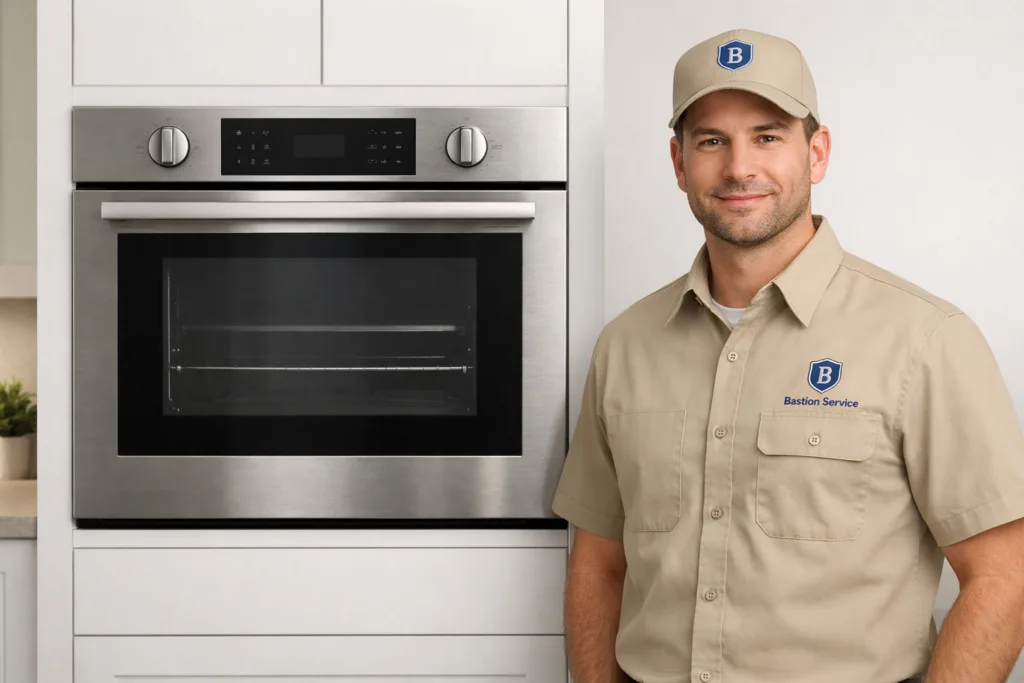
Bosch wall ovens often show problems in stages rather than failing all at once. A little extra time to preheat, one rack baking faster than another, or a display that occasionally resets can all be early signs that a heating, sensor, or control issue is developing. Paying attention to those patterns helps narrow down the likely cause before a small performance problem turns into a complete loss of heat.
How Bosch wall oven problems usually show up
Different symptoms can point to very different repair paths. An oven that powers on but stays cold is not the same problem as an oven that reaches temperature slowly, and neither behaves like one that overheats or shuts off during use. Because Bosch wall ovens rely on several systems working together, the symptom pattern matters just as much as the symptom itself.
In many homes in Inglewood, the first sign is cooking inconsistency rather than a total breakdown. Cookies may brown too quickly on the top rack, casseroles may need extra time, or the oven may seem finished preheating before the cavity is actually ready. Those details are useful because they can help separate a heating issue from a temperature-reading issue or an airflow problem.
Common symptoms and what they may indicate
- Not heating at all: Possible causes include a failed bake or broil element, a power-supply problem, damaged wiring, a thermal safety issue, or a control failure.
- Slow preheating: Often connected to a weakened heating component, inaccurate temperature sensing, or a control that is not cycling heat correctly.
- Uneven baking: May be related to sensor drift, poor heat distribution, a door seal problem, or one heating circuit not performing properly.
- Temperature swings: Can point to a faulty sensor, relay trouble, calibration problems, or an electronic control issue.
- Display or keypad problems: Intermittent response, flashing panels, or error codes may involve the user interface, wiring connections, or the main control.
- Door or lock issues: Misaligned hinges, latch trouble, and lock-motor faults can affect both normal cooking and self-cleaning functions.
Why a wall oven may heat, but still cook poorly
Many homeowners assume that if the oven gets hot, the main system must be fine. In reality, a Bosch wall oven can still produce poor results even when it appears to be heating normally. If the sensor is reading inaccurately, if a relay is sticking, or if one element is not cycling as it should, the cavity may never hold the temperature shown on the display.
This is why baked goods can come out inconsistent even though the preheat tone sounded normal. Roasts may take longer than expected, edges may overbrown before the center is done, and dishes that used to be predictable may suddenly require guesswork. When the issue has reached that point, repair is usually more effective than repeatedly adjusting recipes and cooking times.
Clues that the temperature is off
- Food is regularly underdone even when cooked for the usual time.
- Top surfaces brown too fast while the middle remains pale.
- Preheat appears complete, but the oven still feels weak.
- Recipes that were once reliable now vary from one use to the next.
- The oven seems hotter or cooler than the set temperature.
Control and error-code issues
Modern Bosch wall ovens depend heavily on electronic controls. That improves precision, but it also means that a fault code or inconsistent display can reflect more than one possible issue. Some codes relate to sensor readings, some to latch or lock functions, and others to communication problems within the oven’s control system.
If the display flickers, resets, stops responding, or shows repeat errors, the problem may not be limited to the panel itself. Wiring, connectors, and the main control can all affect how the oven behaves. In some cases, the oven may still operate part of the time, which makes the problem feel random even when there is a clear underlying cause.
When a wall oven starts shutting off mid-cycle or refusing to start certain functions, it is usually best not to ignore it. Intermittent electronic issues rarely stay small for long, and repeated failed starts can place added stress on components that are already unstable.
Door, hinge, and seal problems matter more than many people expect
A wall oven door that does not close evenly can create major performance problems. Heat loss around the seal can stretch preheat times, reduce baking consistency, and cause the oven to work harder to maintain temperature. In some cases, homeowners notice steam, excess exterior heat, or browning problems before they realize the door is not sealing correctly.
Hinges, latches, springs, and door alignment can all play a role. If the oven has a self-clean lock issue, the problem may involve a separate lock mechanism or related control function. These faults are worth addressing because they can affect both safety and cooking results.
When to stop using the oven until it is checked
Some problems are mostly about convenience, while others can point to a more serious electrical or overheating concern. It is smart to pause use and schedule service if you notice any of the following:
- The oven trips the breaker when heating begins.
- It shuts off unexpectedly during cooking.
- The cavity overheats or burns food unusually fast.
- You smell wiring, insulation, or something acrid during operation.
- The display shows persistent fault codes and normal cooking is unreliable.
- The door will not close or lock correctly.
For households in Inglewood, this is especially important when the oven is built into cabinetry and used frequently. Continued use during an active electrical or overheating issue can lead to a more involved repair than the original fault.
Repair or replacement: what usually makes sense
Not every malfunction means the oven is at the end of its life. Many Bosch wall oven problems come down to one failed part or one system that is no longer reading or regulating heat correctly. If the appliance is otherwise in solid condition, a targeted repair can restore normal cooking performance without much disruption.
Replacement becomes a more serious consideration when several problems show up at once, when there is repeated control failure, or when the oven has broader wear that makes future repairs less appealing. Built-in appliances also bring installation considerations, so the right decision depends on the exact fault, the condition of the unit, and how the oven has been performing overall.
Repair is often worth considering when
- The issue is limited to heating performance, sensing, or a specific control fault.
- The oven has been reliable up to this point.
- The cavity, door, racks, and overall structure are still in good shape.
- There are no signs of repeated, unrelated failures.
Replacement may deserve a closer look when
- There are recurring electronic issues across multiple functions.
- The oven has a history of repeat breakdowns.
- Several major components are failing together.
- The appliance condition makes a larger repair harder to justify.
What homeowners can note before scheduling service
A few observations can make the service visit more productive. If possible, note whether the problem affects bake, broil, convection, or all cooking modes. Pay attention to whether the oven reaches any heat at all, whether the issue started suddenly or gradually, and whether error codes appear at the start of a cycle or later during use.
It also helps to mention if the door feels loose, if the control panel has been acting inconsistently, or if the oven has been taking longer to preheat over the past several weeks. Those details can help connect the complaint to the most likely system involved.
What a focused repair visit should accomplish
A worthwhile Bosch wall oven service call should identify why the symptom is happening, not just confirm that the oven is malfunctioning. That means testing the relevant heating, sensing, and control functions, checking for related component stress, and determining whether the repair path is sensible for the appliance as a whole.
For homeowners in Inglewood, the goal is simple: get back to predictable cooking without wasting time on guesswork or unnecessary parts. When the real cause is isolated, it becomes much easier to decide whether the right next step is repair now or replacement later.