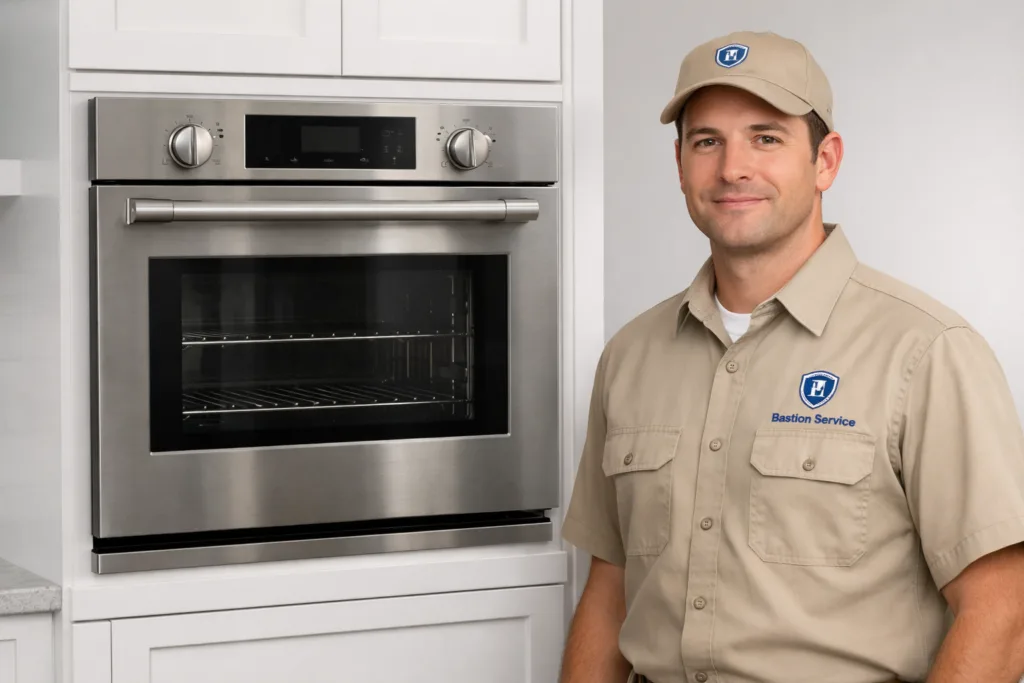
Common Wolf wall oven problems in Inglewood homes

Wolf wall ovens are built for precise cooking, so even a small fault can become noticeable quickly. Homeowners often first spot the problem through daily use: dinner takes longer than usual, baked dishes brown unevenly, the oven shuts off before the timer ends, or the controls stop responding the way they should.
What makes wall oven issues tricky is that similar symptoms can come from very different causes. A slow preheat complaint may point to a weak heating circuit, a drifting temperature sensor, a relay problem, or an electronic control fault. An oven that looks powered on but will not begin a cycle may involve the door latch system, control logic, or an internal safety interruption.
Not heating, underheating, or taking too long to preheat
If the oven will not heat at all, the failure may be fairly direct, such as a heating component problem, a control issue, or loss of proper power within the unit. But in many cases, the oven still heats somewhat, which makes the problem harder to judge by feel alone. Homeowners may notice that preheat takes much longer than before, that the oven reaches temperature inconsistently, or that food never seems to cook at the expected pace.
These patterns can happen when one part of the heating system is not working correctly even though the display appears normal. That is why replacing a single part based only on the symptom can miss the real cause. Proper testing matters when the complaint is “it heats, but not right.”
Uneven baking and temperature swings
Uneven baking often shows up gradually. Cookies may brown more on one side, casseroles may be done around the edges but not in the center, or recipes that used to be reliable suddenly need extra time. Some owners notice one rack cooks faster than another, while others describe the oven as “running hot one day and cool the next.”
This kind of inconsistency can be related to temperature sensing, control regulation, heating performance, or door sealing. If the oven cannot hold a stable temperature, the result is not just poor baking results but also unpredictable cooking times across everyday meals.
Error codes, display faults, and touch control issues
When a Wolf wall oven shows an error code, it is a sign that the appliance has detected a fault condition, but the code itself is not always the full answer. The underlying issue may involve a sensor, communication fault, latch problem, overheating condition, or a board-level failure that needs confirmation.
Other electronic symptoms may include a flickering display, settings that reset on their own, buttons that respond intermittently, or a panel that powers on but does not start the oven. In a built-in cooking appliance, these issues are more than an inconvenience because they can interrupt normal operation mid-cycle and make performance less predictable from one use to the next.
Door, latch, and self-clean problems
A wall oven door needs to close and seal properly for the appliance to regulate heat the way it should. If the door is misaligned, does not close firmly, or the latch does not release correctly, the oven may not start, may lose heat, or may lock unexpectedly.
Some problems appear after a self-clean cycle, when prolonged high heat can stress latch components, switches, sensors, and controls. If the oven becomes locked, unresponsive, or begins acting differently after self-clean, forcing the door or repeatedly cycling the breaker is usually not the best next step. Those attempts can make the fault harder to sort out.
What different symptoms can suggest
Looking at the way the problem behaves often gives helpful clues about where the fault may be.
- Completely dead oven: possible power interruption, internal protection issue, or control failure.
- Display works but no heat: possible heating circuit, relay, latch, or control problem.
- Slow preheat: possible weak heating performance, sensor drift, or temperature regulation issue.
- Uneven cooking: possible sensor error, element problem, airflow issue, or poor door seal.
- Recurring fault code: possible sensor, latch, communication, or overheating condition.
- Shuts off during cooking: possible electrical interruption, overheating response, or board-related failure.
These symptom patterns are useful, but they are still only starting points. Two ovens can show the same complaint for entirely different reasons, which is why an exact diagnosis matters before parts are chosen or repair decisions are made.
When to stop using the oven and schedule service
Some problems are frustrating but still allow limited operation, while others should be checked before the appliance is used again. If the oven cannot maintain temperature, repeatedly fails to finish preheat, stops mid-cycle, or gives inconsistent results often enough to disrupt normal cooking, it is a good time to have it evaluated.
You should stop using the oven sooner if it trips the breaker, gives off a strong burning smell from the appliance itself, overheats surrounding cabinet surfaces, locks unexpectedly, or shows obvious electrical or display instability. In those situations, continuing to use it can increase the chance of a larger failure and make the eventual repair more involved.
Why repeated resets are rarely a real fix
It is common to try a power reset when a wall oven acts up. Occasionally that can clear a temporary glitch, but if the same symptom returns, the reset did not solve the underlying problem. Repeatedly cutting power and restarting cycles can place more stress on controls, relays, and heating components, especially if the oven is already failing under heat load.
If the appliance only works after multiple attempts, or if its behavior changes from one use to the next, that inconsistency is part of the diagnosis. It is better to have the fault checked than to keep working around it meal by meal.
Repair versus replacement for a Wolf wall oven
For many homeowners in Inglewood, the real question is not whether the oven has a problem, but whether that problem still makes sense to repair. The answer depends on the confirmed fault, the overall condition of the oven, whether the issue is isolated or spread across several systems, and how much heat or electrical stress the appliance has already experienced.
Many common wall oven problems remain reasonable to repair when the issue is limited to a sensor, latch component, heating part, or a specific control-related failure. Replacement becomes a more serious consideration when there are multiple major problems at once, signs of broad electronic damage, or a repair history that suggests ongoing reliability trouble rather than a single correctable fault.
A good service visit should help separate those two situations clearly so the next step is based on the appliance’s actual condition, not guesswork.
What a service visit should clarify
When a Wolf wall oven is not performing the way it should, homeowners need more than a vague explanation. The visit should identify which system failed, whether the oven is safe to continue using, what other components may have been affected, and whether the repair path is straightforward or more extensive.
That kind of practical repair guidance is especially important with built-in cooking appliances, where symptoms can overlap and access is more involved than with freestanding units. The goal is to leave you with a clear understanding of what is wrong, what it affects, and whether repair is the right next move for your kitchen.
Why local homeowners pay attention to small performance changes
In many Inglewood households, the wall oven is used often enough that small changes stand out quickly. A favorite recipe needing extra time, repeated trouble with preheat, or unreliable control response may seem minor at first, but those early signs often appear before a full loss of operation.
Paying attention to those changes can help prevent a more disruptive breakdown. If the oven’s behavior has become inconsistent, the most helpful next step is to have the symptom pattern evaluated before the problem spreads into a larger heating or control failure.