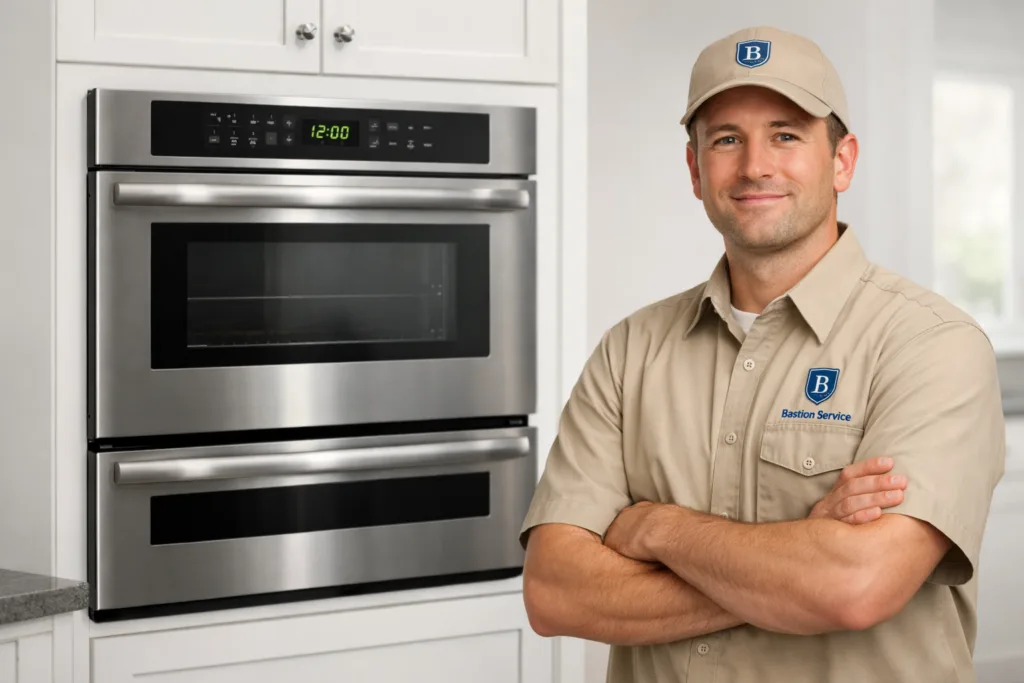
Frigidaire wall ovens usually give warning signs before they fail completely. You might notice slower preheat, pans browning unevenly, a cavity that never seems to reach the set temperature, or a control panel that works one day and acts erratically the next. Those symptoms often point to different underlying issues, so the most useful approach is to match the repair path to what the oven is actually doing.
Common Frigidaire wall oven problems in Inglewood homes
In many homes, the first complaint is simple: the oven turns on, but cooking results are no longer consistent. Cookies brown too fast on top, casseroles take longer than expected, or roast times stretch well past what they should. In other cases, the unit stops heating altogether even though the display and lights still appear normal.
Frigidaire wall ovens can also develop problems with the bake element, broil element, temperature sensor, electronic control, door gasket, latch assembly, or internal wiring. Because several of those parts affect one another, one symptom can have more than one possible cause. A no-heat complaint, for example, may come from a failed heating component, a sensor fault, or a control issue rather than just a single burned-out part.
Door-related problems are also common. If the door does not seal well, heat can escape during preheat and cooking. That can show up as long cook times, uneven baking, or repeated temperature swings that make the oven feel unreliable even though it still runs.
What different symptom patterns usually mean
Oven will not heat at all
If the control panel responds but the cavity stays cold, the problem is often somewhere in the heating circuit. On an electric wall oven, that may involve the bake element, broil element, sensor, relay, wiring, or a failed control output. If the oven is completely unresponsive, incoming power, breaker issues, connections, and internal safety components may need to be checked first.
Slow preheat or weak heating
A wall oven that eventually gets warm but takes far too long to preheat may have a weak element or a component that is not staying energized properly. This is one of the easier symptoms for homeowners to notice because the appliance still seems functional, yet everyday cooking becomes frustrating. Long preheat times should not be ignored, especially if they appear suddenly rather than gradually.
Uneven baking and temperature swings
When one side of a dish cooks faster than the other, or when baked goods come out overdone on the edges and undercooked in the center, temperature regulation becomes the main concern. A drifting sensor, inconsistent element performance, poor heat circulation, or a sealing problem at the door can all contribute. On convection-equipped models, a fan-related issue may also affect how evenly heat moves through the cavity.
Error codes or intermittent shutdowns
Error messages often point to sensor faults, overheating, latch problems, or electronic control failures. Intermittent shutdowns are especially important because they can become a full failure without much warning. If the oven resets during use, stops in the middle of a cycle, or behaves differently from one cooking mode to another, that usually indicates a fault that needs direct testing rather than guesswork.
Door lock or self-clean issues
Some Frigidaire wall ovens begin acting up during or after self-clean. A door that stays locked, a latch that does not engage properly, or an oven that will not resume normal operation can point to a latch motor problem, a switch issue, or heat-related stress on the control system. Forcing the door or repeatedly retrying the cycle can make the repair more complicated.
Signs the oven should not keep being used
It is best to stop using the wall oven if it is tripping the breaker, producing a burning electrical smell, showing repeated error codes, or failing to regulate temperature well enough for safe cooking. A unit that overheats, shuts down unpredictably, or has visible damage around elements or wiring should also be evaluated before further use.
Continued operation can turn a repairable problem into a larger one. A struggling element can stress controls, a poor door seal can overwork heating components, and repeated breaker trips may point to an electrical issue that should not be overlooked. If performance has changed sharply, it is usually worth addressing sooner rather than later.
Repair or replace: what usually makes sense
Many Frigidaire wall oven problems are worth repairing when the appliance is otherwise in solid condition. If the cabinet, interior cavity, racks, hinges, and overall performance history are still good, a repair often makes sense for isolated failures such as elements, sensors, door parts, switches, or some control-related issues.
Replacement becomes more reasonable when the oven has multiple faults at once, recurring electronic problems, significant interior wear, or a repair cost that is hard to justify compared with the unit’s age and condition. For most homeowners in Inglewood, the decision comes down to whether the repair addresses one defined problem or whether it is the latest issue in a pattern of declining reliability.
What a service diagnosis should answer
A useful Frigidaire wall oven service visit should identify which system has failed and whether the symptom is isolated or part of a broader wear pattern. That includes checking heating performance, sensor response, control operation, door condition, latch function, and power-related concerns when needed.
By the end of that process, the homeowner should know what is causing the problem, whether continued use risks more damage, and whether repair is a sensible long-term choice for the appliance. That helps avoid trial-and-error part replacement and makes it easier to decide on the next step with confidence.
Preparing for wall oven service in your home
If service is being scheduled, it helps to note exactly how the oven is failing. Useful details include whether the issue affects bake, broil, convection, or self-clean; whether the display shows an error code; whether the problem happens every time or only intermittently; and whether preheat times have changed. That symptom history can make troubleshooting more efficient.
It is also helpful to stop using the appliance if it shows signs of overheating, electrical odor, or repeated shutdowns. For more routine performance complaints, keeping track of actual cooking results can still be valuable. A pattern such as slow preheat, inaccurate temperature, or unreliable baking often says more than a general description that the oven is “not working right.”