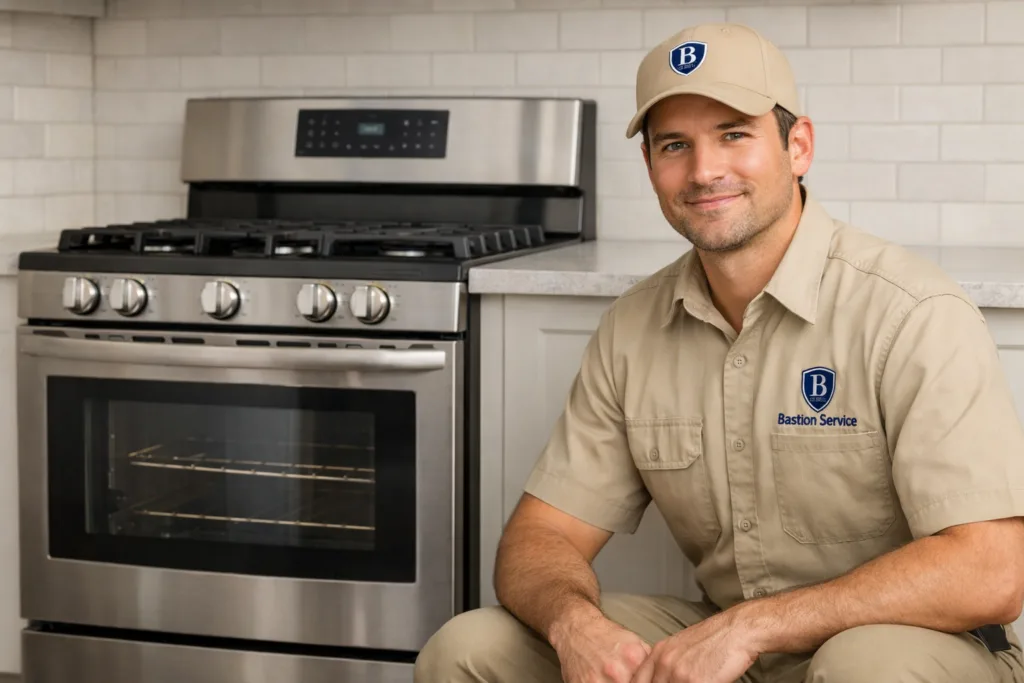
Range problems are easiest to solve when the symptom is matched to the part of the appliance that is actually failing. An LG range may show similar behavior from very different causes, such as an ignition fault, a weak heating component, a sensor issue, or a control problem. For homeowners in Los Angeles, that distinction matters because the right repair depends on how the range is misbehaving in everyday use.
Start with the symptom pattern
Many range issues do not begin as a complete failure. A burner may light on the second try for a week before it stops lighting reliably. The oven may still heat, but preheat takes longer and baking results become less predictable. A display may work normally most of the time, then stop responding during cooking. Those patterns help narrow down whether the problem is isolated to one function or tied to a larger electrical or control issue.
LG ranges combine surface cooking, oven heating, sensors, switches, and electronic controls in one appliance. That is why it helps to look at exactly what changed, when it started, and whether the problem affects one burner, the whole cooktop, only the oven, or multiple functions at once.
Common LG range symptoms and what they may mean
Burner clicking but not lighting
On gas models, repeated clicking usually points to an ignition-related issue rather than a simple inconvenience. The cause may be moisture around the igniter, a burner cap that is out of position, buildup affecting ignition, or a problem with spark or gas delivery to that burner. If the clicking continues after cleaning and drying the area, the range should be checked before normal use continues.
If there is a strong or persistent gas smell, stop using the appliance and address safety immediately.
Oven not reaching the set temperature
When the oven preheats slowly, stalls below the selected temperature, or cooks food unevenly, the issue may involve the bake system, broil support during preheat, the temperature sensor, or the control regulating heat cycles. Homeowners often notice this through recipes that suddenly need much more time, bottoms that stay pale, or dishes that look done on the outside but remain undercooked inside.
Uneven baking or temperature swings
An oven that runs too hot, too cool, or alternates between both can be frustrating because it may seem usable while still producing poor results. Temperature inconsistency can come from sensor drift, cycling problems, door seal wear, or a heating circuit that is not operating as it should. This is one of the most important symptoms to diagnose early because minor inconsistency often turns into clear performance failure over time.
Surface elements not heating correctly
On electric LG ranges, a surface element that stays too cool, overheats, or does not respond normally to setting changes may have an issue with the element itself, the infinite switch, wiring, or the user interface sending the command. If the heat level no longer matches the selected setting, continued use can become both inconvenient and hard on surrounding components.
Display, keypad, or control problems
When the control panel freezes, buttons stop responding, the display flashes errors, or cooking cycles shut off unexpectedly, the problem may be electronic rather than mechanical. On an LG range, control faults can affect oven operation, locking functions, timers, and startup behavior. Error codes can help identify a direction, but they still need to be confirmed against the actual symptom and component behavior.
Signs the range should be serviced soon
Some problems can wait a day or two for scheduling, while others should not be ignored. If the range has become unreliable during normal meal preparation, the issue is usually beyond a one-time glitch. Intermittent failures often become full failures without much warning.
- Burners ignite only after repeated attempts
- The oven temperature is clearly hotter or cooler than the setting
- Preheat takes much longer than it used to
- The display flickers, resets, or stops accepting input
- The range shuts off mid-cycle or shows recurring errors
- A surface element stays on too long or does not heat steadily
These issues affect more than cooking convenience. They can lead to wasted food, uneven results, added wear on parts, and a higher chance that another component is affected if the problem continues.
What homeowners can check before scheduling repair
A few basic observations can help make the problem easier to identify. If a gas burner is clicking, check whether the burner cap is seated correctly and whether the area is wet or recently cleaned. If the oven seems off-temperature, note whether it is always too hot, always too cool, or inconsistent from one use to the next. If the display is acting up, pay attention to whether the issue appears during preheat, after the oven gets hot, or randomly.
These simple details are often more useful than a general description like “it is not working right.” They help separate a heating problem from a control problem and make it easier to decide whether the repair is likely to be straightforward.
Repair or replace depends on the type of failure
Most household decisions come down to whether the issue is isolated or whether the range is showing multiple signs of decline. Repair is often reasonable when the problem is limited to one burner, one heating function, a sensor, an igniter, or a specific control-related part while the rest of the appliance is in good condition.
Replacement becomes more worth considering when there are several unrelated faults at once, repeated service history across different systems, or broader reliability concerns that go beyond a single repair. The goal is to fix a defined problem, not keep chasing new ones.
Why symptom-based service matters for LG ranges
Part swapping based on guesswork can turn a manageable repair into a more expensive one. Two ranges with the same complaint may need very different solutions depending on whether the root cause is power supply, a failed component, wiring, or the main control. A symptom-based approach keeps the focus on what the appliance is actually doing in the home instead of assuming every ignition or heating problem has the same cause.
For Los Angeles households that rely on the kitchen every day, the most helpful service experience is one that explains what failed, what the symptom points to, and whether the repair path makes sense for the condition of the appliance overall.