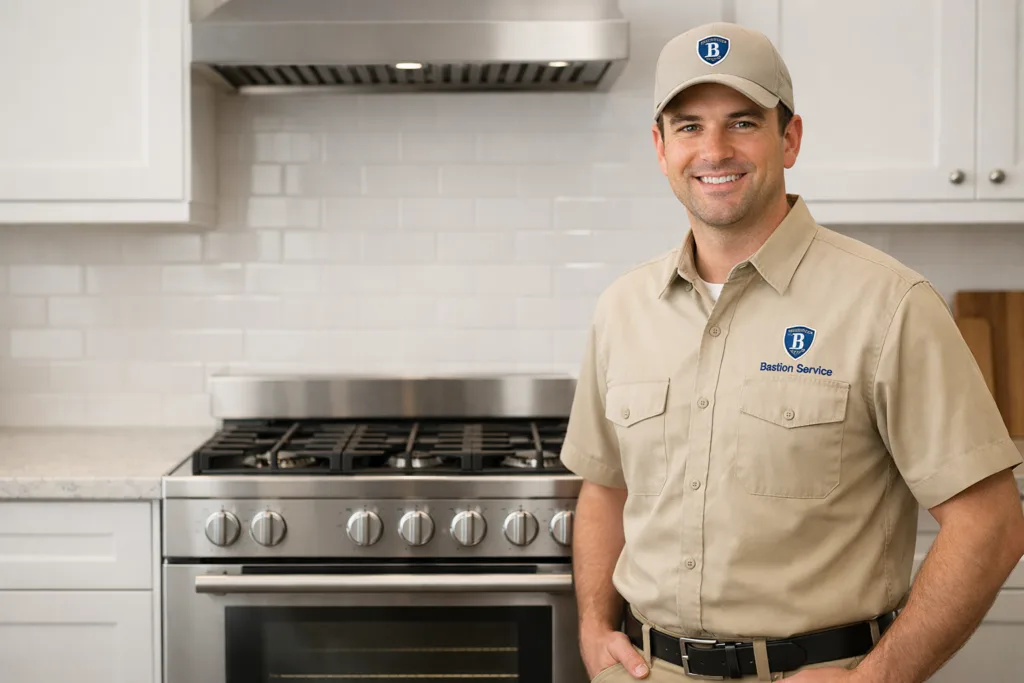
How Miele range problems usually show up in daily cooking

Range issues tend to become obvious in the middle of normal routines: water takes too long to boil, a burner clicks after cleaning, the oven preheats slowly, or baked dishes start coming out uneven from one rack to the next. On Miele models, those symptoms can involve the ignition system, temperature sensing, heating components, controls, or a combination of smaller faults that affect overall performance.
Because a range combines cooktop and oven functions in one appliance, it helps to note whether the problem is isolated to one area or affects the whole unit. A single weak burner suggests a different repair path than an oven that cannot hold temperature, and a display issue can sometimes interrupt cooking cycles even when the heating hardware itself is still functional.
Common Miele range symptoms and what they may mean
Burner clicks but does not light
This often points to an ignition-related issue, but the exact cause can vary. Moisture around the burner base, misaligned burner caps, blocked ports, worn ignition parts, or a problem in the spark system can all create the same basic symptom. If clicking continues after the burner should have lit, the appliance should be checked rather than repeatedly retried.
Weak flame or uneven burner heat
When one burner runs lower than expected or heats unevenly, simple issues such as debris or improper burner assembly may be involved. In other cases, the problem is internal and tied to component wear. If the burner behavior changed suddenly and cookware that normally performs well is no longer cooking evenly, the range likely needs service rather than adjustment alone.
Oven takes too long to preheat
Slow preheat is one of the most common complaints on residential ranges. Depending on the model, the cause may be a weak igniter, a failing heating element, a sensor problem, or a control fault that is not regulating the heating cycle correctly. Long preheat times usually do not improve on their own, and they often become more noticeable as the underlying part weakens.
Oven temperature is off
If roasts finish late, cookies brown too fast on one side, or food needs repeated extra time, the oven may be underheating, overheating, or cycling inconsistently. A temperature complaint is not always caused by the same part in every case, which is why symptom-based testing matters. Sensor readings, bake performance, broil support, and control response all need to make sense together.
Controls, display, or touch panel are not responding normally
Modern Miele ranges rely on electronic controls for timing, temperature management, and cooking modes. If commands do not register, the display behaves erratically, or cycles stop unexpectedly, the issue may involve the interface, the control board, or a related electrical fault. These problems can appear at first like heating failures because the range no longer follows the selected cooking program correctly.
Why the same symptom can have different causes
An oven that will not heat may have a very different repair need than another oven with the same complaint. One unit may have an ignition problem, another may have a sensor reading issue, and another may have a control failure affecting how the range powers and regulates heat. The same is true for burner problems: repeated clicking may come from moisture and alignment in one case and worn ignition components in another.
That is why replacing parts based on guesswork can become expensive without solving the original problem. A service visit that follows the symptom pattern, checks operation under actual cooking conditions, and tests the likely components is usually the fastest way to identify what is worth repairing.
Signs the problem should not be ignored
Some range problems start as minor inconveniences but become harder on the appliance over time. A weak igniter can continue deteriorating until the oven no longer starts reliably. Burners that click intermittently may become less predictable. Temperature control problems can lead to repeated overheated or undercooked meals, wasted ingredients, and extra strain from repeated cooking attempts.
- Burners that spark repeatedly or fail to light consistently
- Preheat times that have noticeably increased
- Oven temperatures that swing far above or below the setting
- Controls that freeze, reset, or stop mid-cycle
- Power interruptions or breaker trips during use
If any of those symptoms are showing up in a Los Angeles home, it is a good time to have the range evaluated before the failure affects additional components.
What helps speed up diagnosis
Homeowners can often make service more efficient by paying attention to when the issue appears. Useful details include whether the problem affects bake, broil, convection, surface burners, or more than one function; whether it happens every time or only occasionally; and whether the change was sudden or gradual. Error codes, unusual sounds, delayed ignition, and temperature drift are all valuable clues.
It also helps to mention whether the issue appeared after cleaning, after a power interruption, or after the range sat unused for a period. Those details can narrow down whether the problem is more likely tied to ignition, control behavior, sensor feedback, or a specific cooking mode.
Repair or replacement for a Miele range
Many Miele range issues are repairable when the fault is limited to a burner component, igniter, sensor, element, latch, or control-related part. Repair generally makes sense when the appliance is otherwise in good condition and the expected fix addresses the main cause of the performance problem.
Replacement enters the conversation when the range has multiple active failures, major electrical or control issues overlap, or the condition of the appliance suggests a repair would not offer a reasonable long-term result. For most homeowners, the deciding factor is not the symptom alone but the actual scope of the failure and the likely reliability after service.
What residential service should accomplish
For a household appliance that is used daily, the goal is not just to swap a part but to restore normal cooking performance. That means confirming whether the burner lights properly, whether the oven reaches and holds temperature, whether the controls respond normally, and whether the original complaint is fully explained by the repair performed.
For Miele range repair in Los Angeles, that kind of practical repair guidance helps homeowners decide whether to move forward with service, monitor a minor issue, or consider replacement based on the real condition of the appliance rather than trial and error.