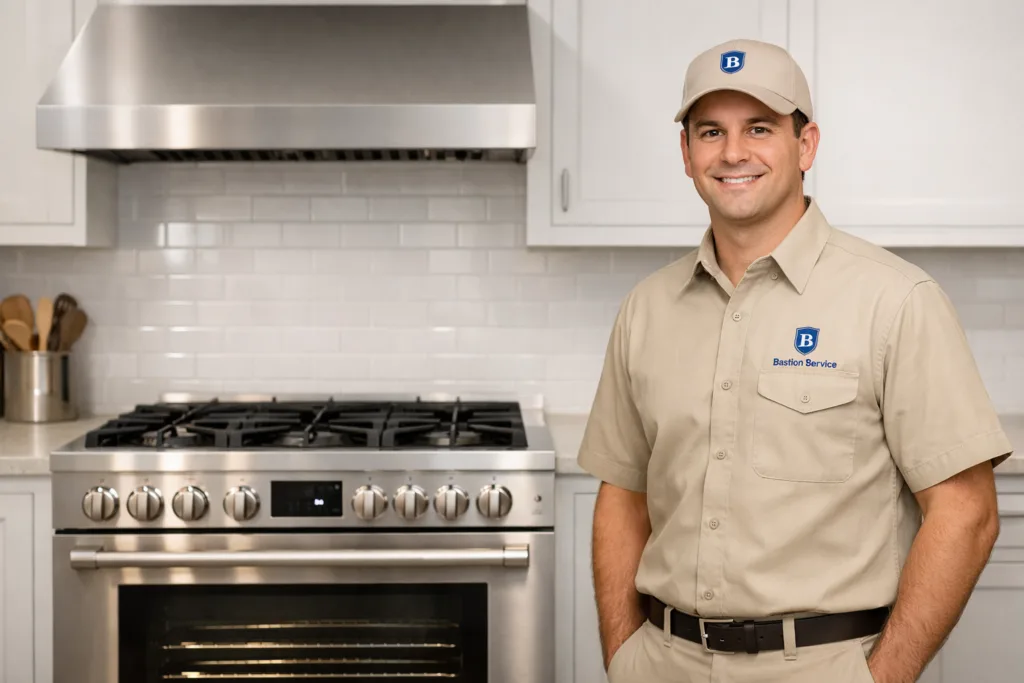
Common Monogram range issues homeowners notice first

A Monogram range can show trouble in subtle ways before it fails completely. Sometimes the problem starts with a burner that takes several tries to light. In other homes, the oven seems to preheat normally but food comes out uneven, underdone, or overbrowned. Paying attention to the pattern helps narrow down whether the issue is tied to ignition, heat regulation, controls, or airflow inside the oven cavity.
In Los Angeles households that cook regularly, these changes are usually noticed during normal meal prep rather than during a total breakdown. That makes early service worthwhile, especially when the appliance still works part of the time but no longer performs consistently.
Burners that click, spark, or fail to ignite
If a surface burner clicks without lighting, the cause may be as simple as burner cap misalignment or as involved as a spark ignition problem. Moisture, food residue, and grease buildup around the burner base can also interfere with proper lighting. When the clicking continues after the flame is already on, the range may have an ignition switch issue or contamination affecting the spark path.
Gas burners should light promptly and burn with a stable flame. Delayed ignition, weak flame, or repeated clicking are signs that something is off and should not be ignored. If there is a strong or persistent gas odor, stop using the appliance until the condition is evaluated safely.
Oven not heating or taking too long to preheat
When the oven does not heat, heats slowly, or never reaches the selected temperature, several different components can be involved. Depending on the Monogram model, the issue may relate to the igniter, temperature sensor, control board, wiring, or another heating-related part. One of the more misleading symptoms is an igniter that glows but still does not ignite properly. In that case, the oven may appear to be working while actual heat output remains too low for reliable cooking.
Long preheat times are often dismissed at first, but they are one of the clearest signs that a heating component is weakening. If dinner prep is taking longer than it used to, or recipes are suddenly inconsistent, the oven may already be operating outside its normal range.
Uneven cooking and temperature swings
Uneven baking can come from more than one source. A faulty sensor may cause temperature drift. A worn door gasket may allow heat to escape. Convection problems can disrupt airflow and create hot and cool spots across different racks. Some homeowners notice that cookies brown on one side first, casseroles need extra time in the center, or roasts finish unevenly from front to back.
These symptoms matter because they often point to performance problems that are not obvious during a quick visual check. The oven may turn on and produce heat, but not with the consistency expected from a premium cooking appliance.
Display, keypad, and control problems
Modern ranges rely on electronic controls to manage temperatures, cooking modes, timers, and safety functions. If the display flickers, buttons stop responding, settings change unexpectedly, or error codes appear, the fault may involve the user interface, control board, wiring connections, or incoming power to the appliance.
Control problems can affect both convenience and cooking results. In some cases the oven will not start at all. In others, it runs but does not maintain the selected setting correctly. When the controls act unpredictably, the repair approach should confirm whether the failure is isolated to the panel or part of a larger electrical issue.
What symptom patterns usually mean
Monogram range repair in Los Angeles is most effective when the complaint is described by symptom rather than by assumption about the part. Two ranges can have the same basic complaint, such as “oven not heating,” but need very different repairs.
- Ignition-related symptoms: clicking, delayed burner lighting, burner not sparking, oven igniter glowing without proper heat, or intermittent ignition
- Heating-related symptoms: no oven heat, slow preheat, poor broil performance, low flame output, or cooking temperatures that drift during a cycle
- Control-related symptoms: flashing displays, unresponsive keypad, repeated fault codes, or settings that do not activate properly
- Performance-related symptoms: uneven baking, inconsistent results from one use to the next, random shutoffs, or unreliable operation under normal cooking loads
Looking at the appliance this way helps avoid part swapping based on guesswork. A burner problem is not always the igniter alone, and poor oven performance is not always a sensor. The right repair depends on what the full symptom pattern shows.
Signs the range should be serviced soon
It is usually better to schedule service before a complete failure. Many range problems start intermittently, then become more frequent as components wear further. An early visit can also help prevent extra strain on related parts.
Service is usually worth arranging when you notice any of the following:
- Surface burners light inconsistently or need repeated attempts
- The oven takes much longer than usual to preheat
- Food quality has changed even though recipes and cookware have not
- The display shows errors, resets, or loses response
- The range shuts off unexpectedly during cooking
- Heat levels no longer match the selected setting
These are not just convenience issues. They often signal a component that is weakening, misreading, or failing under load. Continued use may turn a manageable repair into a broader problem.
Repair or replace: how homeowners usually decide
Many Monogram range problems are repairable when the fault is limited to a specific ignition, heating, sensing, or control component. Repair often makes sense when the appliance is otherwise in solid condition and the issue is confined to one primary system.
Replacement becomes a more serious consideration when several major systems are failing together, the unit has a history of repeat service for different problems, or the overall condition suggests broader decline. The most useful decision point is not age by itself. It is whether the appliance has a targeted repair path that restores reliable day-to-day cooking.
For a household appliance used frequently, reliability matters just as much as whether it can technically still turn on. If the range has become unpredictable, that affects safety, timing, and meal quality in everyday use.
Why premium ranges benefit from exact diagnosis
Monogram ranges are built with model-specific features and components, so similar symptoms can have different causes depending on the configuration. A burner issue may involve the spark system, switch harness, or burner assembly. An oven temperature complaint may involve sensing, control response, or ignition strength rather than the most obvious part.
That is why accurate testing matters more than assumptions. A careful diagnosis helps determine whether the issue is isolated and repairable, whether continued use is reasonable, and what repair path gives the best chance of restoring normal performance without unnecessary parts replacement.
What Los Angeles homeowners can do before service
Before scheduling a repair, it helps to note exactly what the range is doing. Useful details include whether the problem affects the cooktop, the oven, or both; whether it happens every time or only occasionally; and whether any fault code appears on the display. If a burner is clicking, note whether it clicks constantly or only when first turned on. If the oven is underheating, note whether it eventually reaches temperature or stays low throughout the cycle.
Basic cleaning around burner caps and visible spill areas can sometimes resolve minor ignition interference, but deeper electrical, gas, or control issues should not be treated as do-it-yourself guesswork. For most households, the best next step is to document the symptom pattern clearly so the appliance can be evaluated efficiently and the repair decision can be based on the actual condition of the range.