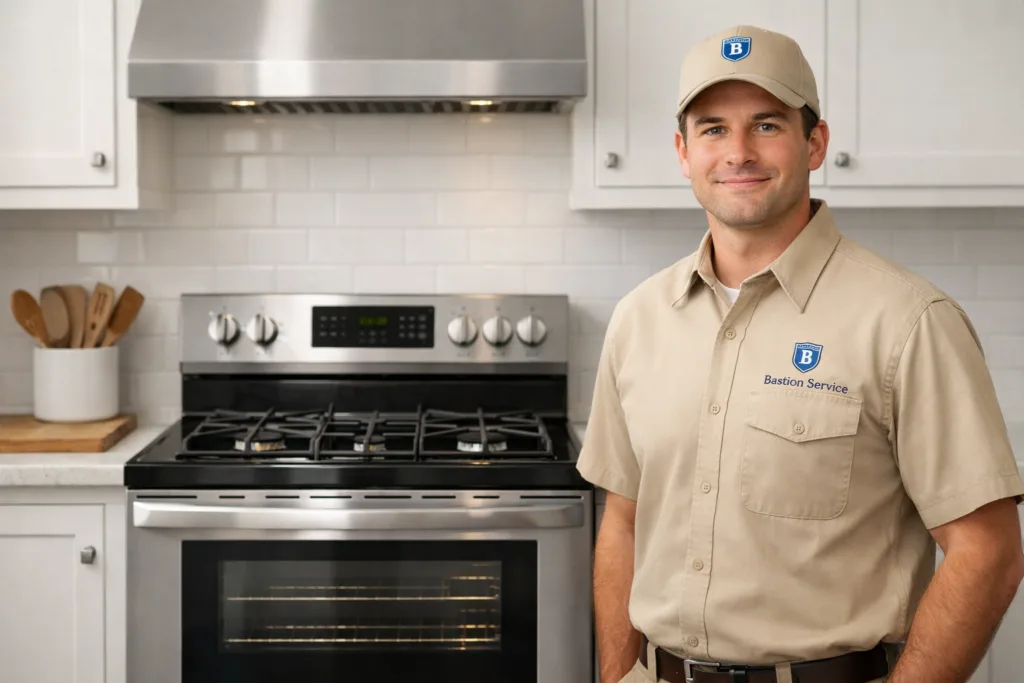
Common Frigidaire range problems and what they may mean

A Frigidaire range can fail in ways that look similar on the surface but come from very different parts. One burner that will not heat, an oven that runs cold, or a control panel that works only sometimes each point to a different repair path. For homeowners in Los Angeles, the most useful approach is to match the symptom pattern to the most likely component failure instead of guessing.
Burners that do not heat or heat unevenly
On electric ranges, a surface burner that stays cold, heats only on certain settings, or cycles erratically may be tied to a worn element, damaged receptacle, failing infinite switch, or wiring problem under the cooktop. If the burner works intermittently, the issue is often a loose connection rather than the visible element alone.
On gas models, weak flame, delayed lighting, or uneven heating can come from blocked burner ports, ignition problems, burner cap misalignment, or a fault affecting gas delivery. If one burner behaves differently from the others, that usually helps narrow the issue to a local burner assembly rather than a full-range control problem.
Oven not heating, overheating, or baking unevenly
When the oven does not reach temperature, takes far too long to preheat, or leaves food undercooked, common causes include a failed bake element, weak igniter, bad temperature sensor, control fault, or power supply issue. On electric models, a broken bake or broil element may be visible, but not always. On gas models, an igniter can glow and still be too weak to open the gas valve properly.
Uneven baking is another frequent complaint. If one side browns faster, the bottom burns before the center cooks, or results change from one use to the next, the cause may be an inaccurate sensor, weak heating component, poor air circulation, or a convection system problem on models equipped with a fan.
Overheating deserves prompt attention. An oven that runs hotter than the set temperature can damage racks, cookware, nearby components, and eventually the control system itself.
Ignition, clicking, or startup problems
Repeated clicking on a gas range usually means the ignition system is struggling to light a burner consistently. That can happen because of moisture, food buildup, a shifted burner cap, dirty electrodes, or a failing spark component. If clicking continues after ignition, the problem may involve the switch harness or ignition module.
Delayed ignition should not be ignored. When gas is present before flame appears, the result can be a rough light-off or small flare. If startup has become slower, less reliable, or noticeably different than before, service is the safer next step.
Display, keypad, and control issues
A blank display, unresponsive keypad, random beeping, or a clock that resets on its own can point to a control board problem, failing user interface, loose wiring, or unstable incoming power. Some homeowners first notice that the oven shuts off mid-cycle or that selected cooking modes do not start correctly.
Electronic symptoms often feel unpredictable, but patterns matter. If problems appear after the oven has been running for a while, heat-related board or wiring issues become more likely. If the panel is completely dead, the problem may be tied to power supply, fuses, or the control itself.
Why symptom-based diagnosis matters
Ranges combine high heat, heavy electrical demand, and on many models, gas ignition. Because of that, the same cooking complaint can have more than one cause. An oven that will not bake may have a bad element, but it could also have a sensor issue, relay failure, wiring fault, or power problem. Replacing parts based on a guess often leads to repeat breakdowns and extra cost.
Symptom-based diagnosis is especially important when the range is still partly working. A unit that broils but will not bake, or a cooktop that works while the oven fails, provides useful clues. Those clues help determine whether the repair is likely to be a single-part fix or part of a broader electrical or control issue.
Signs the range should not keep being used
Some Frigidaire range problems are inconvenient. Others raise real safety concerns. If the appliance shows any of the following symptoms, it is best to stop using it until it is checked:
- A gas smell around the range
- Sparking, arcing, or popping sounds
- A burner that will not shut off normally
- Repeated breaker trips during operation
- Delayed ignition or sudden flare-ups
- An oven that overheats well past the set temperature
- Melted wiring smell or signs of scorching
Even if the range still turns on, unpredictable operation can worsen the damage. Continued use may stress the control board, wiring, switches, igniters, or gas ignition components beyond the original failure.
What to note before scheduling Frigidaire range repair in Los Angeles
A few details can make troubleshooting faster and more accurate. Before service, it helps to note:
- Whether the issue affects the cooktop, the oven, or both
- Whether the problem is constant or intermittent
- Which burners are affected and on what settings
- Whether the problem began after a self-clean cycle
- Any error codes, beeping patterns, or display changes
- Whether the oven fails during preheat or later in the cycle
- Any recent power interruptions or breaker trips
These observations are often more helpful than a general description like “it is not working right.” They can point to heat-related failure, ignition trouble, control issues, or a supply problem without unnecessary part changes.
Repair versus replacement
Many range failures are worth repairing, especially when the problem is limited to a burner element, igniter, sensor, switch, receptacle, or single control-related component. A focused repair is often the practical choice when the rest of the appliance is in good condition.
Replacement becomes more likely when there are multiple failures at once, major wiring damage, expensive electronic control issues combined with other wear, or a history of recurring breakdowns. Age matters, but condition matters more. A newer unit with one isolated fault may be a straightforward repair, while an older range with several symptoms may not justify further investment.
Household performance issues that often show up first
Not every range problem starts with a complete failure. In many homes, the first sign is a change in cooking results. Food may take longer than normal, one burner may run too hot, or recipes that used to be reliable may suddenly come out uneven. Those early changes often mean a component is weakening rather than fully failed.
Pay attention if:
- Water takes much longer to boil on one burner
- The oven needs extra time to finish familiar meals
- Cookies or casseroles brown unevenly
- The broiler works but baking does not
- The range starts behaving differently after cleaning or self-clean use
Catching those shifts early can help prevent a smaller issue from turning into a larger electrical or ignition repair.
Service focused on the actual failure
Frigidaire range problems are easiest to solve when the repair plan matches the exact symptom instead of the most obvious part. Whether the issue involves burner operation, oven heat, ignition behavior, or electronic controls, the goal is to identify the failed component or circuit causing the problem and determine whether repair makes sense for the household. For Los Angeles homeowners, that means less guesswork and a more reliable path back to normal cooking.