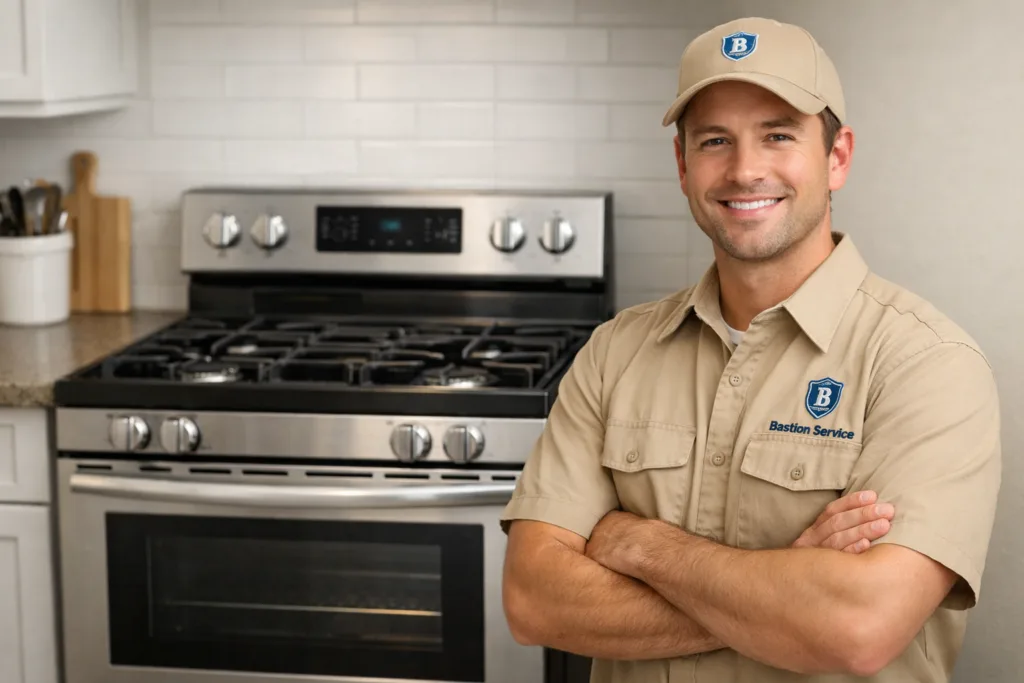
Range problems rarely stay limited to one inconvenience. A single weak oven cycle can turn into longer preheat times, uneven baking, or burners that start acting unpredictably during everyday cooking. With Whirlpool ranges, the symptom itself is helpful, but the pattern behind it usually tells more about what has actually failed.
Start with what the appliance is doing
Some faults look obvious but come from different components. A surface burner that will not light is not always an igniter failure. An oven that seems slow to heat is not always a bad element. In many Los Angeles homes, the best repair outcome starts with noticing whether the issue affects one function, multiple functions, or only happens under certain conditions.
- One burner only: often points to a localized burner, switch, cap, igniter, or wiring issue.
- Cooktop and oven both acting up: may suggest a broader power, control, or supply-related problem.
- Intermittent symptoms: can indicate a part that is weakening rather than fully failed.
- Problems after cleaning or a spill: moisture, misalignment, or residue may be part of the cause.
That distinction matters because replacing parts based on guesswork can quickly become more expensive than the repair itself.
Common Whirlpool range symptoms and what they may mean
Burner clicks but does not ignite
On gas models, repeated clicking with no flame often points to burner cap misalignment, clogged burner ports, moisture around the igniter area, or an ignition component problem. If the clicking stops and starts inconsistently, that can also suggest buildup or a switch issue rather than a complete part failure.
If the burner lights sometimes but not others, homeowners often assume the problem is minor. In practice, intermittent ignition is usually worth addressing early, especially when daily cooking depends on that burner.
Electric burner stays cool or heats unevenly
When an electric surface element does not heat, the fault may be in the element itself, the receptacle, the infinite switch, or wiring beneath the top. If the burner heats only on certain settings or cycles strangely between too low and too high, the control side of the circuit becomes more important to inspect.
Uneven heat on the cooktop can also show up as pans that take much longer to boil or hot spots that make sautéing difficult.
Oven will not heat
A Whirlpool oven that does not heat at all usually has a more focused failure than one that heats poorly. On electric models, that may involve the bake element, broil element, control, or wiring. On gas models, a weak or failed igniter is a common reason the oven will not start heating properly.
When the display appears normal but the cavity stays cold, that is a useful clue. It means the appliance may still have power while a heating component or ignition sequence is failing.
Oven takes too long to preheat
Slow preheating often shows up before a total no-heat failure. A weak igniter, a partially failing element, a temperature sensor drifting out of range, or a control issue can all cause longer warm-up times. Many homeowners first notice it when routine meals start taking noticeably longer even though the settings have not changed.
If preheat delays are getting worse over time, the problem is usually moving beyond simple calibration.
Food cooks unevenly
Uneven baking is one of the most common complaints with a range that still technically works. If the top browns too fast, one side cooks faster than the other, or the center stays underdone, possible causes include sensor inaccuracy, poor heat distribution, a weak heating circuit, convection fan problems on equipped models, or heat loss from a worn door seal.
This kind of symptom can be frustrating because the oven may still turn on and reach a set temperature, just not in a reliable way.
Control panel not responding
If the keypad misses selections, the display resets, or settings will not stay entered, the issue may involve the user interface, electronic control, or incoming power behavior. Control problems can affect both convenience and safety, especially if the oven shuts off unexpectedly or cannot be programmed correctly.
Oven door will not close properly
A loose or misaligned door can make a range seem like it has a heating problem when the main issue is heat escaping during the cycle. Worn hinges, gasket wear, latch trouble, or frame alignment issues can all reduce temperature stability. In households that cook frequently, even a small gap can lead to inconsistent results.
Signs the problem is getting worse
Ranges often give warning signs before a complete failure. Watching for those changes can help homeowners decide when service should move from “soon” to “now.”
- Preheat gets slower week by week
- Burners need multiple tries to ignite
- The oven reaches temperature but cannot maintain it
- Error codes appear intermittently and then disappear
- The display flickers or resets during cooking
- Clicking continues after the burner should already be lit
These symptoms usually mean the appliance is not stabilizing on its own. Continued use can add stress to controls, igniters, elements, or related wiring.
When to stop using the range
Some issues are inconvenient. Others should be treated as safety concerns. Stop using the range and arrange service if it is tripping breakers, shutting off during cooking, overheating, or showing obvious electrical damage.
Gas-related symptoms deserve extra caution. If there is a strong or persistent gas odor, do not keep testing the appliance. Leave the area if necessary and contact the gas utility or emergency service first. Once the immediate safety issue is addressed, the range can be evaluated for repair.
Repair or replace?
Many Whirlpool range problems are still worth repairing when the fault is limited to a specific serviceable part and the rest of the appliance is in good working condition. Igniters, elements, sensors, burner components, switches, seals, and some control-related parts are often repairable issues.
Replacement becomes more likely when several major systems are failing at once, the unit has repeated electrical problems, or repair cost starts approaching the value of the range. Age matters, but overall condition matters more. A well-kept range with one failed component is very different from an older unit with compounding heat, control, and door issues.
What homeowners can note before service
A few details can make troubleshooting faster and more accurate:
- Whether the problem affects the oven, cooktop, or both
- Whether it happens every time or only occasionally
- Any recent spillovers, cleaning, or power interruption
- Whether an error code appears
- If one burner is affected or several are involved
- Whether the issue is no heat, weak heat, or unstable heat
Those observations often help separate a failing component from a one-time operating issue.
Whirlpool range service for Los Angeles households
In a busy home kitchen, range trouble disrupts more than one meal. It affects daily routines, timing, and confidence in the appliance. Bastion Service helps Los Angeles homeowners evaluate Whirlpool range issues based on the actual symptom pattern, appliance condition, and likely repair path so the next step is based on the problem in front of you rather than guesswork.