Appliance Repair Service

Range Repair in Los Angeles

Range repair in Los Angeles with clear diagnosis, practical repair guidance, and dependable local service for burner problems, oven issues, and everyday household cooking failures.

  • Service for common range problems in Los Angeles
  • Clear diagnosis before repair decisions
  • Licensed & insured
  • Warranty for labor and parts
  • Fast scheduling based on availability
Local Range Repair

Range repair in Los Angeles for common household performance problems

When a range problem starts disrupting everyday cooking in Los Angeles, the most helpful next step is a clear diagnosis and a practical repair plan.

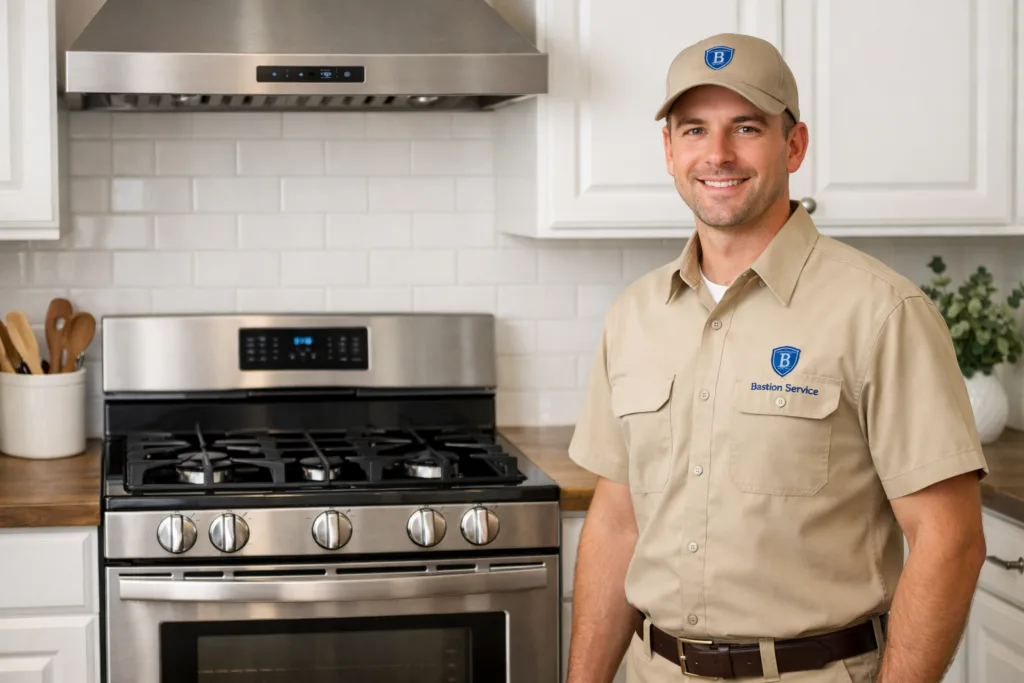
Bastion Service helps homeowners in Los Angeles with range repair focused on clear diagnosis, practical repair guidance, and dependable local service for everyday cooking use.

Local range repair support for Los Angeles homes.

When a range stops heating evenly, a burner will not ignite, or the oven side starts taking too long to cook dinner, the problem quickly affects the whole routine at home. For range repair in Los Angeles, the most important first step is a clear diagnosis, because the same symptom can come from very different failures and the right repair decision depends on what is actually causing the issue.

Common range problems in Los Angeles homes

A household range combines multiple cooking functions in one appliance, so problems can show up in different ways. Some issues are obvious right away, while others build gradually through uneven cooking, delayed ignition, or inconsistent temperatures.

Burners that do not ignite or heat properly

If a gas burner clicks but does not light, the cause may be a dirty burner head, moisture around the igniter, a weak spark, or a gas flow problem. If an electric surface element does not heat, the issue may involve the element itself, the switch, wiring, or terminal damage. In either case, continued use without checking the source can lead to more wear or unreliable operation across the cooktop.

Oven temperature problems

Ranges often get called “working” even when the oven is no longer heating accurately. Food that comes out undercooked, overcooked on one side, or takes much longer than normal can point to a failing bake element, igniter trouble, a weak sensor, or control problems. In gas models, a weak igniter may still glow while failing to open the gas valve properly. In electric models, partial element failure can create heat loss that is easy to miss at first.

Controls that stop responding

If knobs feel loose, a display goes blank, settings change on their own, or buttons stop responding, the issue may be with switches, the control board, or power supply components. Control-related faults are especially important to diagnose correctly because replacing the wrong part can waste time and money without solving the real problem.

Gas odor, sparking, or unusual sounds

A gas smell, repeated clicking, visible sparking, or popping sounds should not be ignored. These symptoms can indicate ignition faults, wiring issues, or gas-related problems that need prompt attention. A range showing these signs should not be treated as a minor inconvenience, especially if the condition is getting worse.

Why diagnosis matters before repair decisions

Many range symptoms overlap. For example, an oven that will not reach temperature could be caused by a sensor problem, a control issue, a weak igniter, or a failed heating element. A surface burner that works intermittently may look like a simple switch problem but could also involve damaged wiring or connection points affected by heat over time.

Accurate diagnosis matters because it helps answer three practical questions: what has failed, whether continued use could cause more damage, and whether the repair is still sensible compared with the age and condition of the appliance. That is especially useful in Los Angeles households that depend on the range daily and need a realistic repair path rather than guesswork.

Symptom groups and what they often indicate

Only one burner has a problem

When the rest of the range works normally and just one burner is affected, the fault is often localized. That can mean a burner head issue, an igniter, an element, a switch, or a connection specific to that cooking zone. These problems are often more straightforward than system-wide failures, but they still benefit from proper testing before parts are replaced.

The oven works but the cooktop does not

This can suggest separate component failure within the range rather than a complete appliance breakdown. Depending on the design, the problem may be isolated to top burner ignition parts, surface element controls, or cooktop wiring. It is a good example of why a range should be evaluated as a whole appliance with multiple systems.

The cooktop works but the oven does not

If the burners are fine but the oven will not heat, the problem is often tied to the bake or broil system, the igniter, the temperature sensor, or the electronic controls. Homeowners sometimes assume the entire range is failing when the issue is limited to one section.

Intermittent performance

Intermittent faults are often the most frustrating because the range may appear normal for part of the day and fail later. This can happen with aging igniters, loose wiring, overheating controls, and worn switches. Problems that come and go usually do not improve on their own and often become more frequent with continued use.

When to schedule service

It makes sense to schedule service when the range is no longer heating consistently, a burner repeatedly fails to ignite, cooking times have changed noticeably, or controls are unreliable. Service should also be prioritized if there is a gas smell, repeated tripping, sparking, or signs of heat damage around knobs, terminals, or control areas.

Households sometimes continue using the appliance in a limited way, such as relying only on the burners while avoiding the oven, or using one working burner while ignoring another. That may seem manageable for a short time, but some faults can worsen surrounding components and turn a smaller repair into a larger one.

When continued use may worsen the problem

A weak igniter can strain other oven components over time. Damaged element connections can create additional heat at the terminal and lead to wiring deterioration. Burner ignition problems can cause repeated clicking and wear on ignition parts. If a control is failing, unstable operation can affect temperature regulation and create unpredictable cooking results.

In practical terms, if the range is showing electrical symptoms, gas ignition issues, or visible signs of overheating, it is better not to wait for a complete failure. Early diagnosis often prevents secondary damage and makes the repair decision clearer.

Repair versus replacement considerations

Not every range problem means the appliance should be replaced. Many common issues involve repairable components such as igniters, elements, switches, sensors, or certain control-related parts. Repair is often a reasonable option when the appliance is otherwise in solid condition and the problem is limited to a specific system.

Replacement becomes more relevant when the range has multiple failing systems, recurring control problems, extensive wiring damage, or an overall condition that suggests more repairs are likely soon. The most useful approach is to compare the current fault, the age of the appliance, the expected reliability after repair, and whether the household needs a short-term fix or a longer-term solution.

Kitchen cooking appliances often work side by side, and households sometimes notice separate performance issues across more than one unit at the same time. In those situations, Oven Repair may also be relevant when another cooking appliance needs its own evaluation.

Kitchen cooking appliances often work side by side, and households sometimes notice separate performance issues across more than one unit at the same time. In those situations, Wall Oven Repair may also be relevant when another cooking appliance needs its own evaluation.

Kitchen cooking appliances often work side by side, and households sometimes notice separate performance issues across more than one unit at the same time. In those situations, Stove Repair may also be relevant when another cooking appliance needs its own evaluation.

Kitchen cooking appliances often work side by side, and households sometimes notice separate performance issues across more than one unit at the same time. In those situations, Cooktop Repair may also be relevant when another cooking appliance needs its own evaluation.

What homeowners usually want from range service

For most Los Angeles households, the goal is simple: identify the fault clearly, understand whether it is safe and sensible to keep using the appliance, and know whether repair is the practical next step. Good range service is not just about replacing a part. It is about narrowing the problem correctly, explaining what the symptom points to, and helping the household avoid unnecessary work.

Range repair in Los Angeles is most helpful when it stays focused on the actual cooking problem in the home, whether that means a burner that will not light, an oven that bakes unevenly, or controls that no longer respond the way they should. A clear diagnosis makes the next step easier and helps restore normal daily use with fewer surprises.

How it works

How range repair works in Los Angeles

Schedule the visit, diagnose the problem, review the next step, and move forward with a clear repair plan.

Call or Book

Call us or send a booking request online with the repair issue and your service area.

Scheduled Visit

A technician arrives for the appointment and inspects the equipment or appliance based on the symptoms you described.

Diagnosis

The problem is checked carefully so the likely cause, repair plan, and practical next step are clear.

Repair Plan

Once the issue is confirmed, the repair can move forward with approval and a straightforward service plan.

Customer reviews

Real customer feedback

Recent customer feedback for Bastion Service.

RODNEY PEETE review profile photo
RODNEY PEETE
Google review

“The technician was awesome and did a great job repairing our microwave. In the end he had to replace it with a brand new one.”

Joshia Brooks review profile photo
Joshia Brooks
Google review

“Fast and friendly. Pleased to have him fix our stove. Would recommend.”

Common Questions

Frequently Asked Questions

Common questions about Range Repair in Los Angeles

What are the most common signs that I need range repair in Los Angeles?

Common signs include burners that will not ignite or heat, an oven that cooks unevenly, temperature problems, repeated clicking, unresponsive controls, and unusual smells or sparking.

Should I keep using my range if one part is still working?

It depends on the symptom. If there is a gas smell, sparking, overheating, or unreliable controls, continued use is not a good idea. Even limited use can worsen some faults.

Why does my oven seem to work but still cook food incorrectly?

A range oven can appear to heat normally while still having a weak igniter, failing element, bad sensor, or control issue. That often leads to slow preheating and inaccurate cooking temperatures.

How do I know whether to repair or replace my range?

Repair is often reasonable when the problem is limited to one component or system. Replacement becomes more worth considering when the range has multiple issues, major wiring or control problems, or repeated breakdowns.

Ready to schedule?

Schedule Range Repair in Los Angeles

Schedule range repair in Los Angeles with clear diagnosis, practical repair guidance, and dependable local service.

Call (323) 433-6360