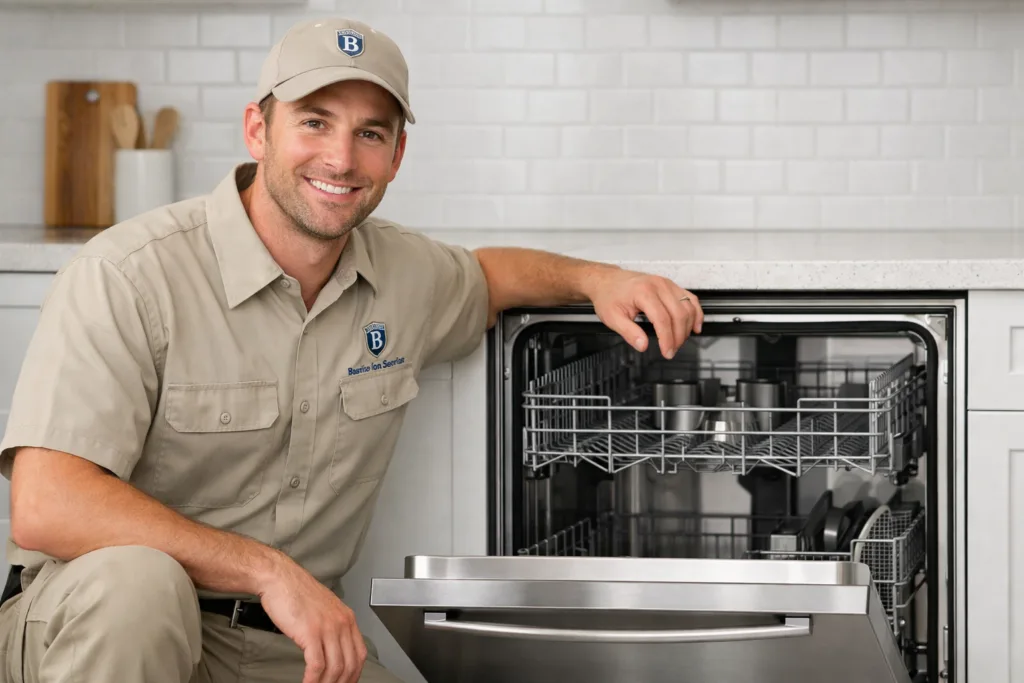
A Summit dishwasher that suddenly stops cleaning, leaks near the door, or leaves water in the tub usually points to a specific system failure rather than a vague “bad cycle.” The most helpful next step is to match the symptom to the part of the machine most likely involved, so the repair is based on what the dishwasher is actually doing.
Common Summit Dishwasher Symptoms and What They Often Mean
Many dishwasher complaints sound similar at first, but the underlying causes can be very different. A unit that runs without cleaning may have a wash circulation problem, while one that will not start at all may be dealing with a latch, switch, or control fault. Looking at the full pattern helps narrow the issue faster.
Dishes stay dirty or gritty after a full cycle
If plates and glasses come out with food residue, film, or detergent left behind, the problem is often tied to wash action, water delivery, or heat. Common causes include:
- Blocked or partially clogged spray arms
- Restricted filters affecting water movement
- Low fill problems from an inlet issue
- A weak or failing circulation pump
- Detergent dispenser problems
- Water that is not reaching proper wash temperature
This kind of symptom is easy to misread because homeowners often first suspect detergent quality. In reality, repeated poor wash results usually mean the dishwasher is not moving, heating, or draining water the way it should.
Water remains in the bottom after the cycle
Standing water at the end of the cycle is one of the clearest signs that the drain system needs attention. In a Summit dishwasher, that can involve a clogged filter area, a restricted drain hose, a blocked air gap where applicable, or a drain pump that is humming without moving water effectively.
If the tub drains slowly at first and then stops draining completely, that may indicate a developing restriction rather than a total pump failure. If the dishwasher never clears water at all, the fault may be more directly related to the pump, drain path, or control signal to the drain system.
Leaks under or in front of the dishwasher
Leaks do not all come from the same place. Water at the center front may point to door gasket wear, poor door alignment, or oversudsing. Water appearing underneath can come from hose connections, pump seals, or an overfill condition. Some leaks only show up during wash circulation, while others happen during draining.
Because even a small leak can affect flooring, toe kicks, and nearby cabinet edges, recurring moisture around the dishwasher should not be ignored. In busy Los Angeles kitchens, a minor drip can become a larger repair issue if it continues through daily use.
The dishwasher will not start or stops mid-cycle
When the control appears responsive but the machine does not actually begin washing, the fault may involve the door latch assembly, control board, user interface, or a safety switch that is not reading correctly. If the cycle starts and then stops partway through, that may suggest overheating, drainage problems, electronic control errors, or intermittent electrical connection issues.
A dishwasher that only works on certain settings or needs repeated resets is often showing an early warning sign of a control-related problem rather than a one-time glitch.
Unusual noises during wash or drain
Grinding, loud buzzing, rattling, or a strained humming sound can help identify where the problem is happening. Debris in the pump area may cause grinding. A failing motor can sound rough or weak. A drain pump that energizes without clearing water may produce a steady hum. Noise that appears only when the unit fills, washes, or drains can help isolate which system needs repair.
Symptom-Based Troubleshooting That Helps Before Service
There are a few simple observations homeowners can make before scheduling repair. These do not replace diagnosis, but they can make the problem easier to describe and faster to pinpoint.
- Check whether the issue happens on every cycle or only certain selections.
- Notice whether the dishwasher fills with water normally before the problem appears.
- Look for spray arms that seem blocked or unable to turn freely.
- See whether the leak occurs early in the wash, near the end, or only while draining.
- Pay attention to whether the unit becomes silent mid-cycle or continues making motor noise.
- Note any burning smell, tripped breaker, or flashing control behavior.
These details matter because “not working” can describe several very different failures. A dishwasher that fills and hums is different from one that never fills, and both point to different repair paths.
Why Poor Drying and Low Heat Should Not Be Dismissed
Poor drying is often treated as a minor annoyance, but it can be a useful early clue. If dishes are consistently wet, cool, or covered with residue after the cycle, the dishwasher may not be heating correctly. Low rinse temperature can affect both sanitation and final results, especially on heavier loads.
Heating-related issues may involve the heating element, thermostat-related components, sensors, control functions, or wash conditions that prevent the machine from completing the cycle properly. If poor drying appears alongside cloudy dishes or weak cleaning, the problem may involve more than one system.
When It Is Best to Stop Using the Dishwasher
Some problems are inconvenient but manageable for a short time. Others should be addressed before the dishwasher is run again. It is smart to pause normal use if you notice:
- Water leaking onto the floor more than once
- Repeated standing water in the tub
- A burning smell or signs of overheating
- Cycle failure with erratic power behavior
- Loud new mechanical noises
- The dishwasher tripping power during operation
Continuing to run the appliance under those conditions can add stress to pumps, controls, seals, and surrounding kitchen materials.
Repair or Replace a Summit Dishwasher?
Many Summit dishwasher problems are worth repairing when the fault is isolated and the rest of the appliance is in good shape. Drain pumps, inlet components, door latch assemblies, seals, wash motors, and some control-related parts can often be addressed without turning the situation into a full appliance replacement decision.
Replacement may make more sense when the dishwasher has a pattern of multiple failures, major interior wear, damaged racks, ongoing leak history, or a repair need that approaches the value of the unit. Age matters, but condition matters just as much. A newer machine with one failed system is different from an older one with several declining components.
What Homeowners in Los Angeles Usually Need From a Service Visit
Most homeowners are not looking for technical theory. They want to know what failed, whether the dishwasher should be used before repair, and whether fixing it is sensible. A useful appointment should identify the failed system, explain how it caused the symptom, and outline the repair path in plain terms.
For Summit dishwasher repair in Los Angeles, that means focusing on the actual complaint in the kitchen: poor wash results, drain trouble, leaks, low rinse temperature, pump issues, or cycles that will not complete. Once the symptom is tied to the right component, the decision becomes much easier and the repair plan is far more straightforward.