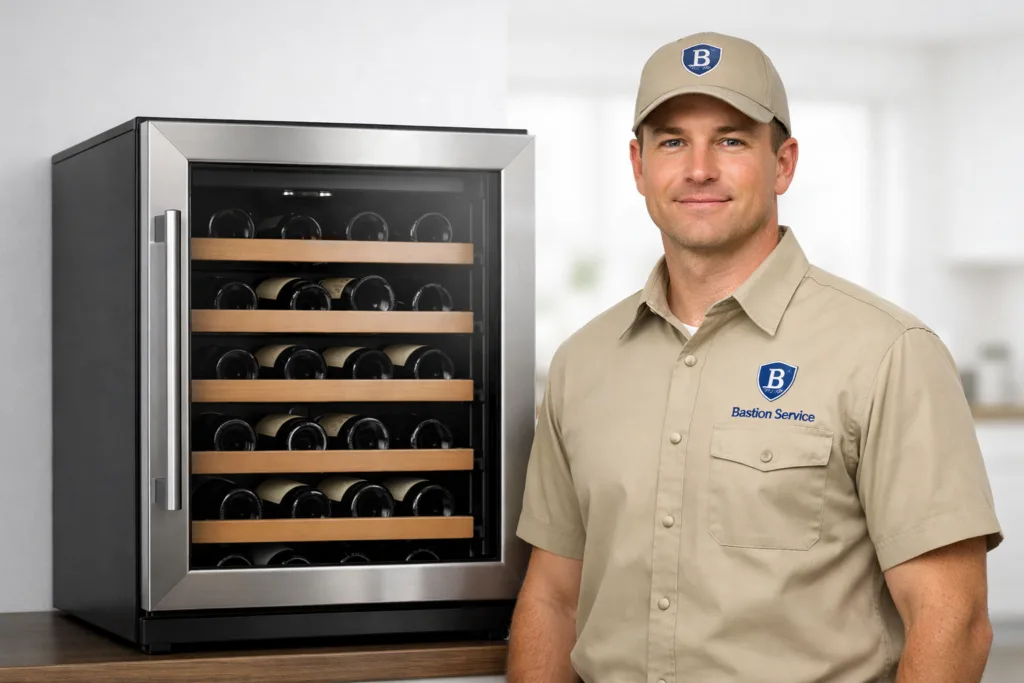
Temperature instability in a wine cooler should be taken seriously because even small swings can affect storage conditions over time. With Summit units, the symptom you notice first is not always the part that failed. A cabinet that seems warm may have an airflow issue, a sensor problem, or a door seal leak rather than a major cooling-system fault. In Los Angeles homes, undercounter placement and limited ventilation can also make a minor issue show up faster.
Common Summit wine cooler symptoms at home
Most wine cooler problems begin with a pattern: the unit runs longer than usual, bottles do not feel as cool, moisture starts collecting, or the sound changes. Looking at the full pattern helps narrow down whether the problem is likely related to controls, airflow, defrost, sealing, or the cooling system itself.
Not cooling enough
If the cooler has power but the interior is warmer than expected, possible causes include dirty condenser coils, restricted airflow, a faulty temperature sensor, thermostat or control issues, evaporator frost buildup, fan problems, or a sealed-system fault. When the temperature is only slightly off, the issue may be linked to circulation or controls. When the cabinet is far too warm, the problem may be more urgent and worth addressing before continued use.
Running constantly
A Summit wine cooler that rarely cycles off is often struggling to reach the set temperature. This can happen when warm air is leaking in through a worn gasket, when ventilation around the unit is poor, or when the condenser and compressor are under extra strain. In Los Angeles, built-in installations with tight clearances can make long run times more noticeable, especially during warmer periods indoors.
Frost, condensation, or water inside
Moisture inside the cabinet can point to several different problems. Frost on an interior panel may suggest airflow restriction, repeated warm-air entry, or a defrost-related issue. Condensation on shelves or glass can come from a door not sealing correctly. Water pooling near the bottom may indicate a drain issue. These symptoms may seem cosmetic at first, but they can interfere with normal cooling and should not be ignored.
Unusual noise
Wine coolers make some normal operating sounds, but a sudden change matters. Buzzing, clicking, rattling, scraping, or louder humming can come from a fan motor, compressor start components, vibration against surrounding cabinetry, or loose internal parts. If the sound changes at the same time cooling performance changes, that combination usually offers a stronger clue than either symptom alone.
Display or control problems
If the control panel is blank, flashing, inaccurate, or unresponsive, the issue may involve the interface, board, wiring, or sensor feedback. A cooler can appear to be set correctly while the actual cabinet temperature tells a different story. When the controls stop behaving normally, the unit should be evaluated based on both panel behavior and actual cooling performance.
Why symptom-based diagnosis matters
Compact refrigeration systems can produce the same complaint for very different reasons. For example, poor cooling can start with a weak fan, heavy frost, a damaged gasket, or a failing sealed-system component. Replacing parts based on guesswork often delays the real fix and can add unnecessary cost. Bastion Service helps Los Angeles homeowners diagnose Summit wine cooler problems and decide whether repair is practical based on the symptom, appliance condition, and repair path.
This matters even more when the cooler still works part of the time. Partial cooling can make a problem seem minor when the unit is actually overworking itself. A proper assessment should look at temperature behavior, run time, airflow, moisture patterns, and whether the cabinet installation may be contributing to the issue.
Signs the problem is getting worse
Some failures develop gradually, but there are a few signs that usually mean it is time to stop waiting and schedule service:
- the cabinet no longer reaches or maintains the set temperature
- the compressor runs for long periods without improving cooling
- frost returns quickly after being cleared
- condensation keeps forming inside the unit
- the door does not close or seal as tightly as before
- the panel resets, flashes, or stops responding
- the unit begins making a new clicking, buzzing, or rattling sound
Continuing to use the cooler in this condition can increase wear on fans, controls, and the compressor. In some cases, a repair that would have been straightforward becomes more involved after extended strain.
Repair issues often seen with built-in wine coolers
Many residential Summit wine coolers in Los Angeles are installed under counters or inside custom cabinetry. That setup looks clean, but it can complicate performance if airflow around the cabinet is limited or if the unit is not level. Heat buildup around the condenser, door alignment issues, and vibration against surrounding panels can all affect how the cooler behaves.
Because of that, repair decisions should account for both the internal components and the installation conditions. A fan or control issue may be the main failure, but poor ventilation can be part of what made the symptom show up. Addressing only one side of the problem may not restore stable performance for long.
When repair makes sense
Repair is often a reasonable option when the issue is isolated to a fan motor, sensor, control component, gasket, drain path, or another targeted part and the rest of the cooler is in good condition. If the cabinet is structurally sound and the problem has a single confirmed cause, repair can restore reliable operation without the disruption of replacing the unit.
Replacement becomes a more serious consideration when the wine cooler has a major sealed-system failure, repeated cooling problems, or overall wear that suggests additional repairs may follow soon. Age matters, but condition matters more. A well-kept unit with a specific repair need is different from a cooler that has been struggling across several systems.
What homeowners can notice before service
Before scheduling Summit wine cooler repair in Los Angeles, it helps to pay attention to what the unit has been doing over the last few days. Useful details include whether the cabinet is slightly warm or fully warm, whether the noise appears at startup or all the time, whether moisture is collecting in one area, and whether the issue began suddenly or gradually.
It is also helpful to note if the problem started after the cooler was loaded heavily, after the settings were changed, or after the unit was pushed tightly back into cabinetry. These details can make diagnosis faster and help separate a true component failure from an airflow or installation-related issue.
Making the next decision with confidence
When a Summit wine cooler starts showing unstable temperatures, moisture problems, or control issues, the best next step is to determine what is actually failing instead of reacting only to the visible symptom. That helps protect your collection, avoid unnecessary part replacement, and clarify whether the better path is repair or replacement.
For Los Angeles households, that usually means looking at the whole picture: cooling behavior, sound changes, moisture, door sealing, and how the unit is installed in the home. Once the source of the problem is narrowed down, the next step becomes much easier and much more cost-aware.