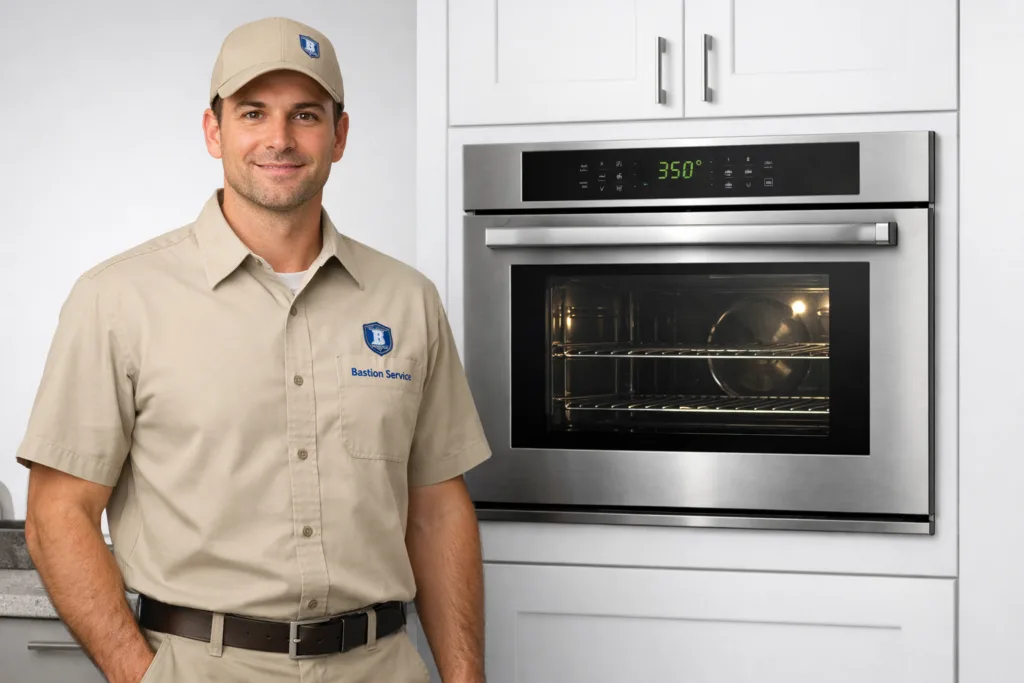
Common Summit wall oven symptoms and what they often mean

Wall ovens tend to show a pattern before they fail completely. Paying attention to that pattern can save time, reduce repeat issues, and help narrow the repair path more quickly.
If the oven turns on but never gets hot, the cause may be a failed bake or broil element, a temperature sensor problem, damaged wiring, a relay fault, or an electronic control issue. If it does heat but baking results are inconsistent, the problem is often tied to temperature regulation rather than total loss of function.
In Fairfax homes, many owners first notice trouble when preheat takes much longer than usual, food starts browning too fast on top, or recipes that used to be reliable suddenly come out uneven. Those clues matter because they point toward different components and different repair decisions.
Oven will not heat
A wall oven that lights up, accepts settings, and appears normal at the display can still have a failed heating circuit. In some cases, one element has stopped working. In others, the issue is deeper in the control system or power supply. A built-in oven may also show confusing partial-power symptoms where the panel works but the cavity never reaches cooking temperature.
Slow preheat
Slow preheat usually means the oven is still heating, but not correctly. A weak element, inaccurate sensor, failing relay, or control board problem can all stretch preheat times. This symptom often gets overlooked because the oven still eventually gets warm, but continued use can make the failure more obvious and more disruptive.
Uneven baking or roasting
If one rack cooks faster than another, the bottom stays pale while the top browns too quickly, or dishes need much longer than recipe times, the oven may be cycling at the wrong temperature. That can happen when a sensor drifts out of range, an element weakens, or the control is no longer responding accurately to temperature feedback.
Temperature swings
Some cycling is normal, but wide swings are not. If the oven runs much hotter than the setting, burns food unexpectedly, or struggles to hold a stable temperature, the issue may involve the sensor circuit, calibration, control relay, or an intermittent electrical fault. This is especially frustrating for baking, where consistency matters more than maximum heat.
Error codes, beeping, or display problems
Repeated beeping, flashing numbers, or fault codes should not be dismissed as a nuisance. These warnings can point to overheating, sensor failure, latch issues, keypad faults, or communication problems within the control system. If the oven stops mid-cycle or resets on its own, service is usually the next step.
Door or latch problems
A door that will not close firmly can let heat escape and affect cooking results. A stuck latch can prevent normal operation entirely, especially after a self-clean cycle. If the door stays locked, the oven refuses to start, or the seal no longer sits correctly, the problem should be addressed before regular use continues.
Signs the problem may be getting worse
Some oven issues stay mild for a while, then suddenly become a larger failure. That is common with slow preheat, occasional overheating, or intermittent error codes. What begins as a once-a-week annoyance can turn into a no-heat condition or an oven that shuts down during cooking.
Watch for patterns such as:
- Preheat getting slower from month to month
- Recipes needing constant time adjustments
- Food browning unevenly in familiar pans
- The display flickering, resetting, or losing responsiveness
- The oven stopping partway through a bake cycle
- New clicking, buzzing, or repeated relay sounds
When several of these signs appear together, the repair is less about a single cooking complaint and more about preventing a broader control or heating failure.
When to stop using the oven
There are times when continued use is not worth the risk. If the oven is tripping the breaker, producing a burning smell, heating far above the selected setting, shutting off unexpectedly, or showing recurring fault codes, it is safer to stop using it until the cause is identified.
The same applies if the door will not latch properly, the oven locks and will not release, or there are visible signs of heat damage near the controls or around the cabinet opening. In those situations, the concern is not just poor cooking performance but possible damage to wiring, insulation, or surrounding components.
Why the same symptom can come from different parts
Wall oven problems overlap more than many homeowners expect. A unit that underheats may have a bad sensor, but it could also have a weak element or a control that is not sending power correctly. An oven that overheats may point to a sensor circuit problem, but it can also be tied to a stuck relay or control failure.
That is why symptom guessing often leads to wasted parts and repeat breakdowns. The useful approach is to test the heating path, verify temperature response, and compare the oven’s actual behavior with the complaint. On built-in appliances, installed condition matters too, since access, wiring, and fit can affect both diagnosis and repair time.
Repair or replacement for a Summit wall oven
Many Summit wall oven issues are still worth repairing, especially when the fault is limited to a heating element, sensor, latch, switch, or a specific electronic component. If the oven cavity, door, and overall structure are in good shape, repair can restore normal cooking without the disruption of replacing a built-in appliance.
Replacement becomes more likely when there are multiple major failures, repeated electronic issues, or structural concerns that go beyond a single component. With wall ovens, replacement also raises practical questions about cabinet size, trim fit, and installation work. For many Fairfax homeowners, that makes an accurate diagnosis more valuable than a quick assumption either way.
Household situations where service makes sense
Not every oven problem starts with a total shutdown. Sometimes it looks like weeknight dinners taking too long, baked dishes that come out uneven, or a holiday meal that reveals the temperature has been off for longer than expected. In other homes, the trouble starts right after a self-clean cycle, when the oven locks up, flashes an error, or stops heating altogether.
These are the moments when service is more helpful than trial-and-error. A careful inspection can show whether the problem is isolated, whether the unit is safe to keep using, and whether the repair path makes sense for the appliance’s condition.
What homeowners in Fairfax can do before scheduling repair
Before arranging service, it helps to note the exact symptom pattern. Try to identify whether the oven is not heating at all, heating too slowly, overshooting temperature, cooking unevenly, or showing specific errors. If the issue only happens during preheat, after extended baking, or after using self-clean, that timing is useful information.
You can also check whether the door closes fully, whether the display remains stable, and whether the problem affects every cooking mode or only one. Those details make it easier to choose the right service visit and avoid treating the problem like a generic oven issue when it may be more specific to the control, sensor, or heating circuit.