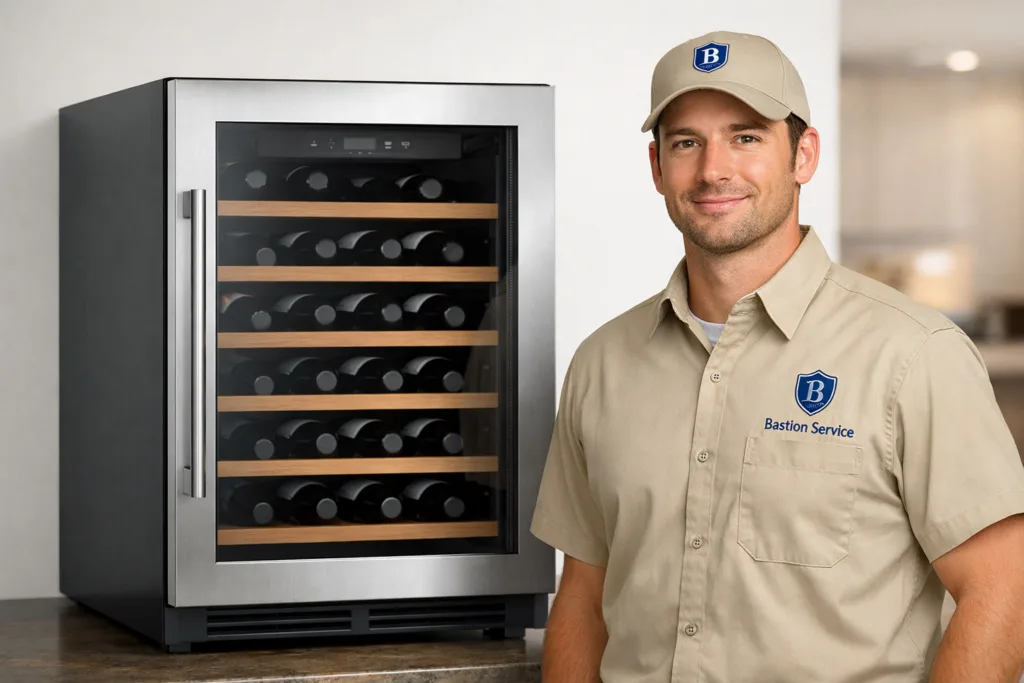
Wine coolers tend to show a small group of symptoms even when the underlying fault is very different. A cabinet that feels warm, for example, might be dealing with restricted airflow, a fan problem, a sensor issue, or a sealed-system failure. That is why the most useful first step is to match the symptom pattern to how the unit is actually operating.
Common Summit wine cooler problems in Fairfax homes
Most residential service calls involve cooling inconsistency, moisture, noise, or controls that no longer behave normally. Because wine storage depends on stable temperature and even airflow, minor changes can become noticeable quickly.
Not cooling enough
If the cabinet temperature stays above the setting, the issue may be caused by poor ventilation, dust buildup around the condenser area, weak fan performance, a faulty thermistor, or a control problem. In some cases, the compressor runs but the cabinet still does not cool properly, which can point to a more serious refrigeration issue.
Homeowners often notice this problem first when bottles feel warmer than expected or when the unit seems to run for long stretches without catching up. If the problem affects the entire cabinet, the cause is often different from a unit that is only warm in one section.
Too cold or freezing bottles
Overcooling is usually tied to sensor misreadings, control faults, or uneven airflow inside the cabinet. A Summit wine cooler that freezes bottles in one area but not another may be moving air incorrectly rather than failing to cool overall. That distinction matters because the repair path can be very different.
Condensation, water, or frost
Moisture inside the cabinet, water under the unit, or frost on interior surfaces can come from a door that is not sealing tightly, a clogged drain path, repeated humidity entry, or a defrost-related issue. In undercounter installations, even a slight door alignment problem can allow warm air in and create ongoing condensation.
If frost keeps returning soon after a manual defrost, that usually means the source of the problem is still active. Leaving it alone can lead to poorer airflow and wider temperature swings.
Fan noise, buzzing, or rattling
New sounds often show up before a complete cooling failure. Rattling can come from vibration against surrounding cabinetry, while buzzing or clicking may be tied to compressor operation or electrical components trying to start. Fan noise can point to blade interference, ice contact, or a worn motor.
Some operating sound is normal, but a noticeable change in tone, volume, or frequency usually deserves attention. Noise that appears alongside warming or frost is especially important because it may help narrow down the source.
Display or control problems
A blank panel, flashing display, wrong temperature reading, or buttons that do not respond can involve the interface board, wiring, sensors, or the main control. Power cycling may temporarily reset the unit, but repeated control trouble usually indicates a fault that needs testing rather than repeated resets.
Why symptom-based diagnosis matters
Wine coolers are compact systems, and several components affect the same end result: stable cabinet temperature. That means two units with the same complaint may need entirely different repairs. One warmer-than-normal cooler may need a fan motor, while another may have a control issue or a refrigerant-side problem.
This is especially important in Fairfax homes where built-in and undercounter installations are common. Tight spacing, blocked ventilation, and cabinet heat retention can change how the unit performs. A proper diagnosis should consider both the appliance and the way it is installed.
Signs the issue may be getting worse
Some problems stay minor for a while, but others tend to escalate. Service is worth scheduling sooner when you notice any of the following:
- The cabinet temperature keeps drifting away from the set point
- The compressor seems to run almost constantly
- Frost returns shortly after defrosting
- Water is leaking onto the floor or into surrounding cabinetry
- The door does not close or seal consistently
- The display behaves erratically or the unit shuts off unexpectedly
These conditions can place extra strain on the system and may increase the chance of food-safe refrigeration issues in nearby built-in spaces, cabinetry moisture damage, or a more expensive repair later.
Repair or replacement: how to think about the decision
Many Summit wine cooler problems are repairable, particularly when the issue involves fans, sensors, controls, door gaskets, drainage, or other accessible components. Replacement becomes a more serious consideration when the unit has major sealed-system trouble, repeated failures, or age-related wear that makes repair less worthwhile.
A smart decision usually comes down to a few practical questions:
- What failed, and has the cause been confirmed?
- Is the cabinet, shelving, and door assembly still in good condition?
- Has the unit had repeat problems in a short period?
- Will the repair restore stable temperature control for normal household use?
When those questions are answered clearly, it is much easier to decide whether repairing the wine cooler makes sense or whether replacement is the better long-term move.
What homeowners can check before service
Before scheduling an appointment, it helps to gather a few basic details. Note the current cabinet temperature, whether the issue affects the full cooler or one zone, and whether the problem is constant or intermittent. If the cooler is installed under a counter, make sure the ventilation area is not blocked and that stored items are not interfering with the door from closing fully.
You can also look for visible frost, standing water, or unusual interior humidity. If there is a new sound, try to identify whether it happens during startup, while the unit is running, or after the compressor shuts off. Those observations can make the service visit more efficient and help narrow down the likely fault more quickly.
What to expect from Summit wine cooler repair in Fairfax
For most homeowners, the goal is simple: restore steady wine storage conditions without replacing parts unnecessarily. The right repair approach depends on how the unit cools, how the controls respond, whether airflow is normal, and whether the installation is contributing to the symptom.
When a Summit wine cooler in Fairfax starts warming, icing, leaking, or making unusual noise, acting early usually gives you more repair options and a better chance of avoiding additional damage to the appliance or surrounding cabinetry.